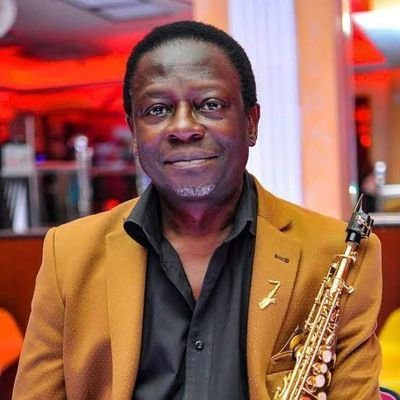


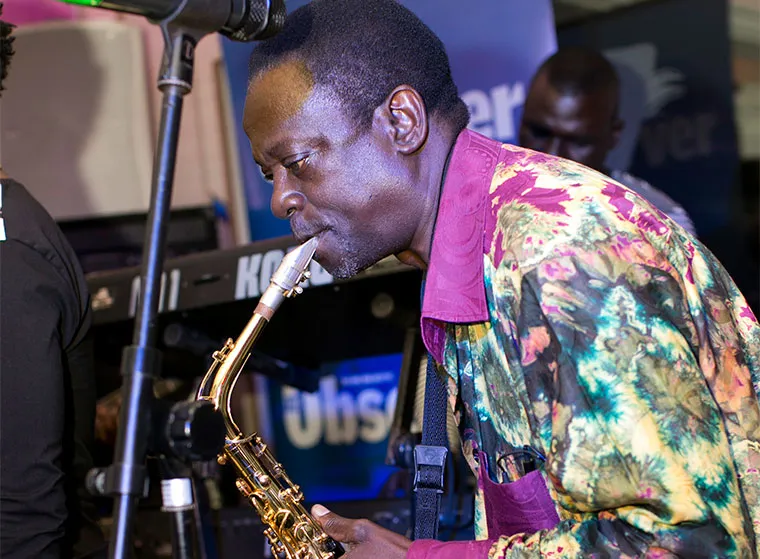

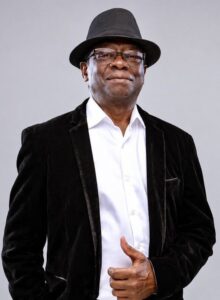
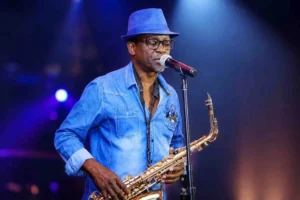
Moses “Papa Moi” Matovu was the undisputed patriarch of Ugandan live band music, a visionary saxophonist, and the co-founder of the Afrigo Band .For nearly six decades, his unmistakable alto saxophone lines and disciplined bandleader ethos provided the heartbeat of Kampala’s nightlife. His recent passing on September 24, 2026, at the age of 77, following an tragic assault in Kibuli, brought down the curtain on a legendary era but cemented a permanent musical legacy
Early Life and Musical Apprenticeship
Born in Kawempe, Kampala, on June 19, 1949, Matovu’s vast musical foundation began at the tender age of four when he joined the Namirembe Cathedral choir. As a young man, he was uniquely torn between two passions: music and football. He showed incredible promise on the pitch, playing for prominent clubs like Express FC, Nakivubo Boys (which later became SC Villa), and Police FC
By 1972, he chose music full-time, having sharpened his performance and vocal skills through Uganda’s golden era of 1960s guitar bands: In 1967 he started out as a young vocalist with the Thunderbirds Band at White Nile Katwe.,joined Joined the prestigious Police Band, where he absorbed strict musical discipline and formal arrangement structures 1968 and 1969 transitioned to the famous Cranes Band alongside music peers like Eddie Ganga.
The Birth and Evolution of Afrigo Band
Following the collapse of the Cranes Band, Matovu joined forces with Tony Ssenkebejje, Charles Ssekyanzi, Jeff Sewava, and Jessy Gitta. On August 31, 1975, inside a small bar in Katwe, they officially formed Afrigo Band. The name was chosen as a rallying cry: “Africa Go Forward,” an ambition to elevate local soundscapes global.
Matovu’s true genius lay in his organizational resilience. He steered the band through Uganda’s most turbulent decades of political instability and war. Even when the regime changes of April 1979 led to the looting of their entire inventory of musical equipment at Cape Town Villas, Matovu refused to let the music stop. Under his leadership, Afrigo went on to celebrate an historic 50th anniversary in 2025, solidifying its rank as Africa’s longest-lasting live music group.
Musical Style and Classic Discography
Matovu pioneered a highly distinct “Ugandan Sound”—a sophisticated cross-pollination of Congolese rumba guitar grooves, Western jazz horn sections, and traditional Ugandan folk rhythms sung in local languages.
Always recognizable in his trademark black hat, Matovu breathed life into a catalogue of timeless hits as a saxophonist, lead vocalist, and master arranger: Jim (the iconic anthem written about Jim Kiggundu),Afrigo Batuuse,Sikulimba,Nantongo and Speed Control
Advocacy and Cultural Legacy
Beyond the stage, “Papa Moi” was a fierce institutional guardian for the Ugandan creative sector. Throughout his later years, he was a vocal advocate for copyright law amendments, consistently lobbying the government to protect the intellectual property rights of marginalized local artists. [1, 2]
He viewed music as a highly technical, lifelong trade rather than a transient pathway to celebrity, constantly urging younger pop stars to put aside pride and master live instruments under the guidance of industry elders.

The seven other founding members who established the  Afrigo Band alongside Moses Matovu on August 31, 1975, were Charles Ssekyanzi, Jeff Sewava, Paul Serumaga, Fred Luyombya, Paddy Nsubuga, Geoffrey Kizito, and Anthony Kyeyune. Having broken away collectively from the popular Cranes Band, this group formed the core operational and artistic unit that launched what became Uganda’s longest-running live music group.

While these pioneers laid down the structural brickwork, they also paved the way for subsequent veteran pillars—such as percussionist Herman Ssewanyana, guitarist Frank Mbalire, and elite vocalists Joanita Kawalya and Rachael Magoola—who joined in later years to keep the Afrigo machine running across decades

Joanita Kawalya and Racheal Magoola fundamentally decentralized the Afrigo Band’s artistic identity, shifting it from a male-dominated, Congolese-influenced rumba orchestra into a deeply localized, multi-cultural Ugandan pop powerhouse. Both vocalists joined the band in the late 1980s and drastically altered Afrigo’s trajectory through three transformative shifts from Male-Led Rumba to Female-Fronted Storytelling
Before their arrival, Afrigo’s frontline was entirely led by male vocalists delivering smooth crooning styles or uniform harmonies. Joanita Kawalya changed the dynamic completely upon joining in 1986.
Kawalya introduced a fierce, emotionally expressive female narrative voice to the band’s repertoire.

Her breakout 1989 hit Mundeke and the legendary anthem Jim refocused the band’s songwriting onto the intricacies of domestic life, romance, and societal pressures from a woman’s point of view. This pivot humanized the band’s catalog, skyrocketing their popularity among female audiences and establishing them as essential family-friendly mainstream listening

Breaking the Buganda Border: Geopolitical Diversification
Historically, Afrigo primarily performed and recorded in Luganda, deeply rooting their music in Central Uganda’s traditions. Rachael Magoola, joining in 1989 from Eastern Uganda, blew these geographic and linguistic boundaries wide open. Integrating Afro-Folk: A trained music educator, Magoola infused the band’s rumba foundation with indigenous Eastern Ugandan Afro-folk rhythms and choreography. The Explosion of Obangaina though audiences were initially indifferent to songs sung in Lusoga, Magoola persevered. Her masterpiece,
Laying the Brickwork for Modern Kidandali Pop
By injecting high-energy dance routines, regional folklore, and pop structures into structural jazz-rumba arrangements, Kawalya and Magoola created the sonic bridge to modern Ugandan music. Their experimentation with up-tempo grooves and local linguistic patterns effectively laid the structural foundation for Kidandali—the dominant, synth-heavy local pop genre that defines contemporary Ugandan airwaves today.
Following the passing of Moses Matovu, Joanita Kawalya has fully assumed the mantle of Afrigo Band’s ultimate matriarch, serving as the primary custodian of its organizational discipline and artistic heritage. Having been with the ensemble for four decades since joining in 1986, Kawalya is no longer just a premier frontwoman; she is the operational and emotional anchor steering the band through its most challenging transition. Her matriarchal role manifests across several critical functions:
Afrigo’s historic 50-year longevity has always been credited to a strict, corporate-style work ethic—a rarity in the often chaotic local music industry. Kawalya actively enforces these high standards:

She demands rigorous rehearsal schedules, ensuring that the complex, multi-layered brass and vocal arrangements are executed with flawless precision.

She upholds the band’s reputation for punctuality, dress code, and professional conduct, maintaining their status as the premier choice for corporate galas and state functions.

With the old guard thinning, Kawalya has taken personal responsibility for grooming younger talent to ensure the “Afrigo Academy” stays open:

She directly mentors younger backing vocalists and dancers, teaching them how to command large stages without losing vocal control.

She actively instills a love for authentic live instrumentation in younger recruits, guiding them away from the shortcut of relying on pre-recorded digital backing tracks.

As the most recognizable face of the band, Kawalya handles the critical public-facing and institutional responsibilities:

She acts as the primary link between the band, the families of deceased founding members, and the public during national moments of mourning.

She manages the delicate balance of keeping Afrigo relevant to contemporary audiences while fiercely protecting the vintage legacy that makes the band a national treasure.Kawalya’s presence ensures that even as Afrigo enters unchartered territory, its soul remains fiercely intact.

Joanita Kawalya is immediately stepping into her leadership role to guide the Afrigo Band through a series of high-profile public tribute performances honoring the late Moses Matovu. In the wake of his passing, the band is channeling their grief into live instrumentation, assuring the public that Papa Moi’s musical legacy remains active

Following the official funeral procession to Kyanja, the arts community is organizing a massive, multi-artist public jam session outside the Uganda National Theatre. Joanita Kawalya will front the full Afrigo orchestra to play through Matovu’s extensive 50-year catalog for fans and mourners.
As the band transitions into October, Kawalya is steering Afrigo back to its traditional live residencies to anchor Kampala’s nightlife and institutionalize Matovu’s legacy:
Planned Afrigo Band Activations
The band is set to resume its historic weekend residency at Club Obligato. Under Kawalya’s matriarchal guidance, these Saturday night sets will serve as open weekly celebrations of the classic rumba brass setups that Matovu spent his life perfecting
Uganda National Cultural Centre (UNCC) to establish a permanent historical exhibition dedicated to the history of the Cranes Band, Afrigo Band, and Matovu’s personal brass instruments
To ensure that his live music philosophy remains active among the youth, the Uganda National Federation of Muscians Foundation  is institutionalizing an annual memorial calendar: Matovu Live Music Lecture Series: An annual seminar pairing veteran instrumentalists with young bedroom music producers to teach live notation, horn orchestration, and band management and the Annual September Tribute Gala: Starting in September 2027, the federation intends to sponsor a multi-genre live festival where contemporary urban artists will perform alongside the surviving brass section of the Afrigo Band to keep the classic rumba catalog in active rotation.
Share.
Leave A Reply

Exit mobile version