




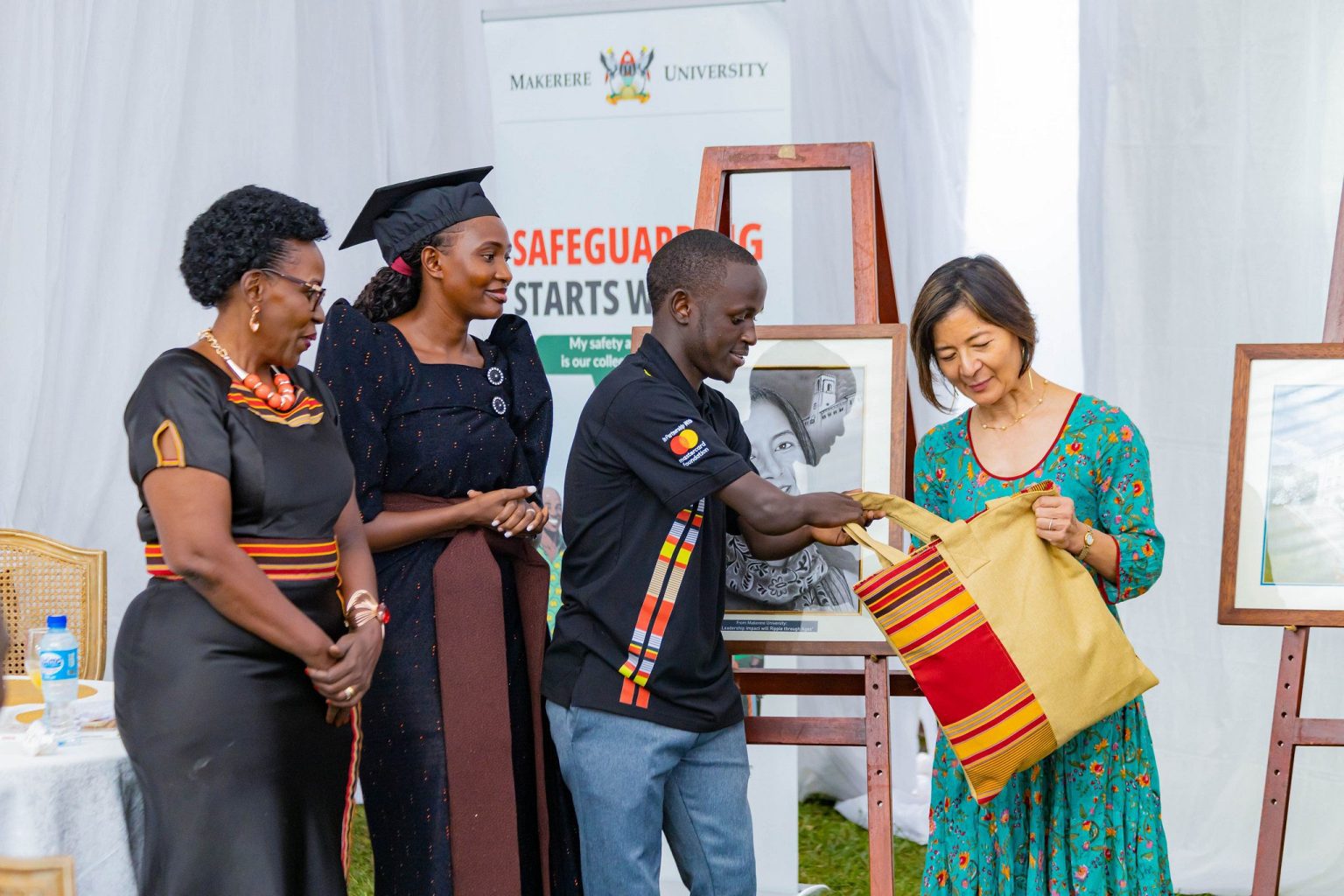
The Principal of the College of Humanities and Social Sciences (CHUSS), Prof. Hellen Nambalirwa Nkabala, at Makerere University has pledged to strengthen collaboration with the Japanese International Cooperation Agency in promoting their joint JICA Program for Japanese Studies in Uganda.
Makerere University and JICA Uganda have along standing partnership on academic exchange ,capacity building and infrastructure
Key collaborations include the JICA Chair program for Japanese studies, the 2025 inauguration of the Tropical Diseases Research Centre (RTC) lab, and partnerships for,digital education and agriculture
Nambalirwa made the remarks while delivering a presentation titled “Centering the Pedagogy of Peace and Conflict in addressing Wars of a Third Kind” during the 5th JICA Chair–JICA Program for Japanese Studies held at the Makerere University School of Public Health Auditorium.
The theme of the one-day conference, which brought together students benefiting from JICA programmes, was “Post-War Reconstruction and Peacebuilding in Hiroshima and Japan.”
The JICA Chair is an academic initiative launched by JICA in partnership with leading universities worldwide, with the aim of sharing Japan’s experiences in modernization, development cooperation, and post-war reconstruction, providing valuable insights for students, researchers, and policymakers.
At Makerere University, four JICA sessions have been successfully conducted since the program’s inception in 2022, yielding impactful results among stakeholders.
Prof. Nambalirwa told the over 60 participants that her college, and Makerere University at large, have benefited from the collaboration and pledged to further strengthen the program for the maximum benefit of the student fraternity.
The JICA Chief Representative in Uganda, H.E. Inoue Yoichi, who stood in for Ambassador H.E. Sasayama Takuya, thanked the leadership of Makerere University for promoting the JICA Japanese Studies Programme in the country, saying it had positively impacted many students and vulnerable people seeking educational opportunities.
He pledged JICA’s continued support to the citizens of Uganda who wish to benefit from its development cooperation activities for the good of all stakeholders.
The keynote lecture was presented by Ms. Mikami Chisa, a visiting board member of the Ashinaga Foundation and Head of the Hiroshima Office, United Nations Institute for Training and Research (UNITAR).
The presentation, titled “From Devastation to Resilience: Lessons from Hiroshima for Post-War Reconstruction and Sustainable Peace,” focused on the difficult period the Japanese people went through when the United States bombed the cities of Hiroshima and Nagasaki with atomic bombs, resulting in untold death and immense human suffering.
She noted that despite being bombed with such devastating atomic weapons, Japan never retaliated but chose the path of reconciliation and dialogue. This included reconstruction of the damaged cities and investment in infrastructure development, which has today enabled Japan to become a global economic powerhouse.
The Board Director of Ashinaga Uganda, Prof. Peter Baguma, commended JICA for its continued financial support toward the provision of education to vulnerable students and orphans, noting that over 1,600 students from lower levels to university have benefited.
He said they joined JICA in celebrating the achievements of the 5th JICA Chair and in appreciating its support to Ashinaga Uganda, including the construction of classroom buildings, office spaces, and the provision of other key human empowerment resources.
Key Aspects of the Relationship
JICA has supported the upgrade of the Research Centre for Tropical Diseases and Vector Control (RTC) at the College of Veterinary Medicine, Animal Resources and Biosecurity (CoVAB).
JICA has supported academic networks, including partnerships between Makerere, Jomo Kenyatta University of Agriculture and Technology (JKUAT), and the Egypt-Japan University of Science and Technology (E-JUST), focusing on student welfare and research collaborations.
JICA has provided Japanese books and materials to the Makerere University Library to support research.


