






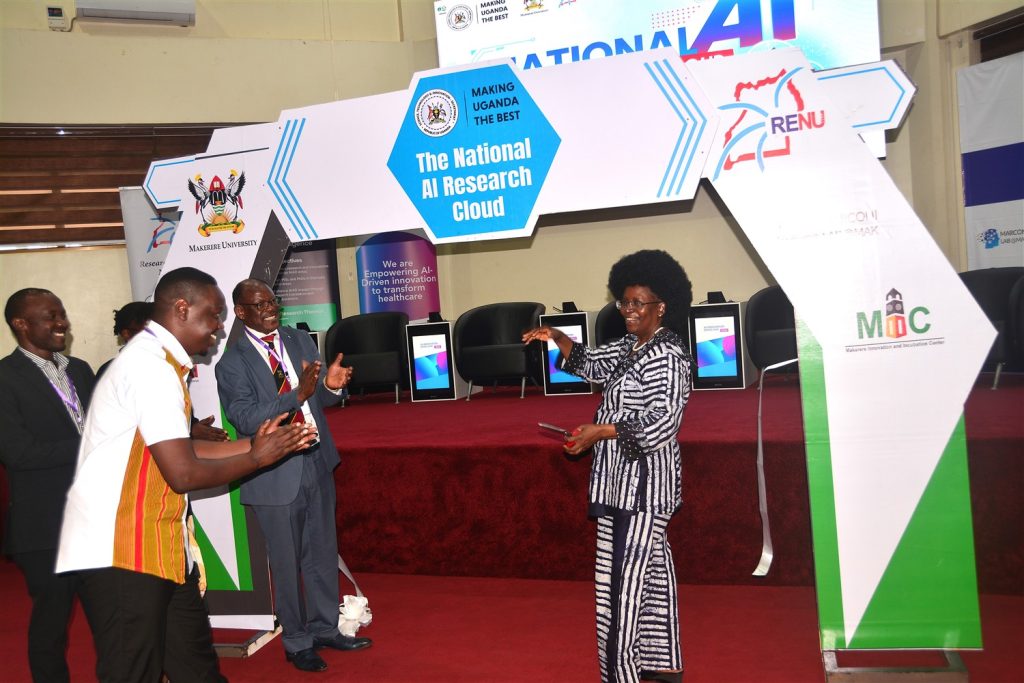
In a strategic move to empower youth with digital skills, Makerere Universityhas officially launched National AI Research Cloud during the AI Innovation Demo Day, hosted under the College of Engineering, Design, Art and Technology (CEDAT).
The initiative “Pathogen Economy Labs Project” is funded by the Science, Technology and Innovation Secretariat that brought together the academia, students and partners to show case some of the products of the AI Innovation Academy.
According to organisers the objective of the project is to develop and support the commercialization of three (3) AI-driven platforms for screening diseases of national priority, and to establish an AI for Health (AI4H) Research and Innovation Hub.

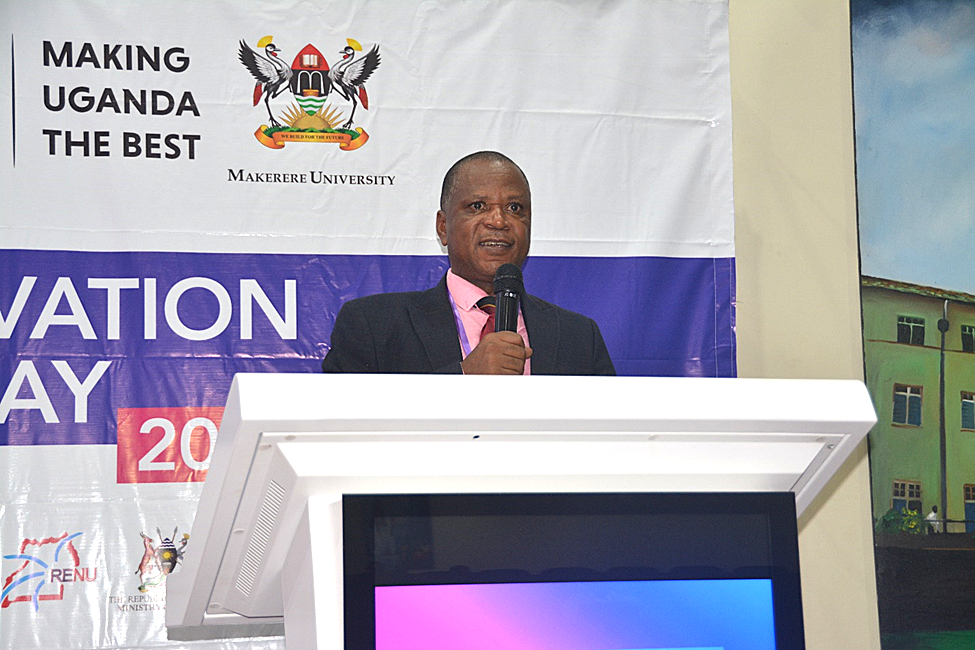
The event highlighted key outputs from the Pathogen Economy Labs project, including Cervisight, a mobile-friendly AI tool for cervical cancer screening; the National Cancer Registry; Ventrascan, an AI-powered tuberculosis screening solution; and the AI4Health Dataset Repository. Beyond showcasing these innovations, the event served as a platform to raise awareness about the services offered by the project and outline the roadmap for its next phase.
During the event,three startups namely Novita Diagnostics, Feyti Limited & Impala Health were each awarded UGX 50M, to support their efforts in addressing the challenge of the low rates of cervical cancer screening in Uganda. For the case of Tuberculosis, data shows that 96,000 people develop TB every year, with only 86,000 diagnosed, and by the time the challenge is realized it’s in the late stages making 30 people die from TB every day.

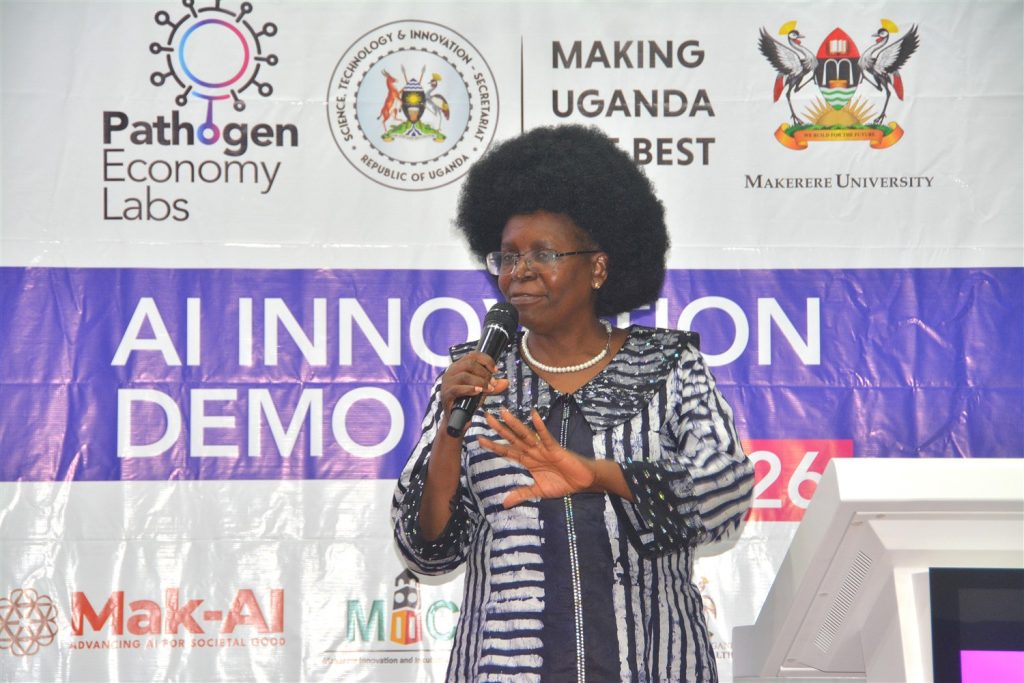
Minister Dr. Monica Musenero noted that AIbased projects were included in government funding, and Makerere University became the host for AI initiatives.
She emphasized that Uganda must not be disadvantaged in this industrial revolution as the case was in previous ones. Instead, the country is determined to be a creator of advantage, harnessing platforms, knowledge banks, and local data to generate value.
“This is the first industrial revolution that found us in a stage of awareness. This time we are taking our destiny in our hands,” she said.
Dr. Musenero also highlighted the recent launch of Uganda’s first sovereign cloud infrastructure, providing a secure national platform for data storage. She reaffirmed government support for AI labs and urged academia, industry, and learners to embrace this vision, positioning Uganda as a leader in AI innovation.
Makerere University Vice Chancellor, Prof. Barnabas Nawangwe, extended appreciation to the President for appointing the right leadership in science and innovation.


He noted that Makerere’s focus has been on unlocking its potential, avoiding disruptions, and channeling its best minds toward transformation. He cited innovations such as Kiira Motors’ buses and the AI labs as evidence of Uganda’s growing capacity.
“It is gratifying to hear young researchers declare that they want Uganda to be the hub of AI innovation. This mindset change is the true mark of transformation,” he said.
Prof. Moses Musinguzi, Principal of CEDAT, expressed appreciation for the support extended by STI to several projects within the College.
He highlighted the upcoming E-Learning Center adjacent to CEDAT, the fully equipped School of Engineering Building, the Science and Technology Center for innovations and experiments, and the National Review Centre, all designed to enhance the delivery of high-quality education and research.
Reflecting on the AI Innovation Day, Prof. Musinguzi described it as a glimpse into the possibilities that emerge when students, researchers, and innovators are empowered to experiment, collaborate, and address real-world challenges.
He said the Pathogens Economy Labs project, has since 2024 supported advancements in artificial intelligence and digital health. The initiative has trained several individuals who are now emerging as leading innovators, a development that continues to make CEDAT proud.
The Pathogen Economy Labs Project has been spearheaded by two Co–Principal Investigators, Dr. Andrew Katumba from CEDAT and Dr. Joyce Nakatumba Nabende from COCIS. In his remarks, Dr. Katumba commended the support from STI and the respective colleges in enabling the Pathogen Labs facility, noting that the National Innovation and Incubation Centre had also come on board to provide incubation support.
He highlighted key outputs from the project, including two AI-powered platforms designed to shift healthcare toward prevention through advanced screening.
Dr. Katumba further explained that the AI Innovation Academy operates as a boot camp, training innovators from the idea stage, equipping them with technical and business development skills, and preparing them to be investor-ready for market competition.


