




The Speaker of Parliament, Rt. Hon. Jacob Marksons Oboth, has pledged full legislative backing for major Japanese-funded infrastructure projects in Uganda, including the construction of a new Karuma Bridge and the second phase of the Kampala Flyover.
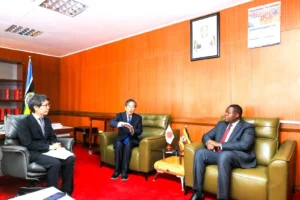
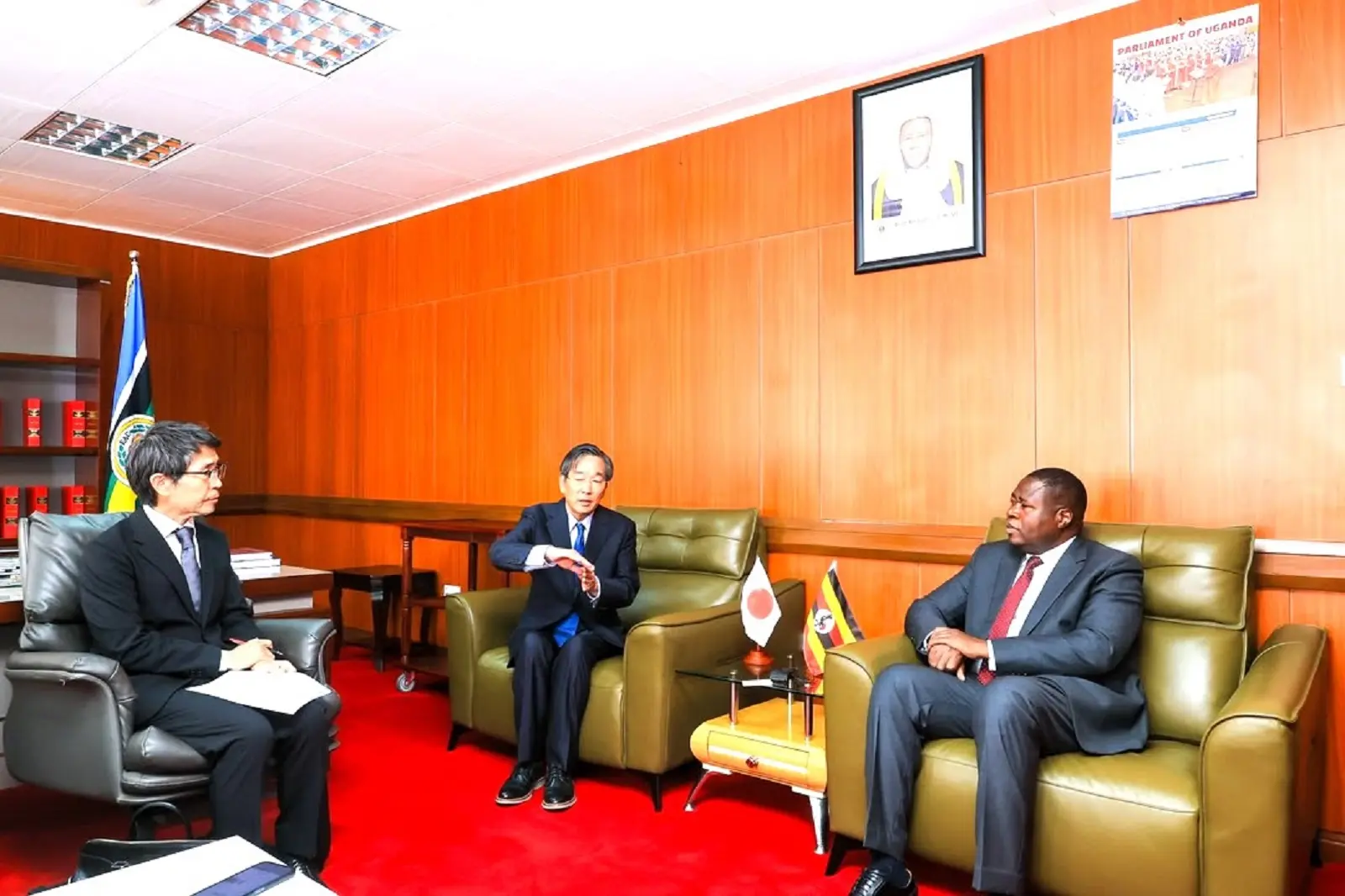
Speaker Oboth made the commitment on Tuesday, November 24, 2026, during bilateral talks at Parliament with Japan’s Ambassador to Uganda, H.E. Takuya Sasayama, who was accompanied by Deputy Chief of Mission Norimasa Yoshida and First Secretary and Head of Economic Cooperation Masanobu Yonemitsu.
During the meeting, Ambassador Sasayama announced that construction of the new Karuma Bridge—a critical trade and transport corridor linking central and northern Uganda—is scheduled to begin on January 14, 2027. He urged Parliament to fast-track the approval of the project’s financing frameworks, including the Ugandan government’s counterpart funding expected to be tabled soon by the Ministry of Finance.
“We shall gladly do that,” Speaker Oboth assured the delegation, confirming that the financing request will be prioritized and laid before the House immediately upon receipt.
Ambassador Sasayama further revealed that Tokyo is preparing the second phase of the Kampala Flyover project. Building on the completed first phase and its modernized traffic signal system, the next phase aims to further decongest the capital alongside planned expansions to the electric power transmission network across the Greater Kampala metropolitan area.
Praising Japan’s longstanding partnership with Uganda, Speaker Oboth noted that Tokyo’s development assistance has consistently been delivered transparently and without political strings attached. He proposed establishing structured, multi-party parliamentary ties between Kampala and Tokyo—extending a formal invitation to his Japanese counterpart to visit Uganda—to unlock deeper cooperation in trade, tourism, cultural exchange, and innovation.
Ambassador Sasayama commended Parliament’s role in Uganda’s socio-economic transformation, emphasizing that Japan’s own economic rise was driven by human capital and technology rather than natural resources.
“We do not have any oil. Our aim is to co-create together with Japanese human resources and technology, and you have an abundance of young workforce. This is not only good for Uganda, but East Africa and the entire region as well,” Sasayama said.
With 2027 marking 65 years of diplomatic relations between Uganda and Japan, the envoy also formally invited Uganda to participate in the International Horticultural Expo (Green Expo) in Yokohama, opening in March 2027. Formal parliamentary exchanges between the two countries date back to 2013, when former Speaker Rt. Hon. Rebecca Kadaga paid a working visit to Japan.
For more than 25 years, Japan—primarily through the Japan International Cooperation Agency (JICA)—has been a key financier of Uganda’s transport, urban mobility, and energy sectors:
- Source of the Nile Bridge (Jinja): Constructed as a modern cable-stayed bridge with access roads to boost regional trade along the Northern Corridor. JICA signed an initial loan agreement in November 2010 for JPY 9.198 billion (approx. US$100 million), later amended in April 2018 to JPY 14.116 billion (approx. US$127 million).
- Urban Mobility & Road Connectivity: Beyond the Kampala Flyover, Japanese support has covered major road rehabilitations, grant-backed upgrades, and discussions around key arterial routes such as the Kibuye–Busega corridor.
- West Nile Bridges & Digital Management (February 2026): Japan, Uganda, and UNOPS launched a US$6.29 million, three-year initiative to rebuild the Ayi (Maracha), Kochi-2 (Koboko), and Woi (Yumbe) bridges while introducing an Electronic Bridge Management System for local access roads.
- Regional Infrastructure Financing (November 2026): JICA signed a US$583.4 million (86.6 billion yen) concessional loan agreement with the African Development Bank Group for the African Development Fund’s 17th replenishment (2026–2028) to support energy access, infrastructure, and regional integration across Africa.


