






MATUGGA, Uganda — Local drug manufacturer Dei BioPharma has successfully introduced 14 medicines onto the Ugandan market, overcoming years of frozen bank accounts, blocked funding, and concerted efforts to derail its operations.
Speaking during a press briefing at the company’s facility in Matugga, Wakiso District, founder Dr. Matthias Magoola revealed that the milestone was achieved despite sustained financial battles dating back to 2019. According to Dr. Magoola, unnamed foreign-funded interests opposed to pharmaceutical manufacturing on the continent repeatedly attempted to cripple the project by freezing the company’s bank accounts and blocking incoming capital from international funders.
The interference extended to the facility’s October 2022 launch, where Dr. Magoola alleged that a COVID-19 test list was deliberately altered to show him as positive, preventing him from attending the event presided over by President Yoweri Museveni.
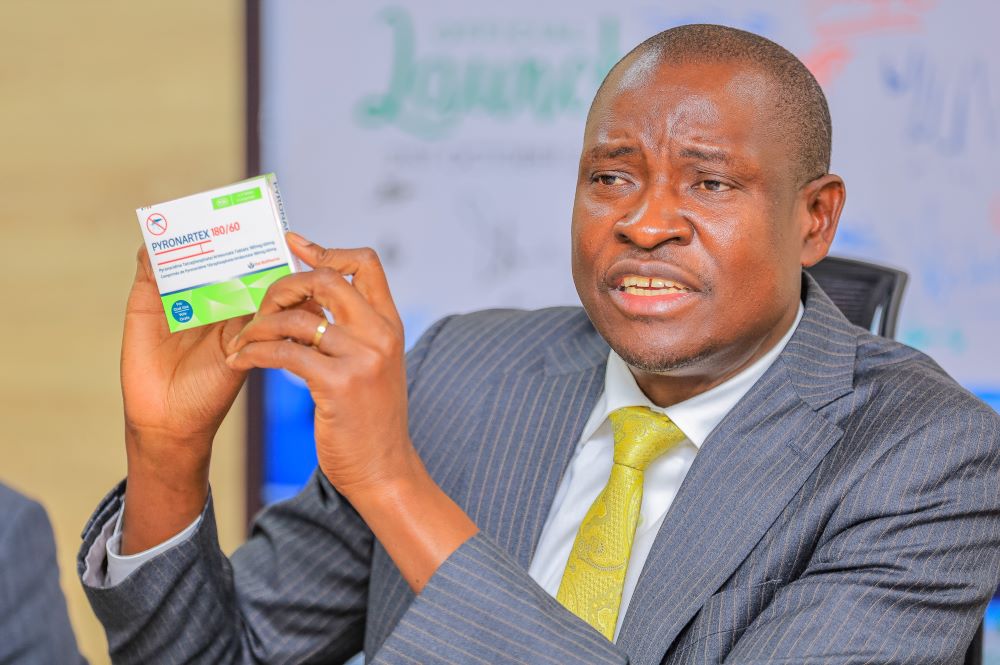
“Our only mistake or our crime is to bring technology, to build capacity for Africa to manufacture essential drugs,” Dr. Magoola told reporters, displaying the company’s range of locally produced medicines.
Before securing state backing, Dei BioPharma raised $500 million through its own sister businesses, local banks, and private partners to keep the project afloat.
Board chairperson Dr. Patrick Wakida, who also serves as the Member of Parliament for Kabweri County, confirmed that the Ugandan government later stepped in, paying Shs723 billion for a 9.4% stake based on a Government Valuer assessment of $2.1 billion. Dr. Magoola presented share certificates held by the Ministry of Finance and the Ministry of Science, Technology and Innovation, noting that the company plans to repay the government “in the shortest time possible.”
Despite the financial headwinds, Dei BioPharma is now manufacturing several essential drugs not produced anywhere else in Africa. Malaria treatments anchor the company’s portfolio, developed specifically to counter growing resistance to older drugs across the region.
Dr. Magoola noted that the Matugga plant is Africa’s sole producer of artesunate-pyronaridine—a World Health Organization-recommended combination made in only one other country globally—as well as artesunate-amodiaquine and dihydroartemisinin-piperaquine. The firm has also developed a high-dose artemether-lumefantrine.
“When it comes to antimalarials, Uganda has taken a leap,” Dr. Magoola said.
Beyond malaria, Dei BioPharma is the only African manufacturer of tranexamic acid, a vital medication used to treat severe bleeding disorders, particularly postpartum hemorrhage. “Our sisters, our mothers are losing lives after giving birth. You need this drug,” he emphasized.
The facility also produces hydroxyurea for managing sickle cell disease and certain cancers, alongside Metosocrol (for high blood pressure), Bactigel, Clamadin, and Photobact. Dr. Magoola stated that all 14 products meet strict international standards, offering a critical defense against the $200 billion global trade in counterfeit medicines—most of which ends up in Africa, where roughly 90% of essential drugs are imported.
Currently employing approximately 500 staff, the $1.1 billion Matugga complex is projected to generate around 40,000 jobs once fully operational, according to Dr. Wakida. Dr. Magoola confirmed that the remaining sections of the facility will be completed next year, paving the way for the company to list on the stock market.
For its next phase, Dei BioPharma plans to venture into biological drugs and gene therapies—treatments currently unaffordable for 90% of the global population. Pointing to sickle cell disease, which disproportionately affects people of African descent, Dr. Magoola noted that existing curative gene therapies cost between $2.2 million and $3.1 million per patient.
“How many people in Africa can afford that?” he asked.


