





Imagine inheriting a house where the foundation is cracked, the roof has caved in, and only one rusty pillar is left standing. That was Uganda in 1986.
When the National Resistance Movement (NRM) government took power, the nation’s economy had shrunk to a bruised $3.9 billion. Decades of political bloodletting and civil conflict had systematically dismantled the country’s productive base. The “3Ts and 3Cs” left behind by British colonial masters—Tobacco, Tourism, Tea, Coffee, Cotton, and Copper—were largely in ruins. Copper was dead. Tourism was non-existent. Only tobacco was weakly gasping for air.
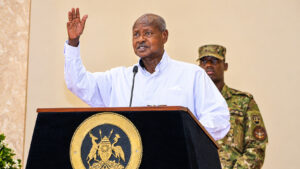
Fast forward forty years to October 9, 2026. Speaking virtually from State House Entebbe during Uganda’s 64th Independence Day celebrations, President Yoweri Kaguta Museveni laid out a staggering reality: that broken $3.9 billion economy has been forged into a $69.3 billion powerhouse, with projections aiming for $74 billion by June 2027.


Under the theme “Embracing Our Sovereignty With Hope and Visionary Leadership,” the virtual address served as both a victory lap for a resilient nation and a fierce battle cry for its next economic frontier.
Uganda’s journey from a shattered state to a regional economic anchor did not happen by accident. President Museveni outlined five distinct, deliberate phases of transformation that salvaged the nation:
Minimum Recovery: Reviving the basic infrastructure and security needed for everyday life.
Expansion: Rebuilding and scaling up the industries that had collapsed during the regimes of the past, like Idi Amin’s.
Diversification: Breaking free from the colonial trap of relying on a narrow menu of raw commodities.
Value Addition: The current, fiercely contested battleground to process goods locally.
The Knowledge Economy: Unleashing the power of science, technology, and local innovation.
The numbers behind this strategy speak for themselves. Tea production, which had bottomed out at a meager 3 million kilograms, has skyrocketed to 60 million kilograms. Coffee exports have similarly surged from 3 million bags to 9 million bags.

But Museveni’s vision stretches far beyond traditional crops. He questioned why everyday staples like milk, fruits, maize, and fish were historically excluded from commercial wealth creation, recalling a time in the 1950s when he saw imported milk on shop shelves in Ntungamo while local cattle keepers struggled for a market. Today, that narrative has flipped, with local agricultural products driving household commercial enterprises across the country.
“When you add value, you get much more money than when you sell raw materials,” Museveni stated plainly, addressing the core of Africa’s historical economic disadvantage.
He used coffee to illustrate the global supply chain trap: a kilogram of raw Ugandan coffee beans might fetch a mere $2 on the international market. Yet, western corporations that roast, grind, package, and market that very same coffee rake in astronomical profits.
To achieve true independence, Museveni argues, Uganda must fight to retain that wealth. The country is already making strides in processing cotton, milk, bananas, and fruits, transitioning from a passive supplier of raw ingredients to an aggressive producer of finished goods.
This philosophy directly bridges into the fifth phase: The Knowledge Economy. Uganda is no longer just farming; it is engineering. From manufacturing its own electric vehicles to expanding domestic pharmaceutical capabilities, the nation is actively turning scientific knowledge into state wealth.
Economic expansion, however, brings its own set of growing pains. Museveni pointed directly to the nation’s transport inefficiencies—what he colorfully termed akatogo (a mixed-up mash) of traffic jams, heavy cargo trucks battering highways, and fuel tankers clogging roads.

This logistical friction isn’t just annoying; it is expensive, costing the country an estimated $1 billion annually.
To unlock maximum competitiveness, the government is executing major infrastructure plays: Partnering with Kenya on a petroleum pipeline to take fuel tankers off the tarmac,Rehabilitating the metre-gauge railway and pushing forward with the Standard Gauge Railway (SGR) and xpanding rail networks into western Uganda and the mineral-rich Karamoja sub-region to tap into massive deposits of marble, limestone, and gold.
A soaring national GDP matters little if ordinary citizens are left behind. Museveni emphasized that true liberation means moving every single Ugandan into the formal money economy.
Through aggressive grassroots initiatives, the tide is turning. Operation Wealth Creation successfully moved the percentage of Ugandans in the money economy from 32% to 61%. The launch of the Parish Development Model (PDM) pushed that figure further to 67%.
The President challenged political, religious, and cultural leaders to inspect their local parishes and actively lift the remaining 33% of the population out of subsistence living. He pointed to success stories like Kisozi—where poverty was rampant in 1990, but now 90% of households earn commercial incomes—and Deziranta Tumusiime, a woman from Rubirizi who transformed her life by acquiring productive assets through the PDM.
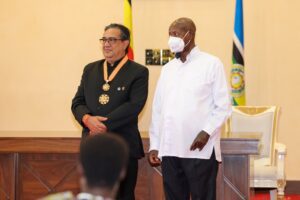

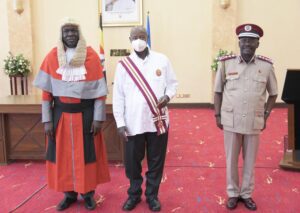
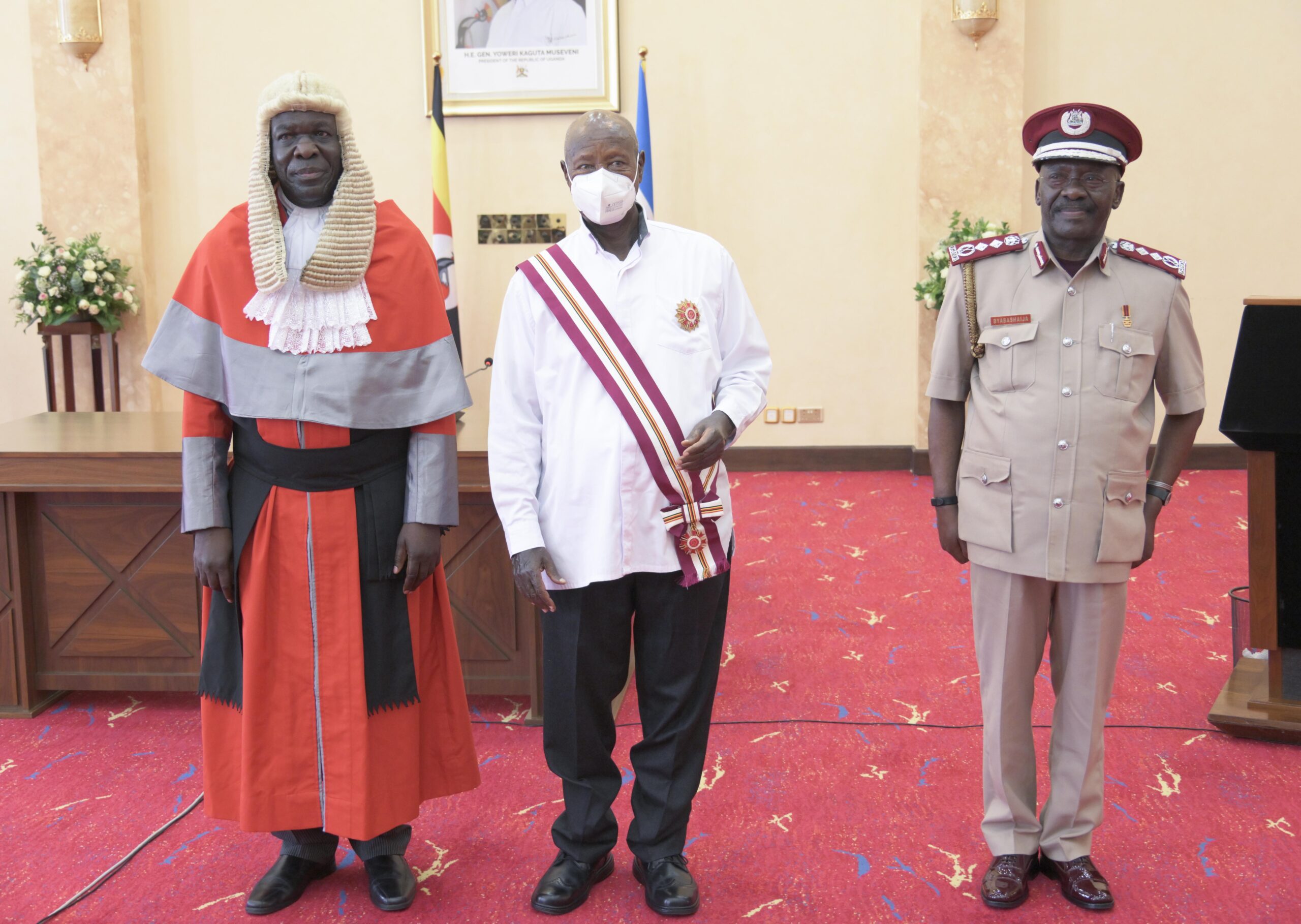
The ceremony also paused to honor those building the nation’s foundation. President Museveni was decorated with the Order of the Commander-in-Chief (Uganda Prisons Service Medal), recognizing his defense leadership and his directives for the Prisons Service to boost national food security, grow cotton for import substitution, and manufacture high-quality local furniture.
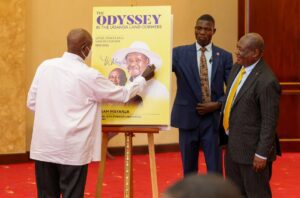
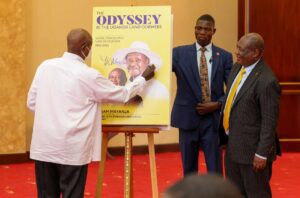
Nineteen other patriots were awarded medals for their outstanding service, including Commissioner General of Prisons Can. Dr. Johnson Byabashaija and Kampala Parents’ School founder Edward Kasole Bwerere Lwanga. Simultaneously, Attorney General Sam Mayanja added to the day’s intellectual landscape by launching his new book, “The Odyssey in the Uganda Land Cobwebs.”
Echoing the mood of the historic milestone, Vice President Jessica Alupo praised the NRM’s “10-fold growth strategy” and its unwavering commitment to women’s empowerment, while the Minister for the Presidency, Babirye Milly Babalanda, reminded citizens of the heavy price paid by historical freedom fighters like Omukama Kabalega and Kabaka Mwanga.
“Uganda’s Independence wasn’t achieved on a silver plate,” Babalanda reminded the nation.
With a $69 billion economic fortress underneath them and a future driven by oil, automotive engineering, and industrial value addition ahead, Uganda’s message to the world on its 64th birthday was clear: the political struggle is won, and the war for absolute economic sovereignty is well underway.


