

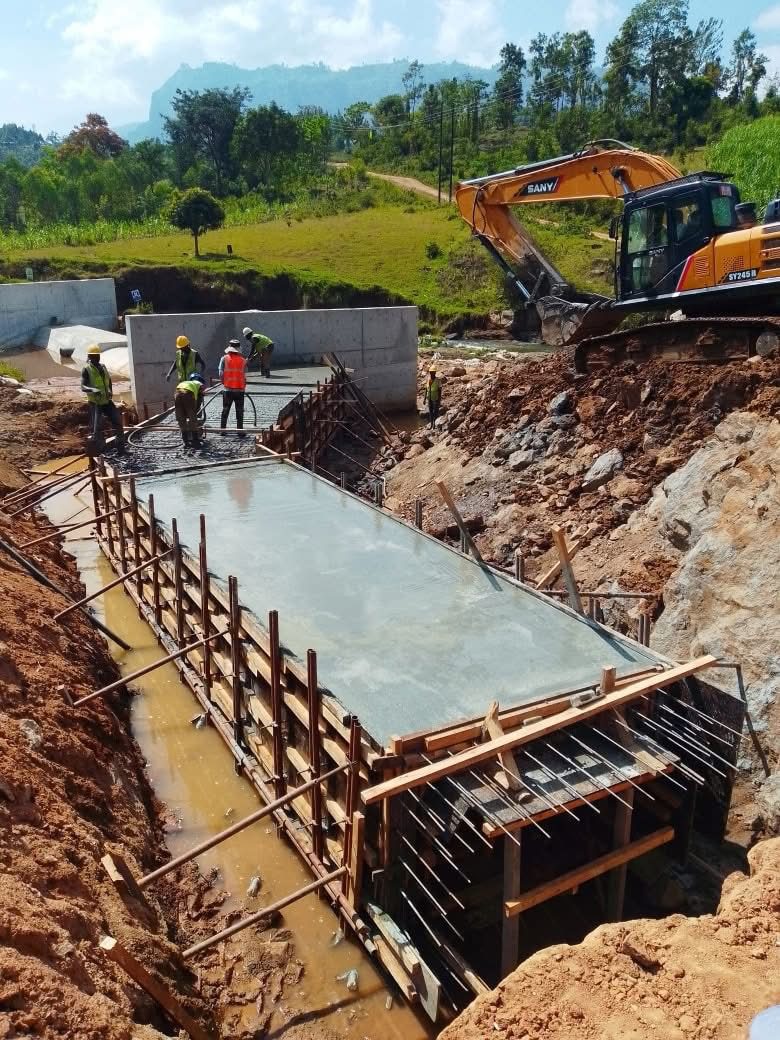
Following the recent launch of National Water and Sewerage Corporation (NWSC) five year strategic plan to expand access to water country wide,NWSC has announced steady progress on the ongoing Mbale Water Supply and Sanitation Project, a major infrastructure initiative aimed at improving access to clean water and sanitation services in Mbale City and surrounding areas.
The National Water and Sewerage Corporation (NWSC) has unveiled an UGX 8.2 trillion expansion plan for 2025–2030, aimed at delivering safe water to 26 million Ugandans. The strategy targets extending 500 kilometers of pipeline per year, adding 60,000 new connections annually, and constructing 15,000 safe water points in villages.
According NWSC Managing Director Eng Silver Mugisha major components of the project like construction of a modern water treatment plant in Bukitti/Jewa, laying of water distribution pipelines across the city, and installation of new water reservoirs to strengthen storage capacity are underway.
He adds that the project also involves the construction and rehabilitation of sewage treatment plants, including a new facility at the Islamic University in Uganda (IUIU), as well as the rehabilitation and expansion of sewer lines to improve sanitation coverage in addition, public toilets are being constructed as part of efforts to enhance public hygiene and sanitation services within the city.
Mugisha said once the project is completed, Mbale’s water supply capacity will increase significantly from 18 million litres to 30 million litres per day.
“The expansion is expected to address growing water demand, improve reliability of supply, and support the city’s rapidly increasing population
The corporation thanked residents and stakeholders for their patience and continued support as works progress, reaffirming its commitment to fast-tracking the project to completion,”he stated.
NWSC Achievements in last 50 years
Over its first 50 years, the National Water and Sewerage Corporation (NWSC) has grown from serving just 3 towns to over 270 urban centers across Uganda. Key milestones include expanding piped water access from less than 200,000 to over 18 million people and scaling the national pipeline network to more than 22,000 kilometers

NWSC’s footprint has increased from an initial 3 towns (Kampala, Entebbe, Jinja) in 1972 to operations in over 273 urban centers across the country.
The number of people served with piped water has surged from less than 200,000 to approximately 18 million Ugandans
The total pipe network has expanded from under 200 kilometers to more than 22,000 kilometers, extending access to previously unserved regions.
