

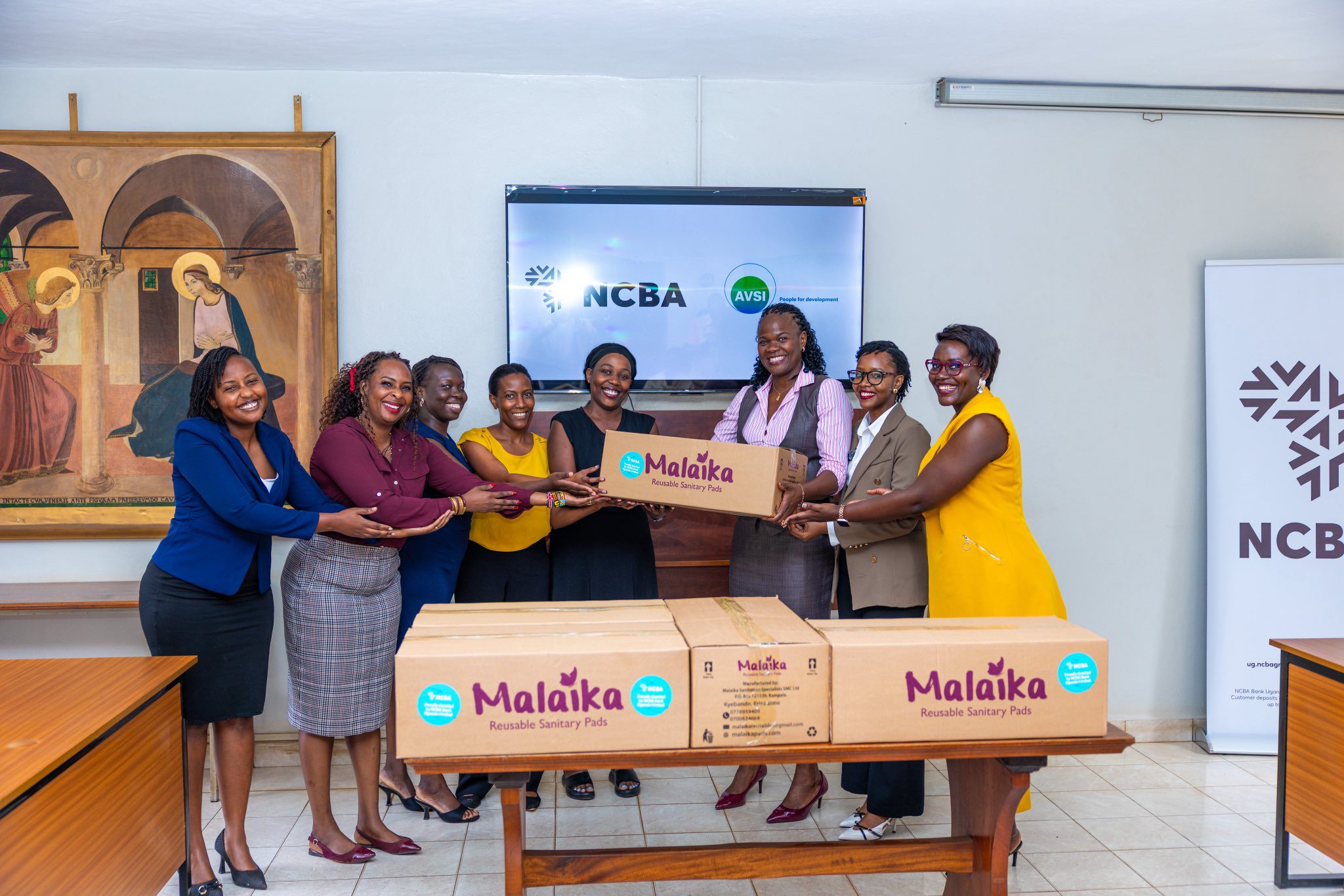
NCBA Bank Uganda has partnered with AVSI to distribute reusable sanitary pads to schoolgirls in a bid to combat period poverty and reduce menstrual-related absenteeism in schools.
According to officials about 1,500 packs of reusable santtary pads will be distributed to schools in underserved communities to cmobat period poverty and reduce school absenteeism
. The initiative, part of NCBA’s “Change the Story” sustainability programme, involved staff contributions totaling Shs 18.5 millio
Sanitary pads in schools are critical for improving girls attendance ,reducing drop out rates by up to 50% and ensuring dignity ,health and academic focus
Providing access prevents absenteeism, protects against infection, reduces shame, and empowers girls to stay in school, directly impacting their long-term health and education.
The pads will be distributed through AVSI’s community outreach programmes to selected schools, particularly in under served areas where access to menstrual hygiene products remains limited.
“Over time, we have heard from education stakeholders that some schoolgirls miss up to four or five days of school each month during their menstrual periods—a situation that affects academic performance and, in some cases, increases the risk of dropping out,” said NCBA Bank Uganda Head of Human Resources, Deborah Maitum.
Reusable sanitary pads are increasingly being promoted as a practical and sustainable solution. When properly maintained, they can last for several months, offering a more affordable alternative for families while also reducing waste associated with single-use products.
Maitum said the initiative is designed to help girls remain in school consistently while promoting dignity, confidence, and uninterrupted learning.
She added that the programme aligns with NCBA Bank Uganda’s broader sustainability agenda, which focuses on supporting education, advancing environmentally responsible solutions, and driving inclusive community development.
AVSI’s role in the rollout is central to the intervention. Through its network of community projects, the organisation is helping ensure that the pads reach the intended beneficiaries and are integrated into wider efforts aimed at supporting education and wellbeing.
The partnership also reflects a growing trend of financial institutions working with development partners to address social challenges beyond traditional banking services.
Maitum noted that tackling period poverty requires a broader approach that includes menstrual health education, improved sanitation facilities, and sustained efforts to address stigma.
“This initiative highlights the role the private sector can play in supporting community development and addressing barriers that continue to affect vulnerable groups, especially adolescent girls striving to complete their education,” she said.

AVSI Country Manager John Makoha said the intervention fits squarely within the organization’s broader mission of expanding access to education for girls, while also addressing the social and economic barriers that keep many of them out of school.
“Today, we are here to witness the handover of reusable sanitary pads from NCBA Bank Uganda. This is a very important initiative for us because, as an organisation, we focus on increasing access to education for the girl child,” Makoha said.
He said evidence continues to show that even modest increases in girls’ access to education can have a significant economic impact, contributing to national growth and improving the country’s overall economic outlook.
He noted that many girls still drop out of school because they cannot afford sanitary products—a challenge that continues to undermine education outcomes and the broader goal of human capital development.
Initiatives such as the reusable pad drive, he said, are critical in addressing that challenge and ensuring more girls remain in school, complete their education, and realise their full potential.
