





Today, as we commemorate the Day of the African Child under the theme “Ensuring Universal Access to Water, Sanitation and Hygiene for Every Child in Africa,” we are called to confront a critical barrier that continues to deny millions of children their right to education, dignity and health. Particularly young girls still struggle to access clean water and safe sanitation facilities at home and in school. This deficiency directly triggers low school attendance, poor health outcomes and diminished standards of living.
Access to water, sanitation, and hygiene (WASH) services is not a privilege but rather foundational to a girl’s health and well-being. Within this right sits menstrual hygiene management (MHM) as an issue too often treated as a private matter for women and girls to manage on their own. MHM is a public health priority and a human rights obligation, and like all rights, it cannot be secured by half the population acting alone. Engaging men and boys is a necessary strategy if we are to dismantle harmful taboos, eliminate period stigma and build supportive environments where women and girls can manage their menstruation with dignity.


For generations, menstruation has been hidden behind a veil of secrecy and stigma, unfairly framed as an isolated female burden. Excluding boys from menstrual health education leaves them with fragmented knowledge, which often breeds school bullying, harmful myths, and the misconception that menstruation is “impure.”
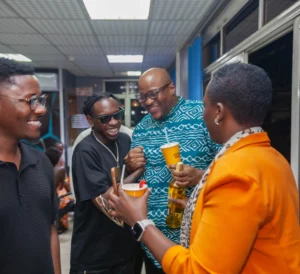
During a recent Menstrual Hygiene Day commemorative event where we were distributing sanitary pads to schoolgirls in Bugiri district, the chief guest, who was a man, was handing over sanitary pads to a group of schoolgirls. However, many of the girls hesitated and felt shy receiving pads from a man. Some looked away. Others sent a friend forward to collect the pads on their behalf rather than receive them directly from a man they did not know.
Evidence shows that involving boys and male teachers in menstrual health initiatives is essential to securing the necessary infrastructure and support for female students. Our field experience reveals that when male teachers actively participate in making and distributing reusable sanitary towels, it opens up vital communication channels. Girls gain the confidence to interact freely with male instructors and ask for assistance when needed. Similarly, young girls are now comfortably requesting sanitary products from their fathers and initiating open discussions about sexual and reproductive health with male community members.


Conversely, a lack of male understanding and support at the household level drives school absenteeism, early marriages and lost economic opportunities for young women.
Within schools, male sensitization eases the social anxiety that drives girls out of the classroom altogether. Where male teachers have been trained and involved in producing and distributing sanitary materials, dropout rates linked to menstruation have fallen visibly.
Within communities, male engagement is steadily unsettling the belief, still held in many Ugandan households, that a menstruating girl or woman is “impure.” As fathers, brothers, and male elders speak openly about menstruation as a normal biological process, girls gain the standing to ask for sanitary products without shame, opening doors to broader conversations about sexual and reproductive health that were previously closed.


Within households, because men frequently control family budgets, an informed father is more likely to set aside money for sanitary products for his daughters and wife, treating the expense as a routine necessity rather than an indulgence.
Within institutions, male teachers, local leaders and policymakers hold the authority to demand what girls cannot demand for themselves: private latrines, reliable running water and proper waste disposal in every school and workplace. Their advocacy turns MHM from a quiet struggle into a budget line and a policy priority.
If we are serious about treating WASH and menstrual health as rights rather than favors, we must ensure no child is left behind, including displaced children and girls living with disabilities, in every WASH and MHM intervention we design. We must intentionally bring men and boys into the conversation, not as occasional participants but as trained, trusted allies who understand why their role matters. We should also mobilize the funding needed to build child-friendly, accessible WASH facilities in every community, not only where it is convenient. We must also remember the lesson from that Menstrual Hygiene Day handover: presence is not the same as preparedness. Engaging men is only powerful when it is done with the sensitivity, training and trust that allow girls to receive their support without shame.
The writer, Susan Gamwino, is a Senior Program Officer, Uganda Community Based Association for Women and Children (UCOBAC)


