







Uganda’s oil and gas sector has generated nearly 200,000 jobs,Petroleum Authority of Uganda Officials have revealed.
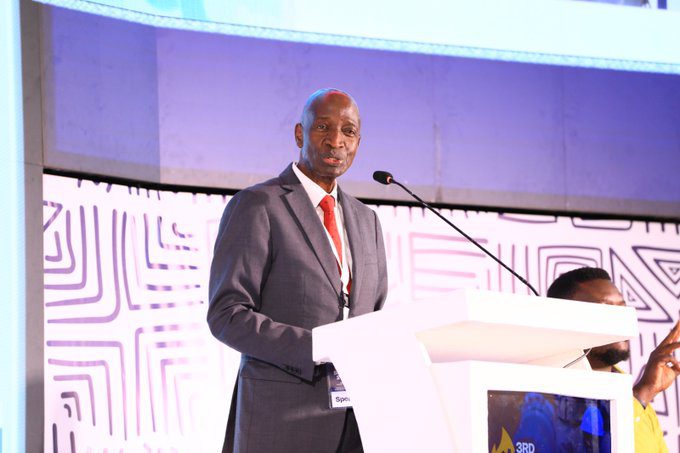
“Overall, the total employment impact of the industry approached 200,000 jobs, underscoring its substantial contribution to national employment creation, income generation, and Uganda’s economic growth,” Executive Director of the Petroleum Authority of Uganda, Ernest Rubondo said while speaking at the Third Oil and Gas Skills Expo 2026 held at Makerer University under the theme, “From Oil and Gas to the Wider Economy: Transferable Skills Driving Sustainable Growth,”
He however said the industry has also generated about 50,000 indirect jobs through transport, hospitality, supply chains, and subcontracting, while broader economic activity linked to petroleum investments supported an estimated 140,000 additional jobs.
Meanwhile Petroleum Authority has trained more than 14,000 Ugandans in petroleum-related skills through institutions including Makerere University, Uganda Petroleum Institute Kigumba, Kyambogo University, and Mbarara University of Science and Technology covering areas such as welding, scaffolding, heavy goods vehicle driving, and Health, Safety and Environment (HSE), with 14 institutions attaining international certifications including OPITO, EICTB, and City & Guilds accreditation.


In her remarks Under Secretary Ministry of Energy Grace Tusiime said government’s new National Petroleum Policy 2025 prioritises skills development, technology transfer, and collaboration between industry and academic institutions to benefit the youth.
“The recently launched National Petroleum Policy 2025 emphasizes skills development, technology transfer, innovation and stronger collaboration between industry and academia to prepare Ugandans for the evolving energy landscape,” Tusiime said adding that the policy promotes digital skills, innovation, and environmental stewardship as Uganda prepares for oil production.
The Dean of the School of Natural Sciences at Makerere University, Prof. Juma Kasozi, said investments from the oil and gas sector had strengthened university research and technical capacity.


In arelated development Prof. Augustine Ifelebuegu in his keynote Speaker at The two days Oil & Gas Skills Expo 2026 said oil and gas will remain a dominant source of energy for the next 50–70 years. However, Uganda must take deliberate steps to future-proof its petroleum workforce by ensuring these skills are transferable to the broader economy.
This years theme focuses on diversifying specialized petroleum knowledge to support overall economic growth as Uganda approaches commercial production
The goal is to ensure skills acquired in the oil and gas sector are applied to other sectors of the economy,shifting from just training for oil projects to ensuring long-term national economic development beyond the industry and enhancing the participation of Ugandans in senior technical and management roles.
The event also aims to Connect students and professionals with industry opportunities and practical skills, especially as over 14,000 have been trained by TotalEnergies and the Petroleum Authority of Uganda (PAU)
The event brought together stakeholders from the Petroluem Authority of Uganda, Ministry of Energy and Mineral Development, academia, and private players.
As of mid-2026, Uganda is on the brink of becoming a commercial oil producer, with first oil expected in July 2026.
The country holds 6.65 billion barrels of total oil in place in the Albertine Graben, with roughly 1.4–1.65 billion barrels technically recoverable. Production is projected to peak at 230,000 barrels per day (bpd) over a 25-30 year lifespan.
Uganda’s oil and gas sector is projected to generate over 160,000 to 200,000 jobs (direct, indirect, and induced) at the peak of development and production, as the country heads towards its first oil expected in late 2026


