





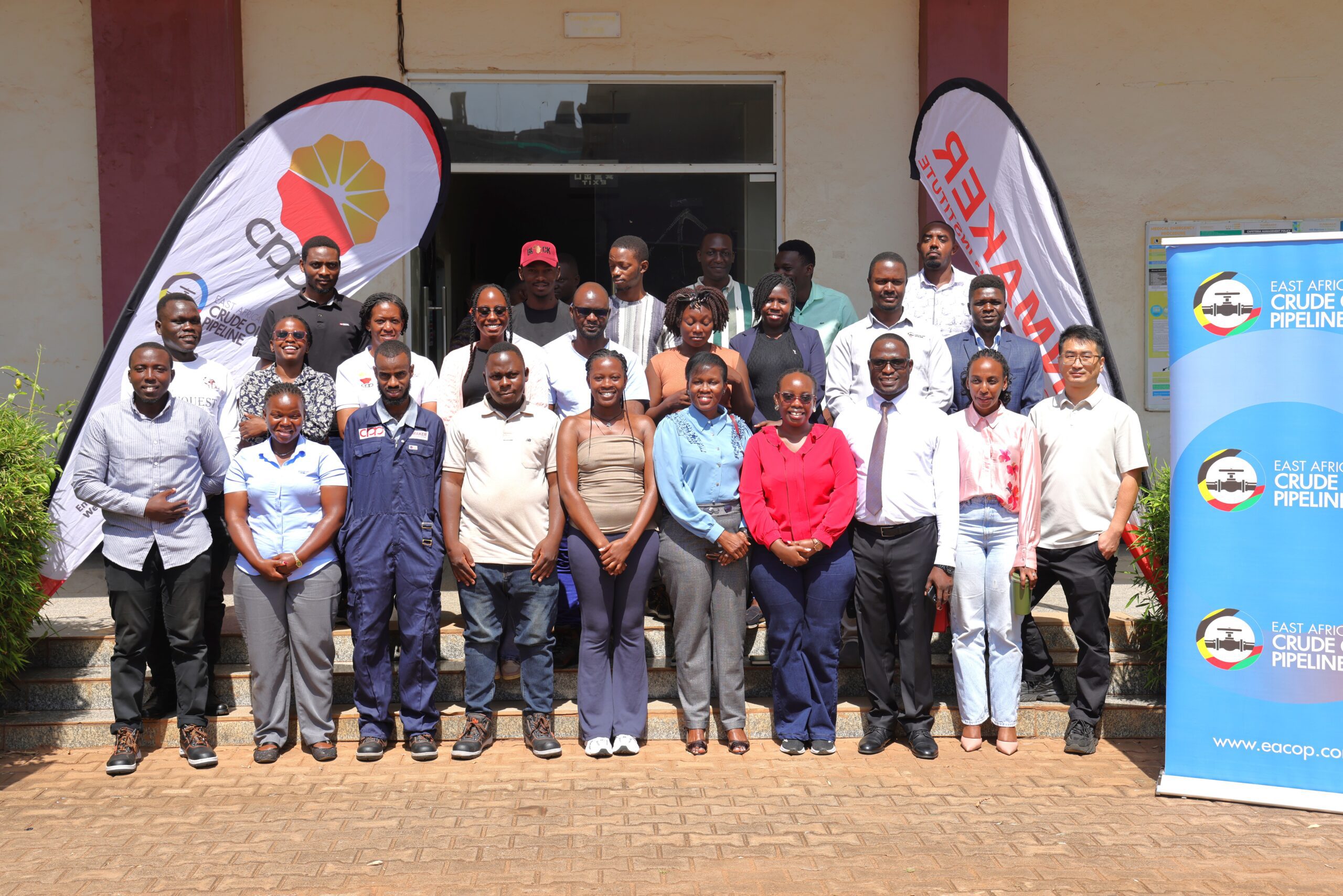
Twenty Ugandan workers on the East African Crude Oil Pipeline (EACOP) project have achieved a major milestone, completing over 360 hours of intensive training and earning internationally recognized professional certifications.
The milestone was marked by a graduation ceremony hosted by EACOP and its Tier-1 construction contractor, China Petroleum Pipeline Engineering Co. Ltd (CPP), alongside training provider Sunmaker Training Institute. The certifications equip local workers with highly transferable skills that extend far beyond the oil and gas sector.
The specialized training directly addresses severe skill shortages within East Africa’s infrastructure and safety sectors. The 20 graduates were split into two specialized tracks:


Ten professionals earned the NEBOSH International General Certificate, transitioning from on-the-job awareness to internationally benchmarked safety management.
Ten technicians qualified in NDT, a crucial engineering discipline used to inspect pipelines and heavy infrastructure for defects without altering or damaging the materials.
Prince Dalia, Head of Business Development at Sunmaker, noted that the region has long suffered from a deficit of certified professionals.
“The industry is short of qualified NDT inspectors, and it is awash with so many HSE (Health, Safety, and Environment) personnel who are not certified,” Dalia said. He emphasized that choosing global certifications ensures Ugandan workers can compete beyond localized networks.
The training initiative directly supports the Petroleum Authority of Uganda (PAU) national content regulations, which legally mandate oil and gas contractors to upskill Ugandan citizens.
The program included a mix of CPP’s direct staff and employees from local Tier-2 subcontractors, including Fulcrum and RIF Logistics.
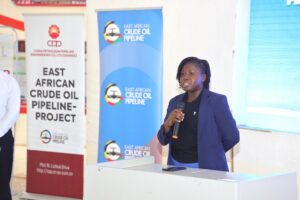
Maria Nahabwe, National Content Manager for EACOP in Uganda, explained that monitoring these training commitments across all contractor tiers ensures long-term human capital development.
“We are already receiving inquiries from as far as Kenya and Tanzania to see what skill sets we have that they can easily utilize as a region,” Nahabwe revealed, underscoring the regional marketability of the graduates.
As Uganda inches closer to commercial oil production, having certified local talent is non-negotiable for the upcoming operational phases.


Nansubuga Shirleen, Skills Development Officer at the PAU, put the achievement into perspective by comparing the credentials to elite international education.
“A student who has achieved NEBOSH is recognized on the same level as that student who has gone to the University of Leeds,” Nansubuga stated. “We are moving to the operations phase, and for us to achieve our first oil, we shall need certified Ugandans supporting in some of these aspects.”
For the graduates, the program offered more than technical skills—it fundamentally re-engineered their approach to workplace safety.
“I thought health and safety is all about observing, seeing what’s wrong or what is right,” said NEBOSH graduate Bukwanza Janet Gift. “But after sitting in a class of NEBOSH, I have come to know that safety is basically a culture. It all starts from top management down to the lowest level.”
While the training opens massive doors, program coordinators are urging graduates to maintain a broad mindset regarding employment. Because NEBOSH and NDT standards apply globally, these newly certified Ugandans are now qualified to work across manufacturing, civil construction, and heavy industrial sectors worldwide.


