


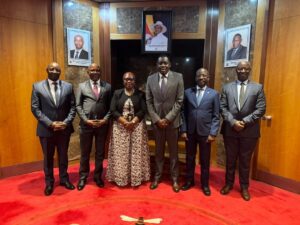





Construction of the African Union Humanitarian Agency headquarters is set to commence in Lubowa.
The African Union is a continental organization of 55 member states established in 2002 to replace the Organisation of African Unity. Its core goals are to boost economic integration, ensure peace and security, and promote human rights across Africa
The project is expected to strengthen the country’s role in continental humanitarian affairs,drive the African Continental Free Trade Area (AfCFTA) to build a single continental market and manage regional conflicts via the Peace and Security Council.


Minister of ICT and National Guidance Justine Kasule Lumumba told the media that Uganda emerged as the preferred host country after a rigorous assessment by the AU.
She said the agency would serve as a central institution in coordinating Africa’s humanitarian response as the continent continues to face challenges linked to conflicts, displacement, climate change, public health emergencies and natural disasters.
The AU General Assembly adopted the Common African Position on Humanitarian Effectiveness during an extraordinary session held in Addis Ababa on January 30, 2016.


The decision outlined the need to strengthen Africa’s humanitarian architecture, address the root causes of crises and develop lasting solutions by improving state and non-state institutions.
“Central to this was the proposal to establish an African Humanitarian Agency as the principal vehicle to spearhead continental humanitarian action,” Kasule Lumumba said.
She said preparatory work began the following year and led to the establishment of the African Union Humanitarian Agency.
Uganda competed with other countries interested in hosting the institution before winning the bid after AU teams assessed the country’s suitability.


Kasule Lumumba said hosting the agency would boost Uganda’s economic development and international profile by attracting diplomats, humanitarian experts, researchers and government officials from across Africa and beyond.
She added that the presence of the agency would increase demand for accommodation, transport, conference facilities, banking services, legal services, healthcare and other support industries.The Cabinet has decided that the project will be implemented in phases, with government first renting office space for technical teams in Rubaga as construction begins.
The headquarters is expected to be completed within two to three years.


