






Uganda is taking its financial inclusion drive to the global stage, seeking advanced Japanese technology and investment to supercharge the Parish Development Model (PDM), digitize local SACCOs, and fuel youth-led enterprises.
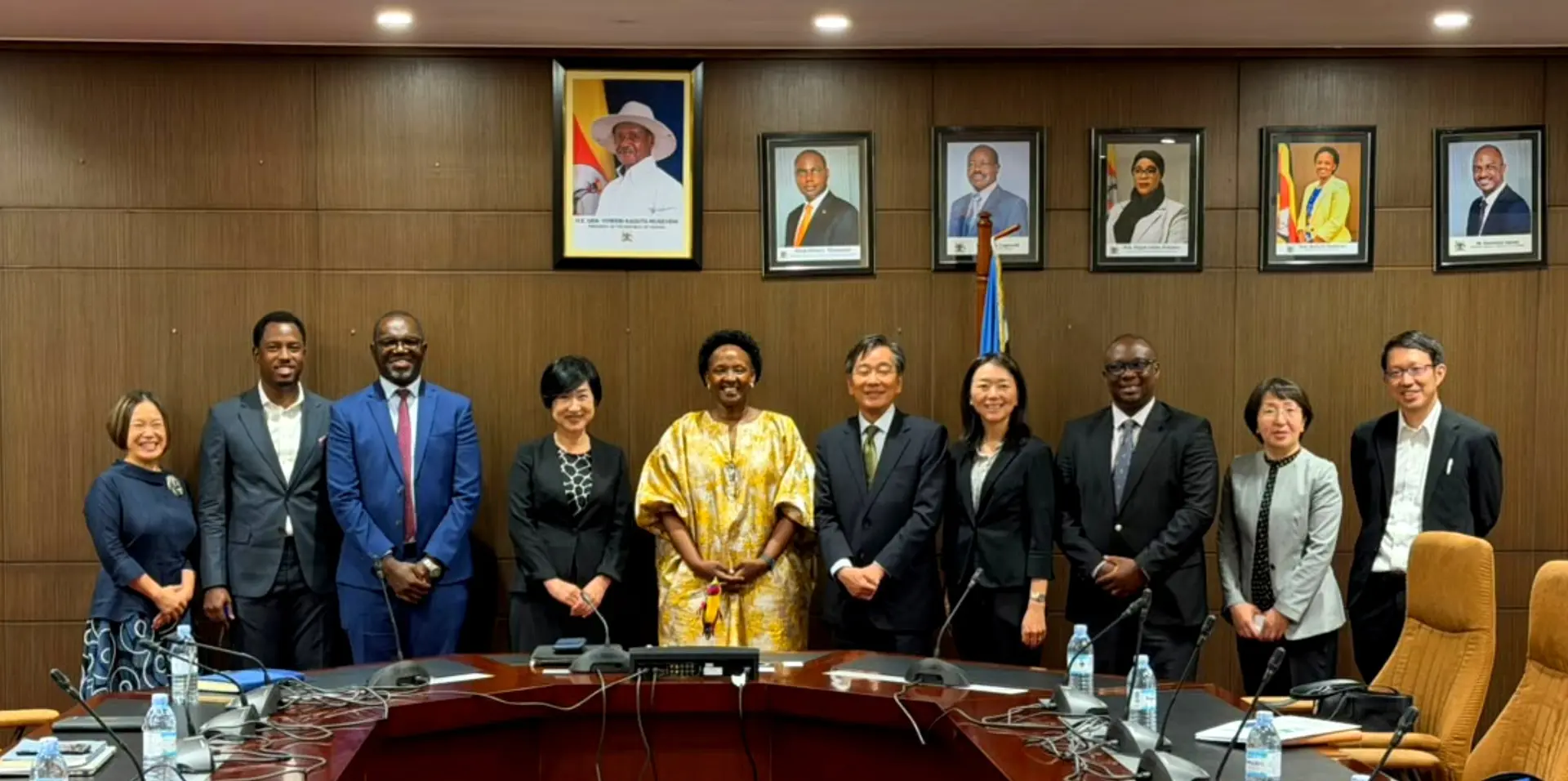
In a high-level bilateral meeting, Shartsi Musherure, the State Minister for Microfinance, held strategic talks with a Japanese delegation led by Takahashi Misako, Japan’s Director General and Assistant Minister for African Affairs, alongside the Japanese Ambassador to Uganda, Sasayama Takuya.


At the heart of the discussions was Uganda’s massive PDM initiative. Minister Musherure revealed that as of September 2026, the program has scaled exponentially, reaching an impressive 3,783,108 beneficiaries. With the government injecting Shs4.317 trillion into the Parish Revolving Fund across 10,589 PDM SACCOs nationwide, the initiative has outgrown its humble roots.
“The program is no longer simply a small loan initiative,” Minister Musherure emphasized. “It is becoming an important platform for bringing millions of Ugandans into the formal financial and productive economy.”
To sustain this momentum, Uganda is looking to marry its expansive microfinance infrastructure with Japan’s world-renowned technological prowess and institutional expertise. Top priorities include upgrading SACCOs with digital systems, tightening internal financial controls, and rolling out smarter savings products. Uganda also hopes to replicate Japan’s highly successful cooperative management models.

Empowering the Next Generation and Going Green
The talks also sparked blueprints for a proposed Uganda-Japan Youth Enterprise and Innovation Facility—a joint venture designed to fuse technical training and business literacy with direct access to credit and digital tools.
This builds on an existing foundation laid by the Japan International Cooperation Agency (JICA), which previously accelerated ten Ugandan startups across seven distinct industries.
Moving beyond traditional banking, the two nations explored eco-friendly economic growth through green financing. The proposed green initiatives focus on powering rural enterprises with solar energy, deploying solar-powered irrigation for farmers, and scaling clean cooking technologies.
“Uganda does not view microfinance simply as the provision of loans,” Musherure stated, aligning the goals with the country’s National Financial Inclusion Strategy II (2023–2028). “We want to build a sustainable financial ecosystem in which ordinary Ugandans can save, access affordable credit, invest, insure themselves, and manage risks to grow their businesses.”


A Two-Way Street: Tech for Trade and Critical Minerals
In response, Director General Takahashi Misako reaffirmed Tokyo’s commitment to Kampala, framing the partnership around Japan’s core African diplomacy pillars: peace, shared economic growth, and empowering the next generation.
While Uganda seeks digital and financial upgrades, Japan is eyeing strategic opportunities in East Africa. Misako expressed Tokyo’s keen interest in expanding cooperation across logistics, regional connectivity, science, and technology. Crucially, the delegates discussed potential partnerships in natural resources, targeting Uganda’s untapped critical minerals.
As talks continue to pin down specific project timelines, this evolving alliance promises to transform Uganda’s grassroots economy into a tech-driven, climate-resilient financial powerhouse.


