





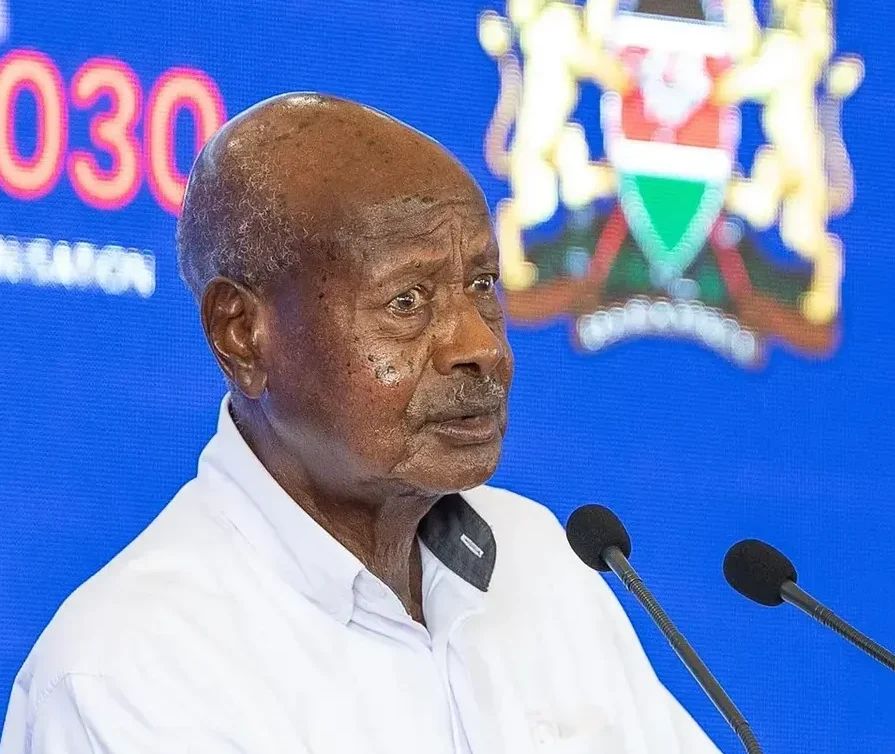
The East African Community (EAC) stands at a defining geopolitical crossroads. On one side is the immediate allure of financial pragmatism, embodied by Aliko Dangote’s colossal $16 billion, 700,000-barrel-per-day (bpd) East Africa Petroleum Refinery in Lamu, Kenya. On the other is Ugandan President Yoweri Museveni’s unwavering economic nationalism, anchored by a planned 60,000-bpd domestic refinery at Kabaale in Hoima District. Critics dismiss Uganda’s project as a redundant, sub-scale venture in a region soon to be dominated by a continental billionaire. However, Museveni’s refusal to bow to the weight of Nigerian capital is a masterclass in strategic foresight that challenges the historic vulnerabilities of African economies
At the heart of Museveni’s resistance is a fundamental macroeconomic truth: profit-sharing fails to resolve localized unemployment. When Dangote offered regional governments a combined 30% equity stake in the Lamu plant, Museveni countered that corporate dividends do not replace domestic industrial jobs. For decades, Africa has trapped itself in a neo-colonial cycle, exporting raw commodities—coffee, cotton, gold, and crude—only to import high-value finished products. The domestic Hoima refinery is designed to break this dependency. Rather than serving as a direct competitor to Dangote’s massive export hub, Hoima acts as the anchor for a localized petrochemical industrial zone. This strategy converts a raw national resource into sustainable, high-skilled Ugandan employment, transforming the country from a passive extractor into an active industrial player.


This refinery race has formalized a deep structural split within the EAC, pitting Kenya’s centralized megaproject strategy against the $20 billion Hoima-Tanga Bilateral Network co-developed by Uganda, Tanzania, and global energy trader Vitol Bahrain. For decades, Kenya’s Mombasa Port operated as the undisputed economic gateway to landlocked East Africa, giving Nairobi immense geopolitical leverage over Uganda, Rwanda, and South Sudan. The Lamu refinery was intended to supercharge this dominance via the Lamu Port-South Sudan-Ethiopia Transport (LAPSSET) Corridor. By bypassing Kenya for its crude oil pipeline in favor of Tanzania’s Tanga route, Uganda structurally shattered the Northern Corridor’s monopoly. The Hoima-Tanga axis establishes a rival Central Energy Corridor, permanently shifting the balance of regional transit power southward. Furthermore, utilizing Vitol Bahrain to bankroll the Tanga Hub counters Dangote’s single-site coastal powerhouse with a distributed network of storage terminals, maritime docks, and multi-product pipelines designed to capture value at every node of the supply chain.

Skeptics argue that Dangote’s massive scale will allow him to flood East Africa with cheap fuel and price Uganda out of its own backyard. However, basic logistics shield the Hoima project from predatory pricing. Coastal refineries must transport refined products inland via pipelines, rail, or trucks over thousands of kilometers. Moving fuel from the Kenyan coast to Kampala adds an estimated $15 to $25 per barrel in transport tariffs and cross-border logistics costs. The Hoima refinery sits directly on top of its feedstock in the Lake Albert basin. It can supply Uganda’s domestic market and neighboring regions (Rwanda, Burundi, Eastern DRC) with zero international maritime freight fees and minimal overland transport costs. Dangote’s fuel would have to be cheap enough at the coast to absorb the massive cost of moving it 1,200 kilometers inland just to match Hoima’s baseline price.
Additionally, Hoima enjoys a major feedstock advantage. Uganda’s crude is heavy and waxy, requiring the East African Crude Oil Pipeline (EACOP) to be continuously heated for export, which adds an operational tariff to every barrel. By diverting crude directly into the Hoima refinery before it enters the heated pipeline, the facility saves on export tariffs, securing its feedstock at a structural discount compared to international crude benchmarks.


The launch of these competing energy hubs will fundamentally alter local pump prices and economic competitiveness across the region. Historically, transit penalties made fuel in Kampala 15% to 20% more expensive than in Nairobi. Once Hoima begins operations, this dynamic will flip. Kampala will no longer pay a premium to its coastal neighbors, bringing its pump prices down to achieve parity with—or even undercut—Nairobi. Furthermore, refining crude locally removes the US dollar from the domestic fuel supply chain. While Nairobi remains exposed to foreign exchange shocks when buying crude, Ugandan consumers will be insulated from global currency fluctuations. This shifting price balance will trigger a massive macroeconomic ripple effect across key sectors in aviation.Fuel accounts for up to 50% of an airline’s operating costs. Jomo Kenyatta International Airport in Nairobi has long dominated regional refueling.


However, the Hoima refinery will produce Jet A-1 inside Uganda, eliminating the cross-border transit tariffs that historically inflated fuel prices at Entebbe International Airport. Entebbe is positioned to emerge as a highly competitive refueling hub, shifting lucrative commercial aviation revenue from Kenya to Uganda,the freight logistics sector will see an intense route war. Fleet operators utilizing the Hoima-Tanga network will have access to cheaper, locally refined diesel, directly lowering their operating cost per kilometer. Tanzanian and Ugandan logistics companies will be able to offer lower freight rates, pulling cargo traffic away from Mombasa’s Northern Corridor and channeling it through the Central Corridor and finally for landlocked agricultural exporters in western Uganda, Rwanda, and eastern DRC, cheaper locally refined diesel will drastically slash farm-to-port transport expenses, Ultimately, the “war of the refineries” highlights a clash over state sovereignty. Kenya’s strategy bets on pure commercial pragmatism, assuming that massive scale will render smaller operations unviable. President

Museveni, however, views energy through the lens of strict national security. Relying on a giant foreign hub—even one run by a continental billionaire next door—exposes Uganda to volatile port levies, pipeline transit fees, and the political whims of maritime neighbors. Backed by the legal foundations of the Uganda-Tanzania Inter-Governmental Agreement, infrastructure like the 1,716-kilometer Tanzania-to-Uganda Natural Gas Pipeline and the EACOP marine terminus are transforming the region into an integrated industrial platform. Museveni’s defiance of the Dangote mega project proves that true economic sovereignty cannot be bought out with corporate dividends; it must be built, refined, and retained at home boosting their global competitiveness.
Share your Thoughts here elixpromotionslitd@gmail.com


