





The Government of Iceland has approved an $8 million grant to construct schools and enhance critical water and sanitation infrastructure across the districts of Namayingo, Kwania, and Amolatar.
The extensive financial backing will directly fund local infrastructure developments spanning a three-year implementation window from 2026 to 2028.
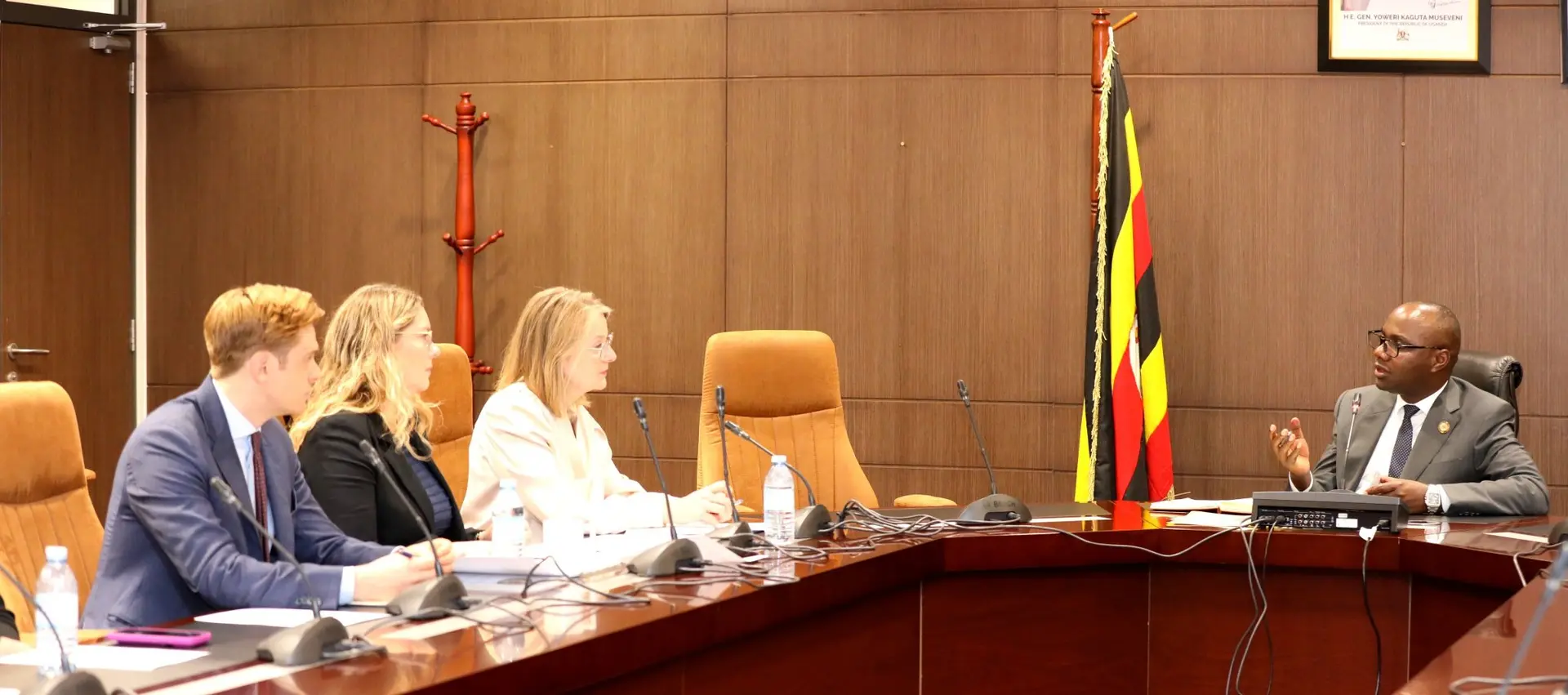
Katrín Einarsdóttir, Iceland’s Head of Mission in Kampala, officially announced the investment during a high-profile meeting with State Minister for Finance Henry Musasizi at the Ministry of Finance, noting that this package marks a significant resumption of cooperative development.
Musasizi welcomed Einarsdóttir and thanked Iceland for its support to Uganda, including projects in Kalangala, Buikwe and Namayingo districts.


He said Uganda’s tenfold growth strategy sets out its economic ambitions for the next 15 years. He invited Iceland to support the country’s priority sectors and the services that underpin them.
“We want you to attract foreign direct investments and tourists, support value addition and innovations. Promote Uganda as the best investment destination,” said Musasizi.
Einarsdóttir, who attended the meeting with her deputy and other officials, said Iceland would continue promoting Uganda and investing in education to support future generations.
She stressed the need for clear financial oversight and quality programmes to account for the funds to Icelandic taxpayers
This strategic funding expands upon Iceland’s long-standing district development presence in Uganda, which historically targeted fishing and vulnerable island communities in regions such as Kalangala, Buikwe, and Namayingo.


Einarsdóttir emphasized that strict financial transparencyand high-quality programming remain foundational to accounting properly for these resources to Icelandic taxpayers.
During the diplomatic exchange, Minister Musasizi expressed gratitude for Iceland’s unwavering support and leveraged the moment to introduce Uganda’s bold tenfold growth strategy, which serves as the economic roadmap for the next 15 years.
To achieve these ambitious targets, the Ministry of Finance formally extended an invitation for deeper economic partnership beyond traditional aid frameworks:
Iceland’s delegation confirmed it will remain an active partner in showcasing Uganda’s investment potential while prioritizing structural investments in primary education to nurture and empower future generations
Bilateral cooperation between Uganda and Iceland spans more than 25 years, focusing heavily on decentralized, district-based development programs. Formally established in 2000, the partnership is coordinated through the Embassy of Iceland in Kampala which opened in 2004.
The cooperation is heavily centered around the “district approach”—partnering directly with local governments to support fisheries, education, health, and Water, Sanitation, and Hygiene (WASH) infrastructure.


