

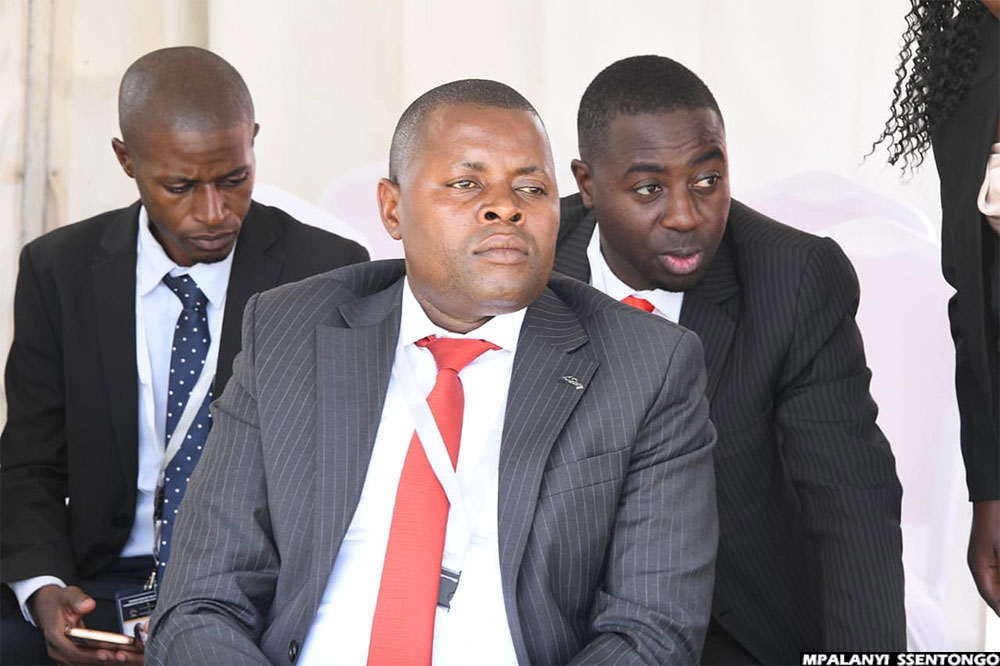
The Supreme Court of Uganda has granted Presidential candidate Kasibante Robert to withdraw his petition challenging the results of the January 15, 2026 presidential election,
In a unanimous decision court allowed the withdrawal of Presidential Election Petition No. 1 of 2026 and the accompanying application for discovery, which sought access to electoral materials and electronic voting systems used by the Electoral Commission.
Kasibante had filed the petition a day after the Electoral Commission declared Museveni the winner with 7,946,772 votes, representing more than 50 percent of the valid votes cast.
The petition alleged widespread non-compliance with electoral laws, including the use of ungazetted polling stations, failures in biometric voter verification systems, discrepancies in vote transmission, and alleged partisan involvement of the security forces.

Kasibante cited prohibitive financial and logistical constraints as key challenge to his progress with the case.
He told the court that prosecuting the petition would require extensive forensic audits of election data, including biometric records, servers, and electronic transmission systems, which would involve “exponentially high” costs beyond his financial capacity.
“The estimated cost of executing the audit and processing the data required for discovery has been determined to be financially prohibitive,” Kasibante stated in his affidavit, adding that without such evidence, the petition could not be sustained to the required legal standard.
All three respondents Museveni, the Electoral Commission, and the Attorney General did not oppose the withdrawal, though Museveni and the Commission initially sought costs.
The court ultimately ordered each party to bear its own costs, citing public interest considerations and access to justice.
In its ruling, the court noted that while a petitioner has the right to seek withdrawal, permission is discretionary.
It found that Kasibante had complied with all procedural requirements, including publication of the withdrawal notice in the Uganda Gazette.
The justices observed that Kasibante filed the petition “armed with mere suspicion” and later realized that the evidentiary and financial burden of pursuing a presidential election challenge was substantial.
“Refusing to grant the Applicant leave to withdraw the Petition would serve no meaningful purpose,” the court held.
As a legal consequence of the withdrawal, the court declared that the election result stands.
“There being no valid legal challenge of the results of the Presidential Election held on 15th January 2026, the candidate earlier declared by the Electoral Commission as the winner is conclusively taken to have been duly elected President,” the court ruled.
The decision marks the fifth presidential election petition to reach the Supreme Court since the promulgation of the 1995 Constitution.
One justice, Christopher Madrama Izama, dissented on the issue of costs, arguing that the law requires a withdrawing petitioner to pay respondents’ costs.
Kasibante’s withdrawal brings formal closure to the only presidential election challenge filed after the 2026