

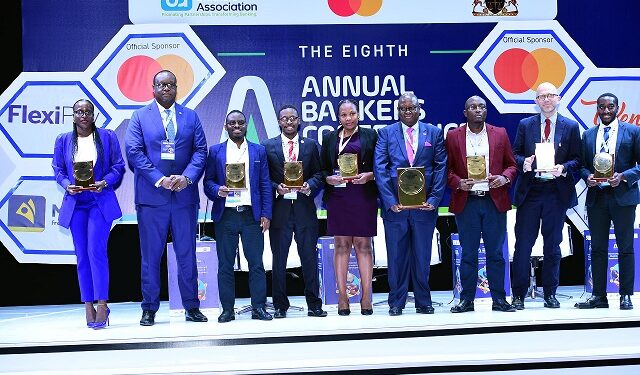
Uganda government has commended Stanbic Bank for its transforming the country’s remittance ecosystem, marking a significant milestone in the evolution of the financial sector.
Governor Bank of Uganda Dr. Michael Atingi-Ego,hailed the bank during the 8th Annual Uganda Bankers Association Conference held in Kampala themed ‘Harnessing the Potential and Maximizing the Impact of Remittances on Development’.
In his address, Dr. Atingi-Ego expressed admiration for financial institutions like Stanbic Bank that have taken bold strides in leveraging digital technology to enhance remittance services.
He highlighted that remittances are a vital component of Uganda’s socio-economic fabric and applauded the bank’s strategic move to improve digital platforms that empower the diaspora community and their families back home. These efforts have made banking more accessible, efficient, and cost-effective.
“In 2023 alone, Uganda received US$ 1.4 billion in remittances, accounting for nearly 3% of GDP. This is more than just a statistic; it reflects the resilience, sacrifice, and unwavering commitment of our diaspora, who continue to build bridges of hope and prosperity from afar,” he said.
Dr. Atingi-Ego also outlined ongoing efforts by the Bank of Uganda to support the remittance ecosystem through modernization and policy reform, including improvements in payment infrastructure, reduction of transaction costs, and fostering a regulatory environment conducive to innovation while maintaining financial stability.
“I invite stakeholders to share insights on your strategies within your mandates and recommend additional initiatives the BOU can pursue in collaboration with other stakeholders, as we work towards transforming Uganda’s remittance landscape,” he stressed.
Delivering a keynote address, Stanbic Bank’s Chief Executive, Mumba Kalifungwa, underscored the bank’s role as a key partner in Uganda’s development agenda.
“Financial institutions play a crucial role in unlocking the development potential of remittances. Stanbic Bank is not just a service provider; we are strategic partners in Uganda’s growth. Our Flexipay platform enables seamless cross-border transactions, reduces costs, and enhances economic resilience,” Mumba stated.
He emphasized the importance of sustainable collaboration to address sector bottlenecks, noting: “Perhaps the most powerful message is the need for continuous, strategic collaboration. The diverse stakeholders gathered here share the understanding that unlocking the full potential of remittances requires concerted efforts.”
Betty Amongi, Uganda’s Minister of Gender, Labour and Social Development, acknowledged the growing contribution of migrant workers to national income.
“As of 2024, remittances from migrant workers have reached USD 1.4 billion, up from USD 700 million in 2020. While migration remains a global phenomenon, Uganda must ensure these remittances flow through formal channels to enable proper tracking and maximize their developmental impact,” she said.
Salim Kitagenda, Head of Products at Stanbic Bank, highlighted the bank’s advancements in digital capabilities to serve both local and international customers better.
“From a payments perspective, we’ve partnered with global money transfer organizations to ensure faster transactions, lower costs, and seamless account management through FlexiPay,” he explained.
“Globally, approximately one billion people are impacted by remittances. Each year, around 200 million diaspora members send money home, supporting about 800 million family members. Over the past decade, remittances to low- and middle-income countries like Uganda have exceeded $5 trillion,” Kitagenda noted.
Launched in 2022, Flexipay has grown to become a popular digital payment platform, providing accessible and affordable financial services, especially for those without traditional bank accounts. In 2024 alone, the platform on boarded over 260,000 new users and processed more than 11,000 transactions, totaling sh30 billion.

According to the International Fund for Agricultural Development (IFAD), migrant workers send home approximately US$ 200 to US$ 300 every one to two months. While this represents about 15% of their earnings, these remittances can constitute up to 60% of a household’s total income, serving as a lifeline for survival, resilience, and growth.
Remittances bolster livelihoods, strengthen local economies, and contribute significantly to achieving the United Nations Sustainable Development Goals by 2030.
The Uganda Bankers’ Association (UBA) is an umbrella organization for licensed commercial banks supervised by the Bank of Uganda Established in 1981, it currently represents 23 commercial banks, the Uganda Development Bank, the East African Development Bank, and the African Export Import Bank UBA also includes associate members from other supervised financial institutions. The organization aims to promote and represent the interests of its member banks, develop best practices, and advocate for policy changes within the banking sector