




By Felix Oketcho
The thunderous, rhythmic pulse of a wooden drum echoes across the waters of Kawuku in Wakiso District, sounding less like a sporting cue and more like a heartbeat returning to a dying giant. A long, dragon-headed vessel slices through the glass-like surface of Lake Victoria, powered by twenty paddlers moving in perfect, adrenaline-fueled synchronization.
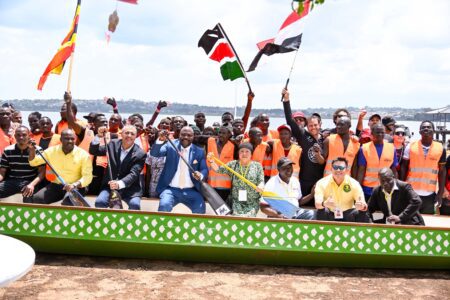
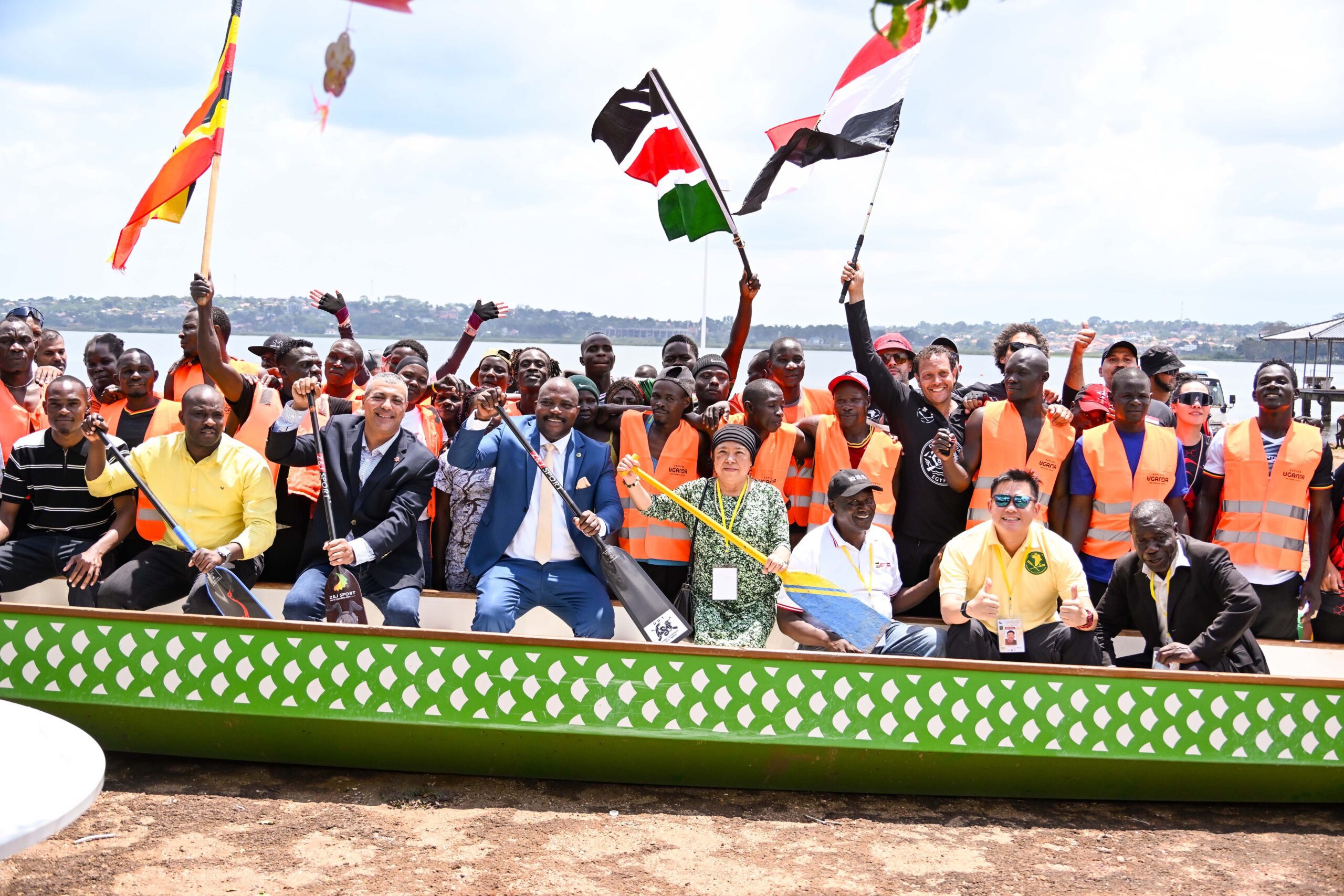
From October 1 to 4, 2026, this very shoreline took center stage as Uganda hosted the historic, inaugural Africa Dragon Boat Cup. Yet, beneath the roaring cheers and flying spray lies a deeper, quiet revolution. The true triumph of Uganda’s newborn water-sports boom isn’t measured in gold medals, but in the survival of Africa’s largest freshwater ecosystem.

For decades, Lake Victoria has endured a slow ecological heart attack, choked by plastic pollution, destructive sand mining, and severe shoreline encroachment. But the sudden rise of dragon boat racing is pulling the lake back from the brink by doing what decades of top-down environmental policy failed to do: giving local communities a direct financial stake in its survival.
To secure pristine racing lanes in places like Nakiwogo Bay in Entebbe, local mobilization committees partnered with municipal waste collectors to clear over 120 tons of choking plastic debris and invasive aquatic weeds, reclaiming vulnerable buffering wetlands. The math is simple: international athletes cannot paddle through floating plastic bottles, and racing lanes must remain unobstructed by the creeping water hyacinth.
By transforming an endangered waterway into a premium eco-sports sanctuary, Uganda’s newest sports boom is turning the lake’s primary exploiters into its fiercest guardians—offering an undeniable, immediate financial incentive to protect their liquid goldmine.
“We are proving that a clean lake is a highly profitable lake,” notes an official from the Uganda Dragon Boat Federation’s environmental compliance committee. “When local youth transition from illegal sand mining to becoming safety marshals, and local fishermen realize that guiding sports tourists pays better than overfishing depleted stocks, they naturally become the fiercest guardians of the shoreline.”

For thirty-four years, Godfrey Sserwadda knew the waters of Lake Victoria only as a battleground for survival. Like generations before him, he spent his nights casting increasingly desperate nets into the depleting, overfished waters of Murchison Bay.
“The fish were disappearing, and the nets were coming up full of plastic bottles instead of tilapia,” Sserwadda recalls, calloused hands resting on a sleek, carbon-fiber paddle. “To feed my family, I had to fish longer hours using illegal, fine-mesh nets just to catch anything. We were killing the lake, but we had no choice.”
Everything changed when the Uganda Dragon Boat Federation recognized that local fishermen possessed an invaluable, elite asset: an unparalleled, instinctive literacy of the water and unmatched physical stamina. Recruited into a local racing club, Sserwadda’s raw rowing power quickly turned him into a star athlete.

Today, Sserwadda’s relationship with the lake has completely transformed. Instead of depleting the water, he makes a sustainable living as a certified dragon boat coach, managing boat rentals for domestic tourists and serving as a safety marshal during high-profile regattas.
“When I was a fisherman, the lake was just a food source to be emptied,” Sserwadda says softly, watching a youth team launch from the cleaned shores of Kawuku. “Now, this water is our stadium, our sanctuary, and our future. If we let it get polluted, we lose everything. I used to take from the lake—now, I protect it.”
To appreciate the scale of Lake Victoria’s ecological recovery, one must look at the data validated by local environment officers ahead of the October 2026 games. Marine sporting events demand pristine, debris-free water; a single floating plastic bag can catch on a dragon boat’s rudder, instantly ruining a team’s time or causing a catastrophic capsizing. This rigid sporting requirement triggered an unprecedented corporate and community cleanup mobilization across Uganda’s most endangered aquatic pathways.

According to municipal collection logs in Wakiso, a combined haul of 122.7 metric tons of solid waste was extracted from the racing corridors. This waste was not merely moved from the water to a landfill. In a collaborative green initiative with local recycling plants in Wakiso, over 60% of the recovered plastics were pelletized and transformed into eco-friendly building materials and durable mooring buoys for the racing lanes, completing a circular economy loop born entirely out of sport.
Beyond the physical cleanup, the dragon boat racing boom is breathing structural enforcement into Uganda’s environmental legislation—specifically the National Environment (Wetlands, River Banks and Lake Shores Management) Regulations. For decades, Section 29 of this framework—which mandates a protected 30-meter buffer zone from the highest water mark of Lake Victoria—has been openly flouted by illegal sand miners, brick makers, and unregulated hospitality developers.
Dragon boat racing has completely flipped the economic script for lakeside land use, creating a powerful argument for strict policy compliance.
First, the sport depends entirely on intact wetlands. Dragon boat courses require calm, stable water. Intact shoreline wetlands act as natural wave breakers and filters; when developers destroy papyrus swamps to build permanent structures, they trigger heavy silting and erratic wave action, rendering the waters completely unusable for international racing.
Second, this shift has transformed local government enforcement. Municipal councils in Wakiso and Entebbe have traditionally struggled to enforce eviction notices on illegal shoreline encroachers due to local economic dependencies. However, the multi-million-shilling eco-sports tourism revenue generated by the Africa Dragon Boat Cup has given these local governments a powerful mandate to strictly enforce the 30-meter exclusion zone.


“We used to view NEMA’s wetland policies as restrictive laws that stopped us from using our land,” admits a local council official from Wakiso’s environmental committee. “But the dragon boats have shown us that an intact, green wetland buffer is a magnet for international investment. We are no longer just enforcing a law; we are protecting an economic asset.”
“Tourism is an intensively capital-driven sector, and to scale our economy, we must move aggressively beyond conventional narratives,” states Julian Kaggwa, CEO of the Uganda Tourism Board. “Marine sports diplomacy—like the historic rollout of the Africa Dragon Boat Cup on our waters—perfectly aligns with our mandate to position Uganda as a globally competitive destination. Broadening our identity allows us to capture affluent new source markets. By anchoring these events through private sector frameworks, we actively feed directly into Uganda’s overarching goal of building a transformative economy.”
The immediate economic impact ripples directly into local commerce and infrastructure.


“From a hospitality perspective, dragon boat racing represents an immediate boost to occupancy and local value chains,” explains Susan Kabonero Muhwezi, Chairperson of the Uganda Hotel Owners Association (UHOA). “Unlike solo travellers, marine sports bring large, structured corporate and international delegations requiring extensive blocks of accommodation, catering, and transit services. The hospitality sector is primed to anchor this growth. We want to see these high-yield water sports festivals transformed into permanent fixtures on the national calendar, filling our hotels and keeping the domestic hospitality ecosystem vibrant year-round.”
Private tour providers see an opportunity to merge marine recreation with traditional conservation experiences upcountry.


“Quality hospitality and innovative itineraries form the literal backbone of our tourism strategy,” adds Civy R.N. Tumusiime, Chairperson of the Association of Uganda Tour Operators (AUTO). “Dragon boat racing gives tour operators an incredible leverage point to design high-value ‘sports-and-safari’ crossover packages. Our international guests shouldn’t just row and leave; we are positioned to transition hundreds of incoming elite athletes from the racing lanes of Lake Victoria directly onto our world-class tracks for mountain gorillas and wildlife safaris. It is about converting a three-day regatta into a multi-week, high-spending expedition across the country.”
Industry veterans underscore that utilizing aquatic resources effectively changes the baseline of national marketing.

“We have been over-reliant on conventional tourism formulas for far too long,” concludes Amos Wekesa, Founder & CEO of Great Lakes Safaris. “Look at how modern events change economic trajectories overnight. We proved the power of sports tourism when we launched the marathon circuits, and water sports hold that exact same disruptive potential. Lake Victoria is an incredible asset that we are letting sit idle. The global dragon boat community is massive, highly affluent, and deeply connected to global corporate networks. If we build the right infrastructure, market aggressively, and tell our story boldly, this sport will bring unprecedented foreign exchange directly to our shores.”
As the sun sets over Lake Victoria, casting a golden hue across the pristine waters of Kawuku, the final dragon boat of the day glides gracefully back to the docks. The scene is a stark, beautiful contrast to the choked, neglected shoreline of recent years.
What the conservation community must take away from Uganda’s dragon boat boom is a profound truth: the environment cannot be saved by fences and fines alone, but by aligning its survival with human progress. By transforming Lake Victoria from an open-access dump into an elite, international athletic sanctuary, Uganda has unlocked a scalable blueprint for community-led conservation.
The sport has done something extraordinary—it has proven that a thriving ecosystem is the bedrock of local economic survival. For Sserwadda and hundreds of youth along the shoreline, the pulse of the dragon boat drum is no longer just a call to race; it is the sound of their lake, and their livelihoods, roaring back to life.