







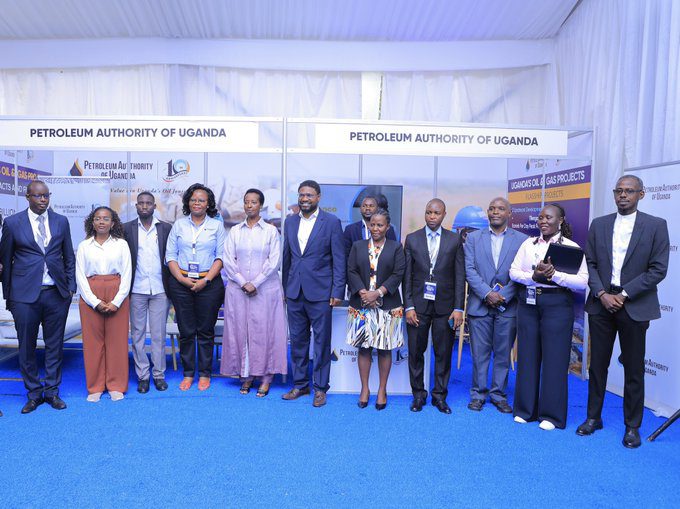
Uganda has been urged to leverage the skills developed in its oil and gas sector to drive broader economic growth and long-term national development.
Delivering the keynote address at the 3rd Oil and Gas Skills Expo held at Makerere University, Professor Augustine Osamor Ifelebuegu, who has 2 decades of oil and gas experience in the UK, US, Middle and Africa, emphasized that the country’s success will depend not just on oil production, but on its ability to translate petroleum expertise into wider industrial capability.
Speaking under the theme “From Oil and Gas to the Wider Economy: Transferable Skills Driving Sustainable Growth,” Prof. Ifelebuegu highlighted that the oil and gas industry builds advanced competencies in areas such as safety management, project execution, environmental protection, and logistics—skills that are highly transferable across sectors.
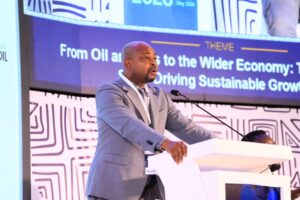

He noted that applying the high standards seen in Uganda’s Tilenga and Kingfisher projects to sectors like construction and infrastructure could significantly improve productivity, efficiency, and safety.
The Professor called on Uganda to avoid the risk of an “enclave economy,” where oil and gas development remains isolated from the rest of the economy. Instead, he urged stakeholders to focus on “capability multiplication,” ensuring that skills developed in the petroleum sector benefit industries such as manufacturing, agriculture, renewable energy, and transport.
He further outlined key pathways to achieving this, including strengthening technical and vocational education, supporting local suppliers, promoting research and innovation, expanding digital skills, and enhancing inclusion of women and youth.
Prof. Ifelebuegu also emphasized the need for universities to align training with industry needs by prioritizing practical skills, digital literacy, and problem-solving.
“The true value of oil lies not only in what is extracted from the ground, but in the human capability developed above it,” he said.
Prof. Ifelebuegu concluded by urging stakeholders to recognize that the true value of oil lies not just in underground reserves, but in the human capital developed through the sector.
“The pipeline will be completed, and the wells will mature, but the competence developed today can power Uganda for generations,” he said.
He noted that graduates trained in oil and gas are already contributing to other sectors such as water, agriculture, aviation, and renewable energy, demonstrating the sector’s wide-ranging impact.
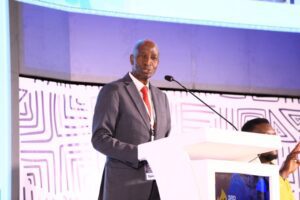
Mr. Ernest Rubondo, Executive Director, Petroleum Authority of Uganda in his remarks noted that the “The theme for this year’s Expo was very timely because it aligns with the current stage of development of Uganda’s oil and gas sector which is progressing towards the commencement of commercial oil production, and the need for deliberate efforts to be made for the knowledge, skills, and experience acquired by Ugandans in the sector to be transferred to the wider economy. This was particularly important as manpower requirements reduce when the sector transitions from construction to the operations phase.
He noted that Government, working closely with industry players and local training institutions, have invested in developing a highly skilled workforce to support the country’s oil and gas sector. These efforts had resulted in the training of over 200 Government officials in oil and gas disciplines.
In addition, more than 14,000 Ugandans had been trained at institutions including in country in aspects like Heavy Goods Vehicle driving, welding, Health, Safety and Environment, and scaffolding, among others all of which were transferable to other sectors of the economy. The capacity building efforts had led to generation of close to 200,000 jobs in the country’s oil and gas sector with Ugandans occupying close to 90% of those jobs.
The Oil and Gas Skills Expo is an annual event aimed at promoting skills development, local participation, and knowledge transfer within Uganda’s emerging petroleum sector. The 2026 edition attracted over 3000 participants from academia, government, and industry.


