







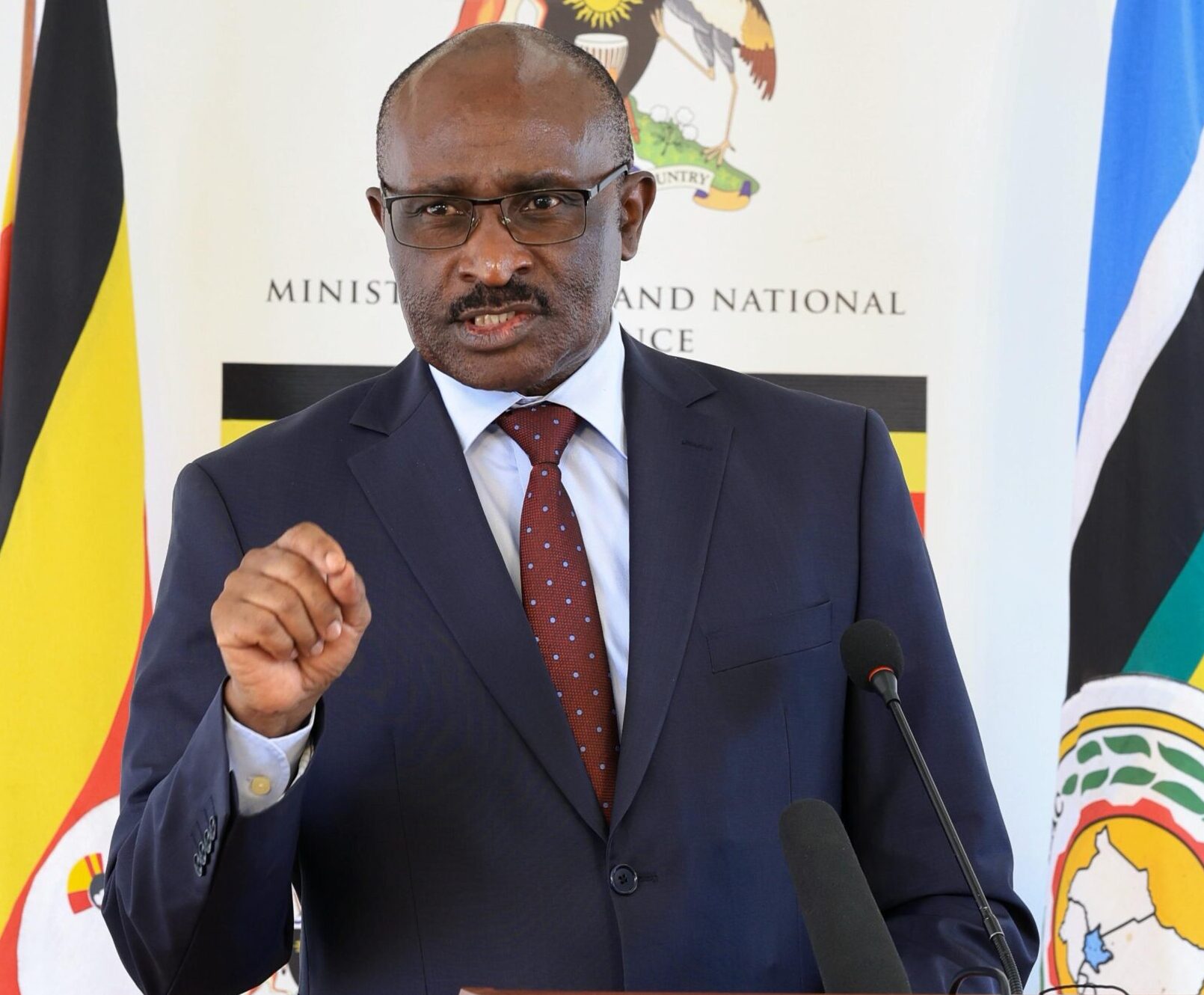
Uganda on 12th June commemorated World Day Against Child Labour at Bugadde Primary School, Bugadde Town Council, in Mayuge District under the theme: “Accelerating Action to End Child Labour: Dignity and Full Potential of Every Child.”
This day provided an opportunity for the government,the International Labour Organization, employers, workers’ organizations, civil society, development partners, academia, religious and cultural institutions, the media, communities, parents, guardians, and all stakeholders to reflect on the progress made, the challenges that remain, and the collective action required to eliminate child labour in Uganda.
Child labour refers to work that deprives children of their childhood, dignity, education, health, safety, and full potential. It includes work that is mentally, physically, socially, or morally harmful to children, and work that interferes with their schooling by denying them the opportunity to attend school, forcing them to leave school prematurely, or requiring them to combine school attendance with excessively long, heavy, hazardous, or exploitative work.
Child labour is not the same as age-appropriate household responsibility, family guidance, or light work that does not harm a child’s health, education, dignity, or development. The concern is work that exploits children, exposes them to danger, keeps them away from school, or uses their vulnerability for economic gain.
According to the 2020 ILO and UNICEF report titled Child Labour: Global Estimates, Trends and the Road Forward, approximately 160 million children globally were engaged in child labour at the start of 2020. Of these, 63 million were girls and 97 million were boys. Nearly half of these children, about 79 million, were involved in hazardous work that endangered their health, safety, and moral development.
Child labour remains most prevalent in low and middle-income countries and is deeply rooted in poverty, inequality, household vulnerability, limited access to quality education, weak enforcement, family enterprises, informal economies, and social exclusion. In Uganda, child labour continues to manifest in agriculture, domestic work, fishing, mining, informal trade, market work, transport-related activities, street-based activities, and other sectors where children remain vulnerable to exploitation.
Government recognizes that child labour is not merely a labour issue. It is a development issue, a justice issue, a protection issue, and a national transformation issue. A child who is kept out of school today becomes an adult whose future opportunities are limited tomorrow. Therefore, ending child labour is central to building a skilled, productive, healthy, and prosperous Uganda.


Interventions by Uganda government in addressing Child Labour
The Government of Uganda has put in place legal, policy, and institutional measures to prevent and eliminate child labour. These include strengthening labour inspection systems, enhancing child protection structures, improving coordination among Government agencies, and working with development partners and communities to identify and respond to cases of child labour.
Labour inspectors have been trained to identify child labour in workplaces and to use appropriate tools and checklists for detection, reporting, and referral. These efforts are intended to ensure that child labour is not hidden in farms, homes, shops, workshops, markets, factories, construction sites, or informal workplaces.
Government has also put in place poverty eradication and wealth creation programmes such as the Parish Development Model, the Presidential Initiative on Wealth and Job Creation, Emyooga, the GROW Project, the Empowering Informal Businesses into Formal Growth Programme, commonly known as Jua-Kali, and the National Apprenticeship Programme, among others. These programmes are designed to improve household incomes, create productive jobs, strengthen livelihoods, and reduce the poverty pressures that often push children into work.
When parents and guardians have reliable incomes, children are more likely to remain in school, access basic needs, and grow in a safe and supportive environment. Therefore, the fight against child labour must go hand in hand with job creation, household income improvement, decent work, education, skills development, and social protection.
Key governance structures for addressing child labour have also been strengthened. The National Steering Committee on the Elimination of Child Labour and the National Technical Coordination Committee on Alliance 8.7 were established to coordinate multi-stakeholder action and provide strategic oversight for eliminating child labour in Uganda.
In addition, the Labour Advisory Board, established under the Employment Act, continues to advise on labour and employment matters, including conditions of work, wages, labour policy, and the protection of workers. The operationalisation of the Child Labour, Slavery and Trafficking Section and the establishment of a dedicated prosecution mechanism within the labour sector demonstrate Government’s commitment to enforcement and accountability.


Current Challenges
However, despite this progress, the challenge remains serious. Children are still being employed in exploitative conditions. Some are found in markets, garages, plantations, homes, workshops, streets, and informal businesses. Others are engaged in hazardous work that exposes them to injury, abuse, long hours, low or no pay, and denial of education.
Government therefore warns all employers, intermediaries, guardians, business operators, and individuals who employ, recruit, harbour, transport, or benefit from the exploitation of children that such conduct is unacceptable and will be addressed within the law. Uganda’s development cannot be built on the suffering, exclusion, and exploitation of children.
Government is also concerned about the growing number of vulnerable children on the streets of Kampala and other urban centres. As a country, we must ask difficult but necessary questions: Who brings these children to the streets? Who transports them? Who accommodates them? Who deploys them? Who controls them? Who benefits from their suffering?
Many of these children are vulnerable and come from poor households and fragile communities, including from Karamoja and other parts of the country. Some are exposed to organized begging, street vending, forced labour, trafficking, abuse, and other forms of exploitation. This is not simply a matter of poverty or public nuisance. Where adults recruit, transport, harbour, control, deploy, or profit from children, it becomes a matter of exploitation and criminal accountability.


Way forward
Government will strengthen collaboration between the Ministry, local governments, security agencies, probation officers, child protection actors, cultural and religious leaders, communities, and development partners to identify, investigate, disrupt, and prosecute networks that exploit children on the streets and in workplaces.
At the same time, the response must remain humane and child-centred. Children found in exploitative situations should not be treated as offenders. They are victims of vulnerability, neglect, poverty, trafficking, or manipulation. They require rescue, rehabilitation, family tracing, reintegration, education, psychosocial support, and livelihood support for their families where appropriate.
Eliminating child labour requires addressing its root causes, including poverty, limited access to quality education, unemployment, inequality, violence against children, trafficking, weak enforcement of labour laws, and inadequate community protection systems. Government remains committed to strengthening labour administration, expanding social protection, improving access to education, and enhancing enforcement mechanisms to protect children from exploitation.
As Uganda commemorates the World Day Against Child Labour 2026, the Ministry of Gender, Labour and Social Development reaffirms its commitment to protecting children from exploitation, promoting decent work, strengthening labour administration, and supporting inclusive socio-economic transformation.
While important progress has been made, the Ministry recognises the need to further strengthen the effectiveness, responsiveness, and impact of labour sector interventions. Going forward, greater emphasis will be placed on ensuring that programmes and initiatives translate into measurable improvements in the lives of children, workers, families, and enterprises.
The Ministry will progressively strengthen a results-oriented approach to labour sector management. Success will increasingly be assessed not only by activities undertaken, but by outcomes achieved, including children protected from exploitation, workers safeguarded from abuse, jobs sustained, incomes improved, enterprises strengthened, and workplaces made safer and more productive.
The Ministry will continue to strengthen labour inspection, occupational safety and health systems, labour dispute prevention and resolution mechanisms, child labour monitoring and response, and productivity enhancement initiatives within both the formal and informal sectors. Particular attention will be given to risk-based targeting, improved data systems, evidence-informed decision-making, and greater operational efficiency.
Government will also continue to strengthen efforts aimed at addressing the underlying drivers of child labour, including poverty, unemployment, vulnerability, limited economic opportunities, and inadequate access to skills development. In this regard, programmes that support household incomes, enterprise development, job creation, and social protection remain important components of the national response.
The Ministry will work with relevant stakeholders towards strengthening labour market information systems capable of linking vacancies, wages, skills demand, TVET outputs, productivity trends, employer requirements, and employment opportunities. Such systems will support more informed planning and better alignment between skills development and labour market needs.
Government will also continue to strengthen Uganda’s labour migration and externalization framework to ensure that labour mobility remains safe, orderly, regular, and beneficial to workers and the country. Priority areas will include stronger Bilateral Labour Agreements, improved labour consular support, enhanced oversight of recruitment agencies, strengthened migrant-worker traceability systems, improved pre-departure preparation, and more effective reintegration support for returning migrant workers.
The Ministry will continue working with local governments, security agencies, employers, workers’ organisations, development partners, civil society organisations, cultural institutions, religious leaders, and communities to strengthen prevention, identification, reporting, rescue, rehabilitation, reintegration, and enforcement efforts aimed at eliminating child labour in all its forms.
Particular attention will be given to emerging forms of child exploitation, including hazardous work, trafficking, street-based exploitation, forced begging, and other practices that deny children their rights, dignity, education, and future opportunities. Sustainable solutions will require coordinated action across Government and society as a whole.
Ultimately, the objective remains clear: to build a Uganda where children are protected, workers are respected, enterprises are productive, workplaces are safe, household incomes are improved, and labour mobility contributes positively to national development.
Call to Action
I call upon employers, workers’ organizations, local governments, development partners, civil society, communities, parents, guardians, religious leaders, cultural leaders, and the media to work together in preventing and eliminating child labour in all its forms. Every stakeholder has a responsibility to ensure that children are protected, remain in school, and grow in a safe and supportive environment.
As we commemorate the World Day Against Child Labour 2026, let us renew our collective commitment to safeguarding the rights, dignity, and future of every child. Together, we can build a Uganda where every child is free from exploitation, has access to education and opportunity, and is empowered to realize their full potential.
The final performance test for all of us must be clear: children protected, workers protected, jobs sustained, incomes improved, enterprises upgraded, workplaces made safer, and labour mobility converted into a national development asset.
By working together, we can accelerate progress towards ending child labour and securing a better future for our children and our nation.
By Simon Mulongo
Minister of State for Gender, Labour and Social Development in Charge of Labour, Employment and Industrial Relations


