






Anew study by Economic Policy Research Centre (EPRC) indicates that uganda smallholder farmers across the country dont have access to irrigation systems despite increasingly frequent droughts affecting agricultural production.
Agriculture employs 37.1% of the total Ugandan workforce. With over 60% of households engaged in farming, the sector forms the backbone of the economy, drives rural development, and contributes roughly 24% of the national GDP
The study attributes the low adoption to expensive co-financing requirements attached to government irrigation support programmes, making them inaccessible to many smallholder farmers.
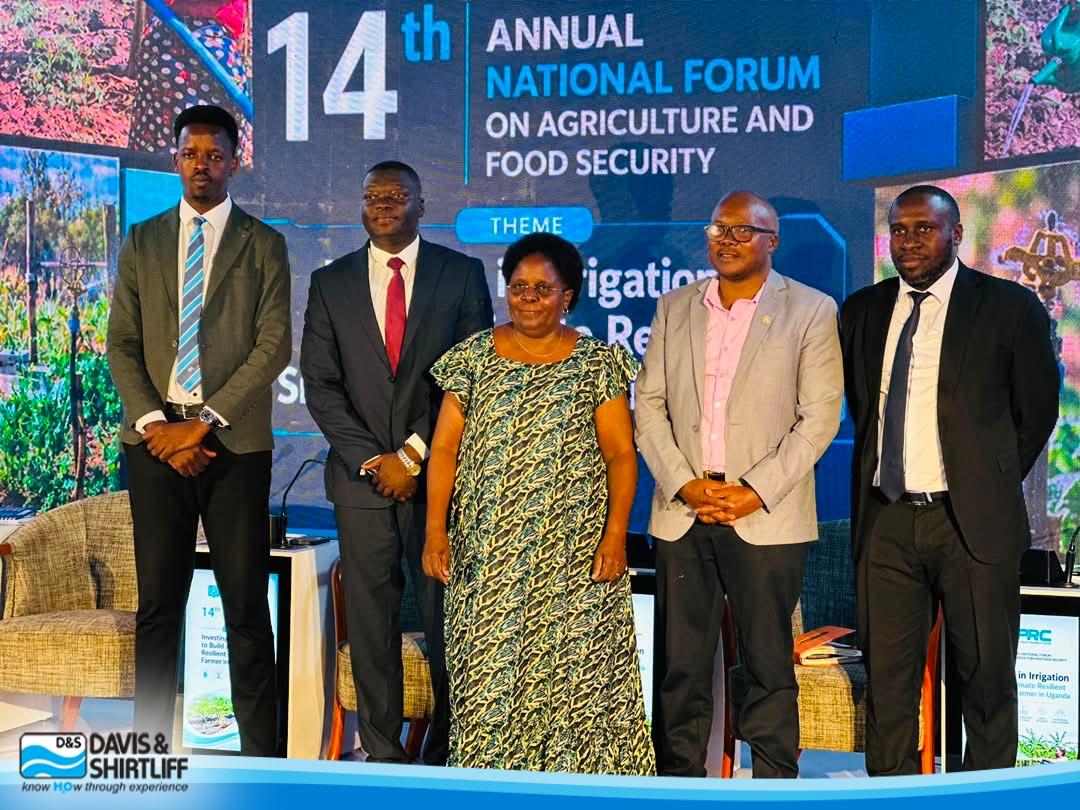
Speaking at the 14th Annual National Forum on Agriculture and Food Security, Dr. Christine Arwata, a Research Fellow at the Makerere University-based policy think tank, said a nationwide study found that only 3.5 percent of farming households use irrigation.
Arwata noted that regions most affected by drought also record the lowest irrigation uptake.


According to the study, irrigation use remains below five percent in Eastern and Northern Uganda.
In Northern Uganda, nearly nine out of ten households live in communities that experienced drought during the previous farming season.
As droughts and other climate change-related challenges continue to affect agricultural productivity, the government, through the Ministries of Finance and Agriculture, has, over the years, introduced various programmes aimed at promoting irrigation among smallholder farmers.
Access to water has consistently been identified as one of the major constraints to agricultural production. However, EPRC’s findings indicate that many of the existing irrigation financing models are beyond the reach of smallholder farmers.
While some farmers are aware of the available programmes, many are unable to participate due to the high financial requirements.


Arwata explained that the co-financing arrangements attached to most irrigation support programmes remain unaffordable for small-scale farmers.
She cited the Uganda Intergovernmental Fiscal Transfers pilot programme, launched in 2020 to provide grants for machinery acquisition, among other interventions.
More than five years later, uptake remains low despite expectations that the initiative would help farmers move beyond rain-fed agriculture.
Meanwhile Dr. Brian Sserunjogi an independent researcher argued that Uganda’s current agricultural financing models are largely unsustainable because many fail to progress beyond pilot phases and donor funding.
He said there is a need for a long-term financing strategy, noting that partial subsidies have not delivered the desired impact.
Briton Kananura, an Irrigation Engineer at Davis & Shirtliff Uganda, said improving awareness among farmers is critical to increasing irrigation adoption.
He noted that irrigation should be understood as more than simply watering crops and that financing alone cannot address the challenge.
Kananura said the company has developed portable irrigation kits tailored to the needs of smallholder farmers. He emphasized the importance of extension services, warning that inappropriate irrigation practices can negatively affect agricultural production.


He said agro-industrialization, which includes irrigation, is a key component of the government’s tenfold growth strategy. Mugagga revealed that the agro-industrialization sector received 1.8 trillion shillings in the current financial year and is expected to receive 2.2 trillion shillings in the next financial year, with irrigation among the priority areas for investment.
Meanwhile, Uganda’s National Irrigation Policy targets increasing the country’s irrigated area to 1.5 million hectares by 2040. However, less than two percent of the country’s irrigation potential is currently being utilized.


