





Industrial progress is often measured by the numbers: tonnes of steel installed, kilometers of pipeline built, or megawatts of energy delivered. But there’s another measure that’s just as important, even if it doesn’t always make the headlines: who gets the opportunity to build that progress.In Uganda and Tanzania, that story is beginning to change.
For a long time, skilled trades such as welding, rigging, and heavy equipment operation have been seen as men’s jobs. It wasn’t always written down, but it was deeply ingrained in the way the industry worked. Today, that perception is gradually shifting.

More women are stepping into roles that were once considered out of reach, proving through their skill and performance that competence, not gender, is what defines excellence in the industry.
At the core of this project is a commitment to National Content; a strategy designed to ensure that the economic benefits of oil and gas infrastructure remain within host nations.
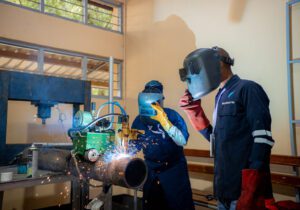
Working with institutions such as the Uganda Petroleum Institute Kigumba (UPIK) and vocational training colleges across Tanzania, the EACOP Academy and its tier-one contractors have developed specialized training programmes to equip local talent with practical, industry-ready skills.
Participants earn internationally recognized certifications, including those from the Engineering Construction Industry Training Board (ECITB) and OPITO, in high-demand technical fields such as 3G and 6G coded welding, mechanical maintenance, non-destructive testing (NDT), and heavy equipment operation. These qualifications not only prepare trainees for work on the pipeline project but also give them skills that are recognized and valued across the global energy and construction industries.

EACOP’s National Content team notes that, “Our objective is not simply to build a pipeline, but to build local capacity that outlasts the construction phase.” To date, hundreds of local youths have entered these specialized pathways, retaining vital technical value within host communities.

The results are already visible in training yards across Buliisa, Hoima, Sembabule, and Tanga: Women now represent up to 25% of trainees in specialized midstream technical cohorts, female operators are actively qualifying to maneuver heavy cranes, mobile workshop vans, and rigging setups required for pipe yard logistics.
Trainees are mastering high-precision automatic and manual welding techniques required for the world’s longest electrically heat-traced pipeline system.
For young women entering these programs, the training offers benefits beyond employment, it represents financial independence and leadership. “When people first saw me in a welding helmet, they thought it was too dangerous for a woman,” shares one trainee at UPIK. “Today, when they see my welds pass inspection, they see a qualified professional.”


Furthermore, as Uganda and Tanzania expand their industrial and energy infrastructure, these internationally certified female technicians will form a permanent talent pool for future projects in civil construction, manufacturing, and renewable energy.
As pipeline assembly and station construction progress toward operational readiness, EACOP continues to roll out additional vocational intakes and supplier skilling programs. By investing in local talent and championing equal opportunity, the project is demonstrating that East Africa’s industrial future will be powered by a diverse, highly skilled workforce.
For the team driving these initiatives, this cultural shift represents the project's true legacy. As the EACOP Gender Equality and Social Inclusion team summarized: “When you train a woman in technical engineering, you don't just fill a job role, you transform entire community perceptions of what is possible.”


