







The Ugandan government has launched an aggressive, three-week inter-agency vetting and screening operation across the external labour recruitment industry, following damning parliamentary findings that exposed widespread neglect of migrant workers and an 83% backlog of unresolved abuse complaints.
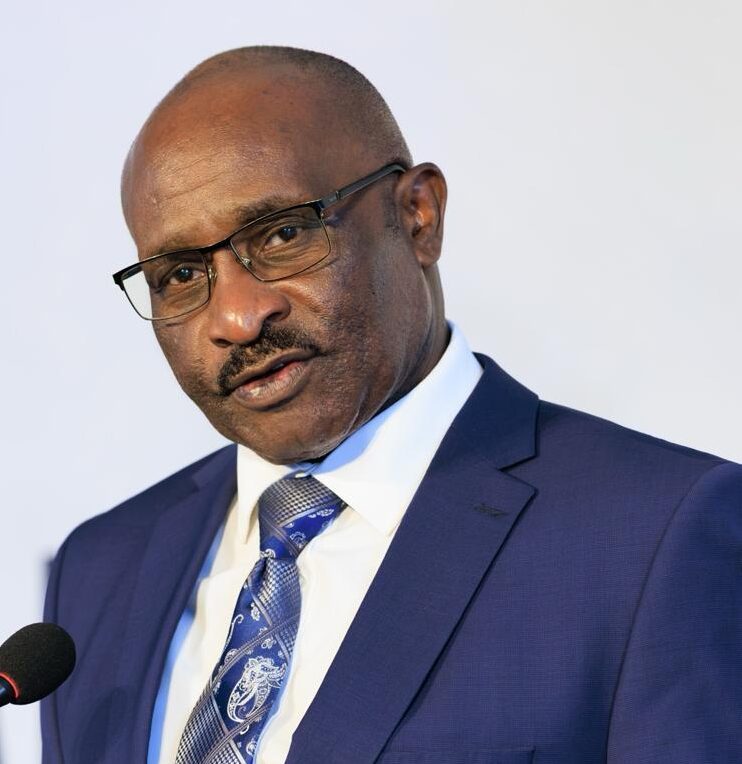
Addressing the nation in Kampala on Tuesday, November 17, 2026, the Minister of State for Labour, Employment and Industrial Relations, Hon. Simon Mulongo, declared that the era of regulatory laxity is over. The joint operation—which began on November 16 under the Ministry of Gender, Labour and Social Development—targets all 172 licensed recruitment agencies, 54 pending licence applicants, and 27 pre-departure training institutions nationwide.
The crackdown comes on the heels of intense parliamentary scrutiny that laid bare systemic failures in protecting Ugandans working abroad. According to figures acknowledged by the Minister, out of 1,012 formal complaints lodged by migrant workers, only 172 (roughly 17%) have been resolved—leaving 840 cases gathering dust.
Even more alarming, out of 101 reported human trafficking cases, only a single case has been recorded as concluded, while just 32 of 133 refund disputes have been settled.
“These figures are unacceptable,” Minister Mulongo stated bluntly. “Behind every unresolved complaint is a person, a family and often an entire household that invested its savings in the hope of a better livelihood. No Ugandan worker should be reduced to an unresolved file while those responsible continue conducting business without accountability.”
Under the ongoing three-week audit, recruitment firms will be scrutinized on their financial standing, ownership structures, foreign employer verification protocols, and emergency response systems. Mulongo warned that agencies will no longer be permitted to collect fees from desperate jobseekers and abandon them once they board a plane. Non-compliant firms face immediate regulatory sanctions or closure.
Simultaneously, the government is launching a multi-agency dragnet against illegal brokers and human trafficking syndicates. Working alongside the Uganda Police Force, INTERPOL, immigration authorities, and intelligence agencies, the Ministry will tighten surveillance at Entebbe International Airport and porous border crossings.
The Minister also issued a stern warning to corrupt insiders, noting that any established collusion involving public officials or private intermediaries will face full prosecution. In partnership with the Uganda Communications Commission (UCC), authorities will also crack down on fraudulent online job adverts luring youth into forced labour.
To enforce accountability beyond Uganda’s borders, the government announced several structural reforms:
In coordination with the Ministry of Foreign Affairs, Uganda is moving to deploy dedicated Labour Attachés to seven strategic destination countries to handle worker welfare and dispute resolution on the ground.
Existing bilateral labour agreements will be reviewed to enforce strict standards on wages, working hours, and occupational safety. Mulongo warned that the government will not hesitate to suspend recruitment channels to destinations where persistent abuses go unchecked.
Recruitment firms must now arrange or verify comprehensive insurance covering workplace injuries, disability, illness, death, emergency medical treatment, and repatriation. “Worker protection is a legal and institutional responsibility, not an act of charity,” Mulongo emphasized.
The Ministry is also overhauling the 27 pre-departure training institutions—which currently hold a combined capacity of 5,074 trainees—in collaboration with the Ministry of Education and Sports and the Directorate of Industrial Training. Moving away from mere “certificates of attendance,” institutions will be required to deliver practical, accredited skills in high-demand sectors such as healthcare, caregiving, construction, welding, engineering, and digital technologies, alongside the mandatory 14-day orientation.
While reassuring legitimate operators that compliant firms will be cleared to resume full operations promptly after the three-week exercise, Minister Mulongo maintained that Uganda’s international labour mobility must align with national development goals rather than exploit its youth.
“We are not against the external employment industry,” Mulongo concluded. “Our success will be measured not merely by the number of Ugandans employed abroad, but by the quality of their employment, the protection they receive, the skills they acquire and their contribution to national prosperity.”


