





Formula 1 will officially return to Africa for the first time in over three decades after signing a historic 10-year agreement with Rwanda. The highly anticipated African Grand Prix is slated to hit the grid in the early 2030s.
The race will take place on a state-of-the-art, purpose-built circuit in Bugesera, located just 25 miles south of the capital city of Kigali and adjacent to the nation’s brand-new international airport.
The landmark agreement closes a massive gap in motorsport history. Formula 1 has not raced on African soil since the 1993 South African Grand Prix at Kyalami. This multi-year partnership is expected to supercharge motorsport development, tourism, international investment, and job creation across the entire region.
According to F1 officials, the contract is the culmination of years of meticulous, joint planning designed to establish a truly sustainable, world-class racing ecosystem.
Drivers can look forward to a demanding new layout. Designed by former F1 driver Alex Wurz alongside acclaimed track architects Tilke Engineering and DAR, the upcoming circuit will wrap directly around Rwanda’s famous rolling topography.
To deliver a punishing test of driver skill while offering spectacular, sweeping views for spectators.
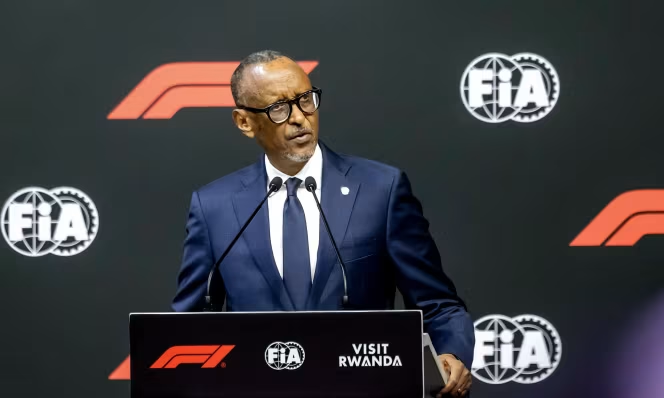
Rwandan President Paul Kagame hailed the partnership as a turning point for the continent, emphasizing its potential to inspire more than 100 million African F1 fans.
“For more than three decades, the world’s premier motorsport championship has raced without this continent, and that changes with this agreement.” — President Paul Kagame


Kagame underscored that the venture aims to provide lasting socio-economic benefits far beyond a single race weekend, paving the way for young Africans to chase careers as drivers, mechanical engineers, technicians, and entrepreneurs.
F1 President Stefano Domenicali echoed this sentiment, calling the deal a breakthrough milestone that finally fulfills the championship’s ambition to hold races on every inhabited continent on the globe.
Despite the excitement, the announcement is generating pushback from global human rights organizations. Critics have frequently accused Rwanda of leveraging high-profile sports sponsorships—such as its existing deals with Premier League clubs Arsenal and Aston Villa—to reshape its global reputation amid domestic human rights concerns.
Additionally, the country is navigating geopolitical tensions, including an active legal dispute brought by the neighboring Democratic Republic of Congo at the International Court of Justice. In response to the criticism, an F1 spokesperson defended the move, stating that the sport possesses a unique power to unite, inspire millions, and act as a positive force for global good.
While South Africa has held long-running talks regarding an F1 comeback at Kyalami or Cape Town, no contract was ever finalized. With this decisive 10-year deal, Rwanda has firmly captured the driver’s seat in bringing elite motorsport back to Africa, staking its future on major infrastructure developments and long-term economic sustainability.


