

By Our Team
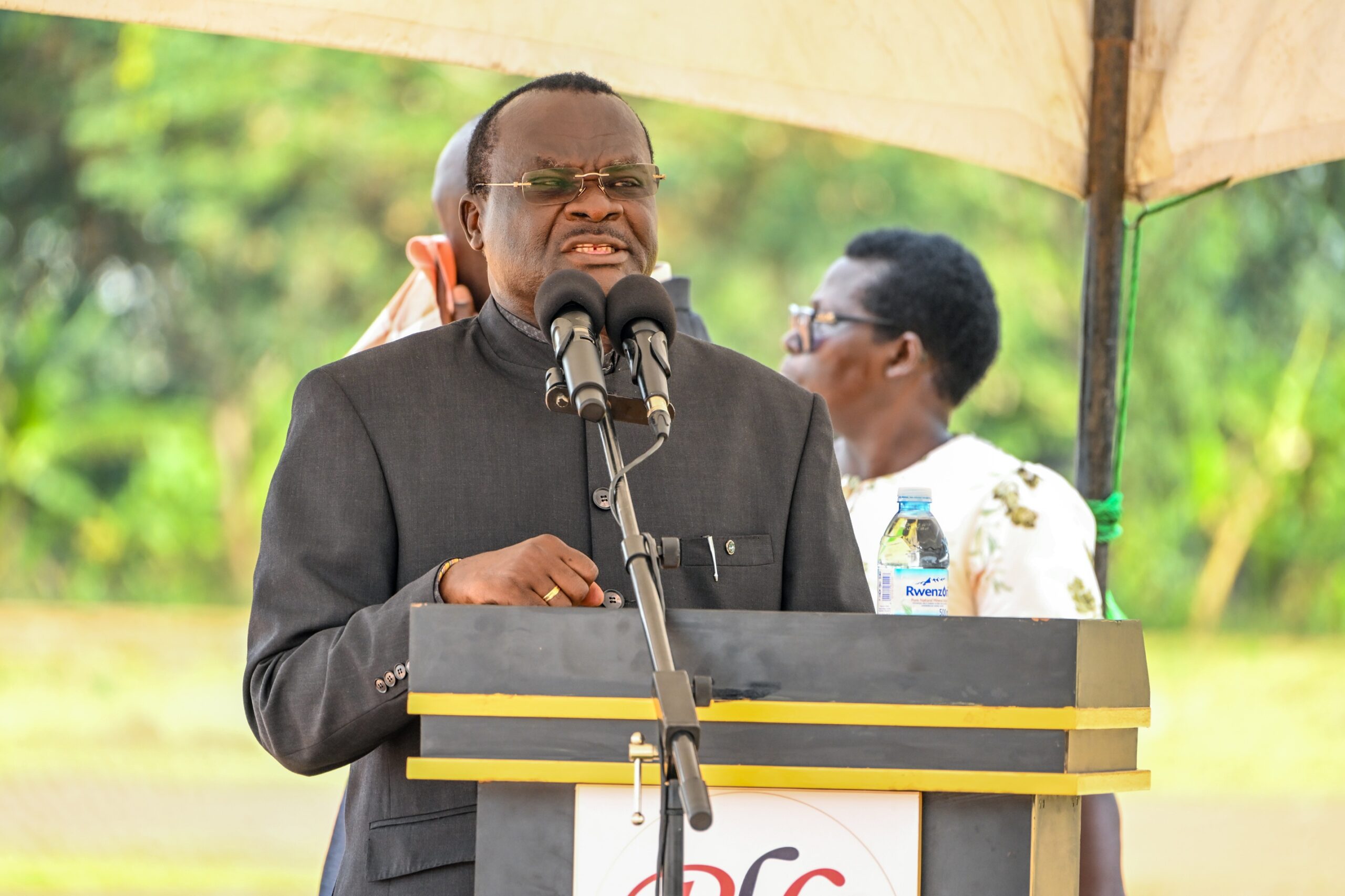
Former Chief Jusrice Owiny-Dollo has embarked on championing community revival and wealth creation across the Acholi sub-region citing decades of conflict that has had left many households economically disadvantaged.
He called on communities to move beyond the rhetoric of past conflicts and instead focus on rebuilding their livelihoods through productive economic activities.
The retired Chief Justice emphasized the need for people-centered wealth creation initiatives, including the productive use of large expanses of idle land and the adoption of mechanized agriculture led by communities themselves.
He noted that ongoing efforts supported by Operation Wealth Creation, under the leadership of Gen. (Rtd) Salim Saleh, had already begun supporting agricultural mechanization in the region.
Owiny-Dollo also intends to establish an irrigation scheme at Agoro to enhance agricultural productivity and urged government toreview the impact of socio-economic empowerment funds that have been injected into Northern Uganda over the years to ensure they are achieving their intended outcomes.
He called on leaders across Acholi—including political, cultural,and community leaders—to take responsibility for driving socio-economic transformation in their respective areas. He suggested that local by-laws could help encourage households to actively participate in wealth creation initiatives
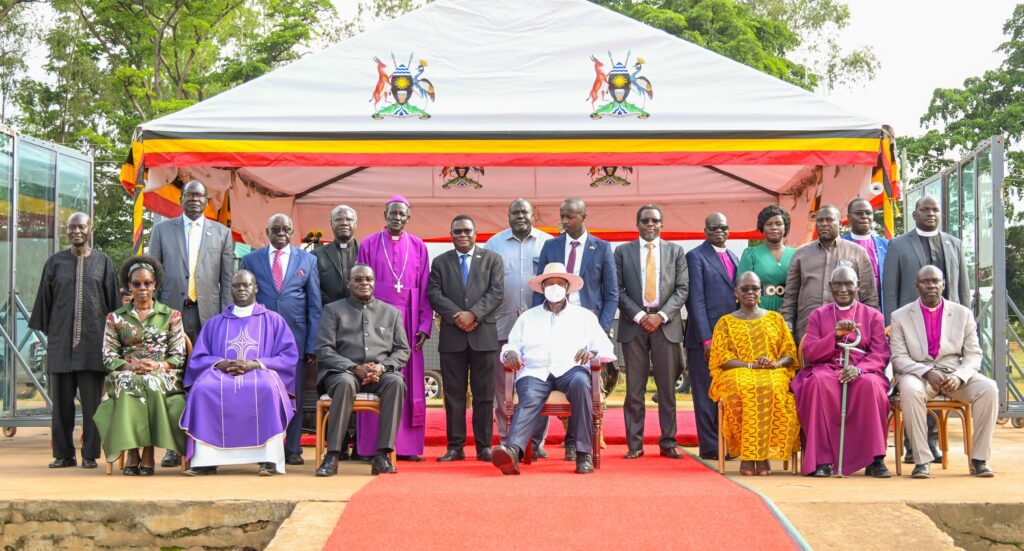
President Yoweri Museveni recently congratulated Chief Justice Emeritus Owiny-Dollo on the recognition accorded to him by his community, describing the honour as a fitting celebration of integrity, dedication, and patriotism.
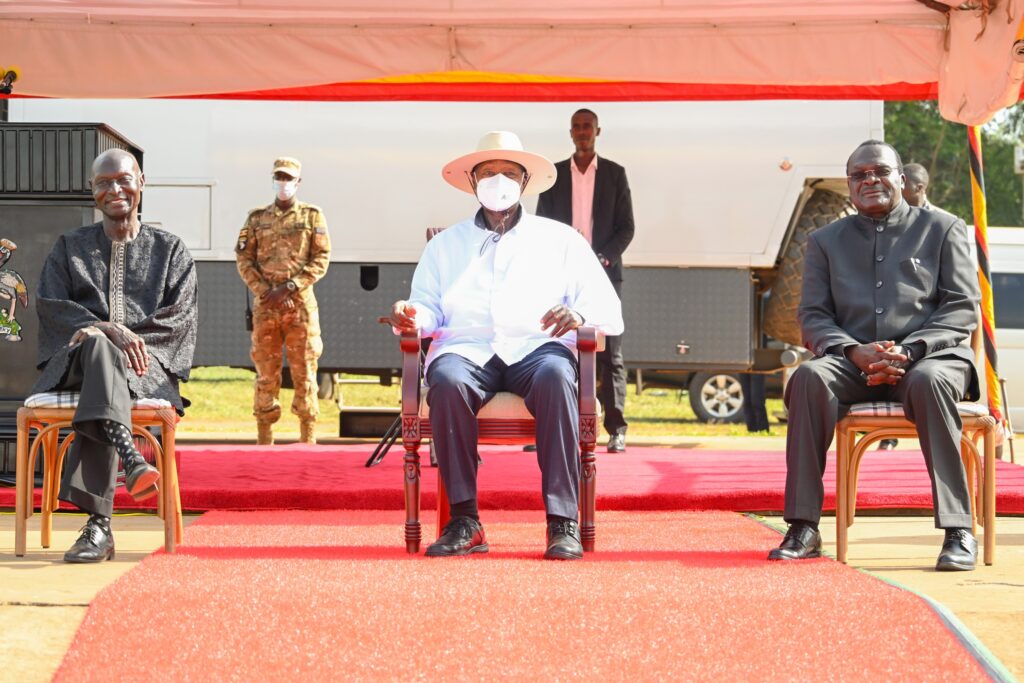
He commended the people of Acholi for recognizing leaders who have contributed to building strong national institutions and promoting peace and unity across Uganda.
The President particularly thanked Chief Justice Owiny-Dollo for three key contributions. First, he praised his integrity in public service, noting that despite persistent concerns about corruption in some sectors, he had never heard Owiny-Dollo associated with corrupt practices.
He recognized his contribution to strengthening Uganda’s judiciary,especially his support for the expansion of Alternative Dispute Resolution (ADR) mechanisms—an approach the President has long advocated to ease court congestion and improve access to justice.
The President commended Owiny-Dollo’s role in promoting unity and reconciliation in Northern Uganda, particularly during the region’s recovery after years of conflict.
President Museveni also used the occasion to highlight the importance of economic transformation through household participation in productive activities.

He emphasized the government’s strategy ofpromoting small-scale enterprises that are suitable for households with limited land, including poultry for egg production, dairy farming, coffee growing, fruit cultivation, fish farming, and other high-value agricultural enterprises.
The President explained that the strategy focuses on intensive agriculture rather than extensive farming, noting that crops such as cotton, maize, sugarcane, and rubber require large land holdings and are therefore less suitable for smallholder households.
He further stressed the importance of producing for markets, cautioning against encouraging farmers to produce commodities without assured demand. The President noted that Uganda must take advantage of expanding markets within the East African region and across the African
continent, while guiding farmers toward enterprises that guarantee sustainable income.
President Museveni observed that Uganda’s economic transformation will largely be driven by millions of small-scale producers working collectively across the country. He cited examples from regions such as Masaka, where smallholder farmers have significantly increased production of commodities such as coffee and milk.
According to the President, empowering small producers ensures that more households earn income and participate directly in national development.
He thanked the President for the role he played in restoring peace and stability in the region after years of conflict, noting that this peace had enabled communities to rebuild their lives, pursue education, andstrengthen institutions.
Looking ahead, President Museveni concluded by encouraging leaders and communities across the country to continue working together to strengthen institutions, promote unity, and accelerate Uganda’s socio-economic transformation.