
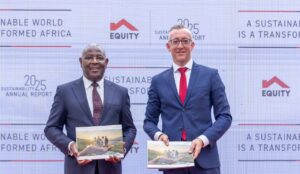




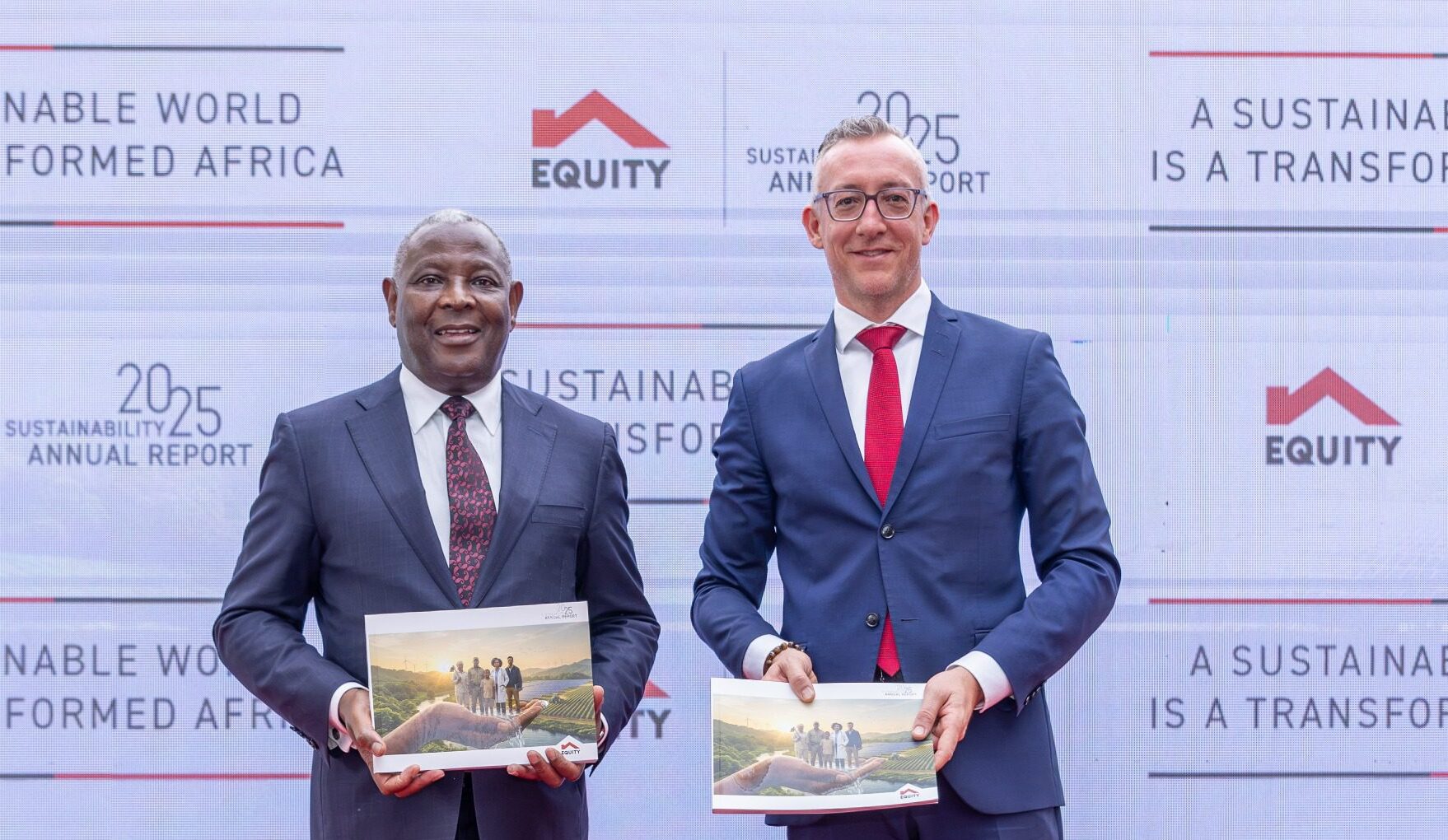
Equity Group Holdings Plc has officially released its 2025 Sustainability Report, revealing a record UGX 3.10 trillion (US$771 million) investment in social impact and sustainability initiatives across its regional footprint. Themed “A Sustainable World is a Transformed Africa,” the report outlines the Group’s advancements in education, healthcare, financial inclusion, climate action, and enterprise development.
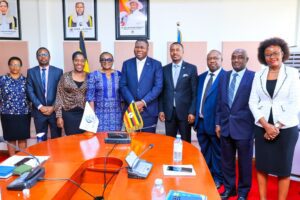
The Uganda edition of the report highlights the critical role of Equity Bank Uganda in adapting the Group’s regional sustainability targets into locally impactful financial services, enterprise capacity building, and strategic partnerships.
The report demonstrates how Equity Group seamlessly integrates sustainability into its core business strategy, risk management, and day-to-day operations. This is achieved through its proprietary Tri-Engine Model, which balances three core pillars to drive long-term institutional value:Economic Performance,Social Impact and environmental Sustainability
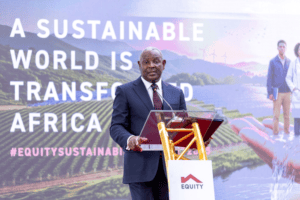

Dr. James Mwangi, Equity Group Managing Director and CEO:”Our performance demonstrates that commercial success and sustainable development are not competing priorities, but mutually reinforcing drivers of long-term prosperity. The stronger our business becomes, the greater our capacity to invest in people, enterprises, and communities. Through our investments, partnerships, and innovation, we are translating our purpose of transforming lives, giving dignity, and expanding opportunities for wealth creation into measurable, enduring impact.”
Gift Shoko, Managing Director and CEO of Equity Bank Uganda: “In Uganda, our ambition is to ensure that banking contributes to lasting economic and social progress. This means supporting businesses to grow, widening access to appropriate financial solutions, and working with partners to unlock opportunities. The Group’s sustainability framework gives us a strong platform to connect financial performance with practical, inclusive development.”
The scale of Equity Group’s regional and domestic interventions is reflected in several key performance metrics:Social Protection & Cash Transfers: Reached 5.94 million individuals, backed by UGX 5.40 trillion (approx. US$1.34 billion) in direct cash transfers.


MSME Financing disbursed UGX 12.57 trillion (US$3.11 billion) to micro, small, and medium enterprises to stimulate financial inclusion,Local Supply Chain Support directed 90% of the Group’s total procurement spending toward local suppliers, injection UGX 1.48 trillion (approx. US$369 million) into domestic economies and Refugee Financial Inclusion prrovided UGX 1.80 billion (US$450,000) in credit facilities to 115 refugees and delivered business training to 772 refugees to build sustainable livelihoods.
H.E. Sebastian Groth, German Ambassador to Kenya, commended the shift from traditional aid models to collaborative, equal-footing investments:
“By focusing on renewable energy, local value addition, and catalytic climate finance, Equity Group is demonstrating that sustainability is the very engine of transformation for the many. Our goal in development cooperation is to use public funds to mobilize private capital—we provide the spark, but the private sector provides the scale.”
Nasra Nanda, Built Environment Lead at the Executive Office of the President, emphasized the role of financial institutions in driving green development:“An investment is stronger when the asset can withstand the conditions it will face throughout its life. Financial institutions have a decisive role to play in making resilient, sustainable construction accessible and inclusive for ordinary borrowers by financing the enterprises and skills that drive this transition.”


