





Equity Bank Uganda has announced an expansion of financial services targeted at artisanal and small-scale miners (ASMs), aligning with government initiatives to boost the mining sector’s contribution to the national economy.
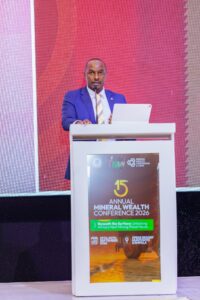
The strategy was presented at the 15th Annual Mineral Wealth Conference and Expo, held at the Speke Resort Munyonyo from September 29–30. Convened under the theme “Beneath the Surface: Unlocking Africa’s Next Mining Powerhouse,” the event was organized by the Uganda Chamber of Energy and Minerals in partnership with the Ministry of Energy and Mineral Development. The forum brought together state officials, international industry experts, and financial institutions to deliberate on the trajectory of Uganda’s extractive industry.


Christine Mukasa Mugerwa, Senior Sector Head for Energy, Mining, and Extractives at Equity Bank Uganda, emphasized the institution’s commitment to formalizing and modernizing the sector. Mugerwa noted that artisanal workers comprise 80% of Uganda’s mining workforce, yet they face prohibitive barriers to conventional credit due to their migratory operations and a lack of formal documentation, fixed addresses, or structured cash-flow records.
To bridge these financing gaps, Equity Bank is implementing several targeted interventions through strategic partnerships with miner associations, off-takers, and refineries—including the Wagagai Gold Mine. This collaborative framework aims to establish structured cash flows, guarantee transparent pricing, and extend critical services, including:financial literacy programs delivering structured training to unbanked workers via regional miner associations,asset financing providing access to modern equipment, such as mini-excavators, to enhance productivity and
occupational Safety promoted through the enforcement of safer mining practices and the provision of personal protective equipment (PPE).
The bank’s initiatives support the government’s strategic objective to elevate the mining sector’s GDP contribution from approximately 2% to 10%. Achieving this target demands heightened investment, local processing capabilities, and comprehensive value-chain financing.

Jonard Asiimwe, Minister of State for Science, Technology, and Innovation, underscored the critical need to halt raw mineral exports. “Exporting our minerals in their raw form is equivalent to exporting our future prosperity,” the Minister stated, advocating for rigorous geological data mapping and domestic processing to drive industrial employment and technology transfer.
Humphrey Asiimwe, Chief Executive Officer of the Uganda Chamber of Energy and Minerals, highlighted expanding investor confidence, noting that the conference drew over 1,000 delegates from 30 nations. He emphasized that with 58 identified minerals, Uganda is well-positioned to attract foreign and local investment, using major operations like Wagagai to pioneer mineral value addition.
Equity Bank’s sector-specific focus integrates into the broader Equity Group Africa Recovery and Resilience Plan. This overarching blueprint identifies natural resources as a primary catalyst for continental industrialization, prioritizing mineral beneficiation and localized supply chains to ensure African economies retain maximum value from their natural resources.
Equity Bank Uganda is a leading commercial bank in East Africa and a subsidiary of Equity Group Holdings known for its strong focus on financial inclusion, small and medium enterprises (SMEs), and large-scale regional development.

The bank is funding the mining sector—particularly artisanal and small-scale miners (ASMs)—due to a strategic mix of corporate regional policy, economic opportunity, and ESG (Environmental, Social, and Governance) targets:
The investment is a core component of Equity Group’s USD 6 billion regional growth strategy. The Africa Recovery and Resilience Plan identifies extractives and natural resources as vital pillars for continental industrialization. By funding this sector, the bank intends to shift African economies away from exporting raw materials and toward keeping maximum value within local supply chains
Artisanal and small-scale miners make up 80% of Uganda’s active mining workforce, yet they are completely isolated from traditional commercial bank credit due to a lack of formal documentation, fixed addresses, or steady records. By partnering with local miner associations and major refineries (such as the Wagagai Gold Mine), Equity Bank is creating a structured banking ecosystem. This allows them to securely extend financial literacy, asset financing (like mini-excavators), and credit to a massive, previously unbanked market segment.

The Ugandan government is pushing to increase the mining industry’s contribution to the national GDP from 2% to 10%. For this national objective to succeed, the thousands of small-scale operators who form the bedrock of the local industry must be formalized. Equity Bank is positioning itself as the primary financial engine driving this transition, capturing early value as the local value chain scales up
Unregulated artisanal miners typically rely on predatory local middlemen and cash buyers, resulting in lower payouts for their mineral yields. By providing direct capital and formal banking pipelines, Equity Bank helps miners secure transparent and fair pricing for their output. This formal cash flow flows directly back into the bank’s deposits and ecosystem, creating a sustainable financial cycle
Beyond traditional profits, Equity Bank leverages this financing to enforce basic corporate responsibility standards. Introducing formal asset financing replaces high-risk, manual mining techniques with machinery, while simultaneously allowing the bank to bundle and promote safer practices and personal protective equipment (PPE) across local communities


