

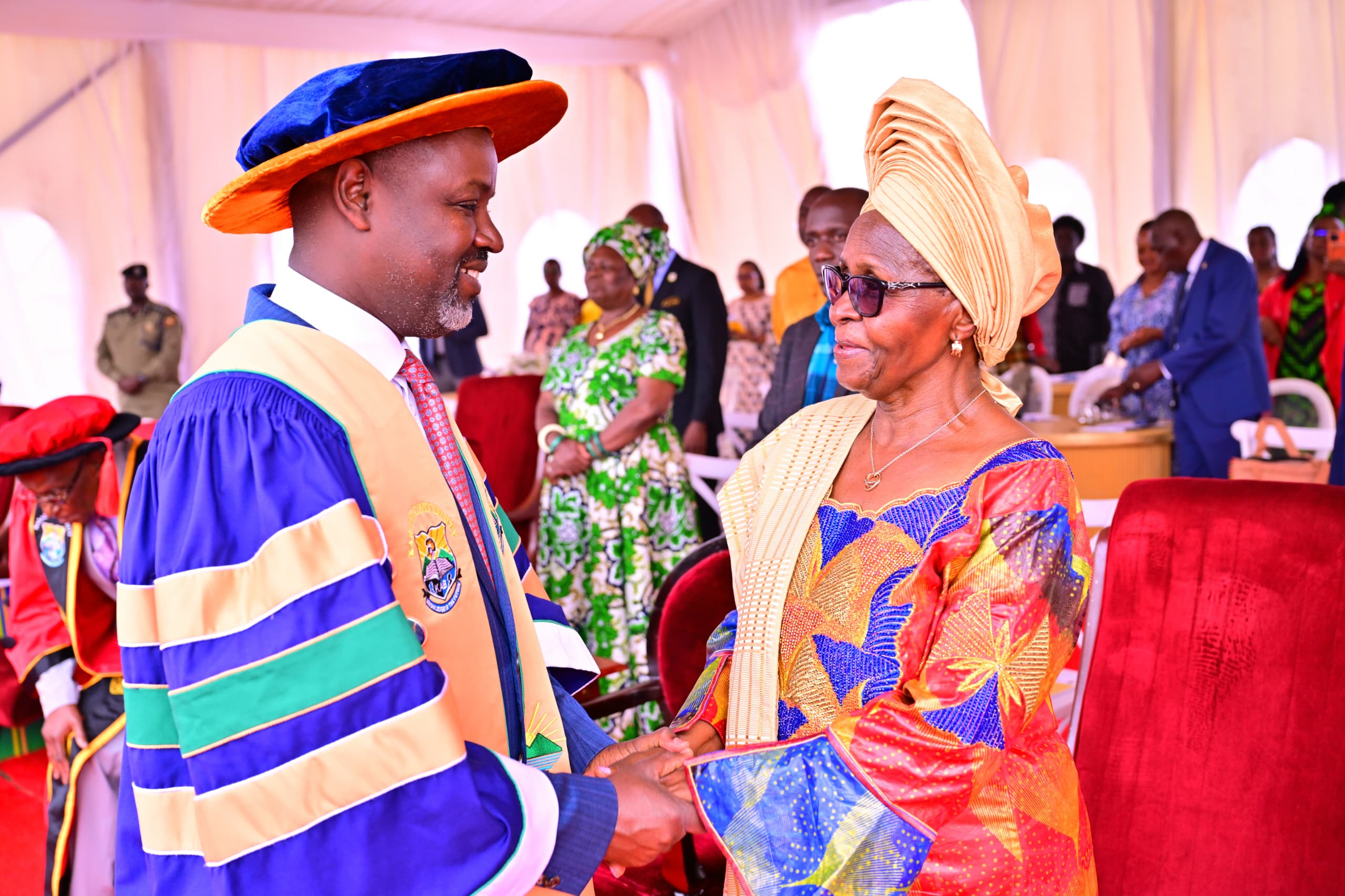
Deputy Speaker of Parliament Thomas Tayebwa has commended former Kabale University Vice Chancellor Prof. Joy C Kwesiga for transforming the institution from a young university into an institution of national significance during her 21 years of service.
Speaking at a ceremony to celebrate Prof. Kwesiga’s service at the university on Friday, Tayebwa said her contribution to higher education and the people of Kigezi extended beyond her tenure as vice chancellor. He described her record as one that had opened opportunities for many people.
“I am not here to celebrate your exit. I am here to celebrate a testimony, a record of service that opened doors for very many people, not only in Kigezi but beyond Kigezi,” Tayebwa said.
He also praised Prof. Kwesiga for breaking barriers for women in leadership, saying her achievements demonstrated that excellence should not be judged by gender.
“I appreciate you for breaking barriers and for showing people that excellence cannot be related to gender,” he said.
Prof. Kwesiga served as Vice Chancellor of Kabale University for 21 years, during which the institution grew from a young university into a public university with national significance.
Tayebwa said Prof. Kwesiga had made a deliberate choice to serve her home region at a time when she could have pursued leadership opportunities elsewhere.
“You went out of the way for 21 years, at the prime of your time, when you could have become Vice Chancellor of Makerere University. You decided and said, ‘No, let me go and take a risk ahead of my people of Kigezi.’ So really, we cannot take that for granted,” he said.
Tayebwa also attributed Kabale University’s growth to the vision of the elders who established it in 2001 under difficult circumstances, saying the institution had provided both roots and wings to people in the region.
Kabale University, which was the first community university in Uganda to be transformed into a public university, has become a model for the transformation of other community universities into public universities under the NRM government.
“Kabale University has become a benchmark university because it is the first community-owned university that transitioned into a public university,” Tayebwa said.
He added that the university’s success had informed the government’s decision to establish public universities in other sub-regions.
“Because Kabale University succeeded, His Excellency the President directed that all sub-regions of Uganda should have a public university,” he said.
A career spanning decades
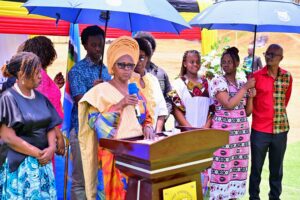
Prof. Kwesiga’s career in higher education spans more than five decades.
Born in 1943 in present-day Rukiga District, she studied Geography at the University of East Africa (Makerere) before pursuing postgraduate studies in public administration, higher education and gender issues.
She earned a master’s degree in Higher Education and a PhD in Education and Gender Issues from the University of London.
She began her career in Makerere University’s administration and later rose through the institution’s leadership, serving as Head of the Department of Women and Gender Studies and Dean of the Faculty of Social Sciences. In 2005, she became Vice Chancellor of Kabale University, where she spent 21 years leading the institution’s growth and development.

Outside academia, Prof. Kwesiga has been active in Uganda’s women’s rights and gender-equity movement. She was a founding member of Action for Development (ACFODE), has represented Uganda on the Africa Board of the Forum for African Women Educationalists (FAWE), and was among the founding members of KOMAZA, a Kabale-based organisation focused on empowering women, girls and disadvantaged communities.
Her work has also included research and writing on gender and higher education.
As the university charts its future, Tayebwa challenged it to ensure that its programmes and research respond directly to the challenges facing the Kigezi region.
“Poverty levels are going up. Why? Where is the problem? You as Kabale University, can you do for us a study and guide us? That’s how you show your relevance,” he said.
He urged the university to focus on areas such as science, medicine and other disciplines that can help address local challenges, including poverty and malnutrition.
