






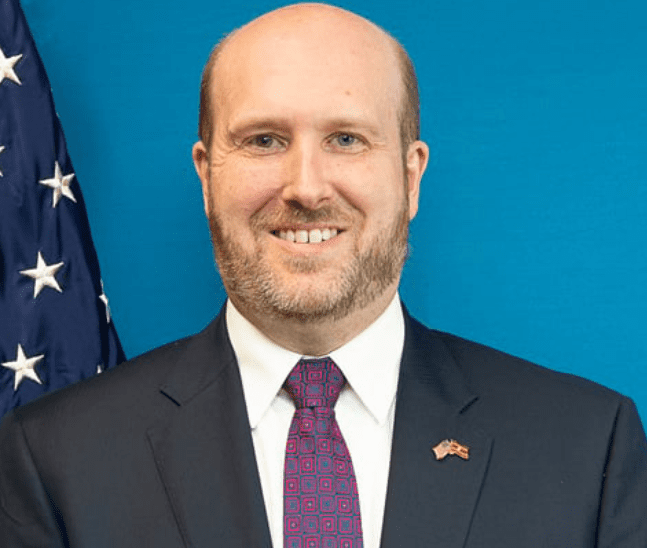
The United States Ambassador to Uganda, William Wayne Popp, is set to exit Uganda following the conclusion of his duties later this month.


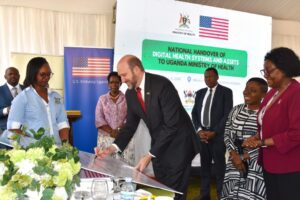
These Health Digital Systems have improved efforts against HIV, TB, and Malaria by improving monitoring and giving timely data needed to manage medicine supplies.
In December the U.S. government and Government of Uganda signed a five-year, $2.3 billion Health Memorandum of Understanding that outlines a comprehensive vision to save lives, strengthen Uganda’s health system, and make America safer, stronger, and more prosperous.
The MOU marks a shift from parallel systems to Ugandan leadership, supporting government-led health delivery, continued funding for frontline health workers and essential commodities while ensuring accountability and responsible use of U.S. taxpayer resources. The transfer of these systems is a very important step further increasing Ugandan sovereignty over your health systems.
We are proud of the work we have accomplished together to get to this point. From 2010 to 2026, the U.S. President’s Emergency Plan for AIDS Relief or PEPFAR and the U.S. Department of Health and Human Services provided more than $103 million to the METS program through the U.S. Centers for Disease Control and Prevention (CDC). This support strengthened Uganda’s HIV response, modernized national health information systems, and improved service delivery. It also strengthened emergency response systems, integrated disease surveillance, infection prevention and control, and workforce development during the 2020-2023 COVID-19 pandemic.
Over 15 years, the program expanded digital health reporting nationwide and strengthened the use of data for decision-making. Disease surveillance systems can now detect health trends earlier and track deaths more accurately. This strengthens Uganda’s ability to manage public health threats and supports broader global health security for the world.
The United States also assisted the printing of data collection and reporting tools. As digital platforms expanded, electronic reporting replaced paper-based systems. This year, no foreign assistance was required for printing paper-based tools because Uganda successfully adopted digital data collection and reporting platforms. This transition reflects greater efficiency and sustainability —and it highlights a core objective of U.S. foreign assistance and our new Health MOU: supporting countries to strengthen and sustain their own national institutions. Today, health facilities across Uganda can collect, analyze, and share data in real time using modern digital platforms.
U.S. support also provided equipment which allow health facilities across Uganda, including those without reliable electricity, to collect and use data in real time. Today’s handover includes the transition of these digital platforms, laptops, servers data infrastructure, solar power solutions and associated equipment, along with the expertise to ensure continuity within the Ministry of Health.
The United States’ objective is to strengthen local capacity so countries can sustain progress independently. That is exactly what today’s event symbolizes. A strong health system in Uganda protects Ugandans as well as Americans. When Uganda can quickly detect and respond to disease outbreaks, it reduces the risk that those threats spread across borders. This work strengthens the safety of Ugandans, people in the region, and Americans. This transition shows that foreign assistance, when delivered with discipline and accountability, can build lasting national capacity.


