




Atleast shs 10 billion has been earmarked for President Yoweri Museveni swearing in Ceremony slated for 12th May at Kololo Independence ground,this website has learnt.
The Theme of the Swearing-in and Inauguration Ceremonies of the President elect, 2026 as: “Protecting the Gains, Making a Qualitative Leap into High Middle- Income Status”
In 2021 government budgeted approximately UGX 7 billion for President Yoweri Museveni’s 2021 swearing-in ceremony.
President Museveni took over power in 1986 after guerilla war on 26th January 1986.Consequently, the NRM/NRA Compatriots utilized the initial years from 1986 – 1996 to set up the basic infrastructure to define a modern State such as: a people centered Constitution, a National Resistance Council and restoration of security for both persons and property of Ugandans.
on the 15th of January 2026, Ugandans once again went to the Polls to exercise their right to democratically elect Leaders at both the Presidential and Parliamentary levels of Governance and NRM Party,represented 71.65% out of the total votes cast
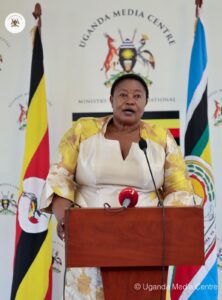

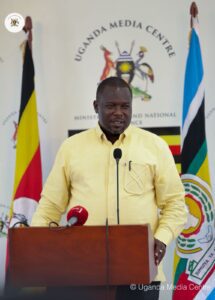
Commenting about the NRM achievements over 40 years in power,Minister for Presidency Milly Babalanda said that the regimae has created Peace and Security.
“The NRM has been able to preserve peace for 40 years which no previous governments had ever achieved. This has been done through correct political line emphasizing interests (business, markets, services etc.) instead of identity (tribes, religious sectarianism and gender chauvinism). This has enabled NRM Government to unite Ugandans politically and create strong national institutions such as the Uganda Peoples’ Defence Forces, Uganda Police Force and Uganda Prisons Service among others,”she stated.
In terms of Sustained economic growth the minister said that ugandas economy has doubled with Real GDP growing faster every year (2020 – 2024), recovering from 3.0% in FY 2019/20 to 6.3% in FY 2024/25. As a result, the economy expanded from Shs. 128.5 trillion (USD 34.7BN) in 2019 to Shs. 226.3 trillion
(USD 61.3BN) in FY 2024/25. By the end of the year 2025/26, the size of the economy is projected to expand to Shs. 254.2 trillion (USD 66.1BN). Uganda has also upgraded from the Least Developed Countries.
“In March 2024, Uganda met the criteria for graduation from the category of LDC, thus crossing the lower middle income threshold and setting the foundation for continued socio-economic transformation. GDP per capita increased from Shs. 3.15 million (USD 891) in FY 2019/20 to Shs. 4.52 million (USD 1,263) in FY 2024/25, and is expected to increase to Shs. 4.76 million (USD 1,324) by end of FY 2025/26. This is in tandem with Prof. Walt Whitman Rostow’s Take-Off Stage, which was expounded on in 1961 and characterized by:
On Rapid Industrialization,Babalanda said Manufacturing contributed 15.6% to our GDP as at June 2025, which was equivalent of USD 9.6 Billion,”Babalanda stressed.

According to the minister government invested over Shs. 11 trillion in key wealth creation initiatives contributing to poverty reduction from 56.4% in 1992 to 16.1% in 2024 and cut the number of households in subsistence economy by more than half from 68% in 2014 to 33% in 2024. These initiatives include; Operation Wealth Creation (OWC), Parish Development Model (PDM), Emyooga and other livelihood support programmes.
More Ugandans are connected to the grid. Electricity generation rose to 2051MW in 2024 from 1839.4MW in 2019, with completion of flagship projects like Karuma, Isimba and other electricity generating facilities. As a result, access to electricity increased to 60% of the population in 2024, up from 51% in 2020.
In terms of infrastructure,the road network that is tarmacked has increased to 6,288 kilometers from 1,000 kilometers in 1986 and 844 kilometers at independence and access to clean water by Ugandans has increased. Currently, 68% and 71.6% of the population in the rural (within a walking distance of 500m) and urban areas (within a walking distance of 200m) respectively, have access to clean and safe water.
At village level, the number of villages with a safe, clean and affordable supply system increased from 38,809 villages in 2021 to 57,313 villages out of 71,210 in 2025 which is now an 81% coverage.