


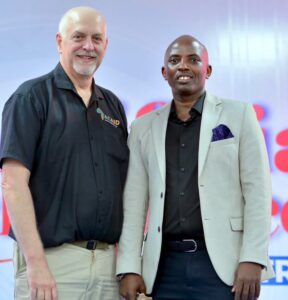




In a major step toward integrating modern technology into higher education, Victoria University has launched a comprehensive Artificial Intelligence (AI) training initiative for all its staff members.
The extensive training program is designed to equip university faculty and administrative staff with the practical skills needed to utilize cutting-edge AI tools in the classroom and operational workflows. As educational institutions globally face the pressure to adapt to digital transformation, Victoria University’s latest initiative ensures its workforce remains ahead of the curve.

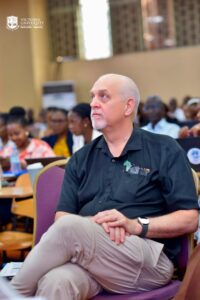
To deliver world-class insights, the institution flew in Tim Abel, a highly accomplished global tech veteran and former executive at Google and Microsoft, to facilitate the sessions. Abel’s training focuses on the practical application of AI in higher education, addressing how automation and machine learning can enhance teaching methodologies, streamline administration, and improve student learning outcomes.
This milestone training aligns with Victoria University’s ongoing commitment to digital-first education, preparing both its staff and students to successfully navigate the rapidly evolving digital landscape.
Victoria University Vice-Chancellor Dr Lawrence Muganga said the session was part of the institution’s effort to prepare staff for emerging technologies that are already reshaping higher education.
“Our goal goes beyond simply teaching students about AI,” said Vice-Chancellor Dr.Lawrence Muganga .“We want our graduates to leave Victoria University with the AI literacy, practical skills, and confidence to take on today’s labor market. That is why we are investing heavily in ensuring our teachers and support staff are learning together and staying ready for what comes next.”

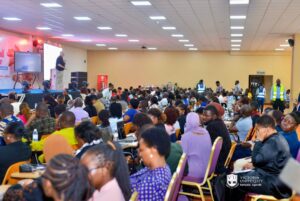
The morning sun streamed through the glass facade along Jinja Road, but inside the main auditorium of Victoria University, the energy was focused entirely inward. Laptops clicked open, notebooks were readied, and row upon row was filled with university staff from academic deans and department heads to executive support personnel. There was a palpable buzz in the air, born of the realization that today was not going to be a routine administrative retreat.
Stepping onto the stage was Tim Abel, a figure whose career trajectory reads like a blueprint of the modern digital era. Having served in high-level executive capacities at Dell, Microsoft, and Google, Abel carried the quiet authority of someone who had watched technological revolutions unfold from inside the boardrooms where they were built. Yet, as he adjusted his microphone and looked across the audience, he didn’t speak with corporate detachment. He spoke as a practical innovator addressing a team on the frontlines of human development.

“Artificial intelligence is not a distant storm on the horizon that academia must brace for,” Abel began, his voice easily holding the silent room. “It is an engine that is already running. The only question for an institution like Victoria University is whether you intend to sit in the passenger seat or take the wheel.”
For the next four hours, the auditorium turned into a dynamic laboratory. Abel stripped away the dense, intimidating jargon surrounding large language models and neural networks, replacing it with immediate, real-world utility tailored directly to the university’s practical learning philosophy.
He walked the academic staff through live demonstrations of building adaptive curriculum outlines, generating dynamic case studies in seconds, and utilizing AI as a relentless co-pilot for academic research. For the administrative and executive staff, he opened up frameworks on automating high-volume workflows, refining institutional data processing, and turning complex scheduling bottlenecks into effortless digital routines.


During a break in the presentation, a senior lecturer raised her hand, articulating the quiet fear that often accompanies the AI conversation: “How do we protect the human element of teaching when machines can write, analyze, and synthesize faster than we can?”
Abel smiled, stepping out from behind the podium. “AI will never replace the empathy, intuition, and mentorship of a dedicated educator,” he replied. “AI will not replace humans. But human beings who master AI will inevitably lead those who do not. Your job isn’t to compete with the technology it is to use it to amplify your human potential.”
That moment shifted the room’s energy from cautious curiosity to active creation. Hands-on exercises followed, with faculty members testing prompts, automating lesson plans, and building administrative templates on the spot. The laughter and intense peer-to-peer discussions that filled the hall proved that the barrier between traditional higher education and cutting-edge tech had effectively dissolved.
By the time Tim Abel concluded the workshop to a resounding standing ovation, the staff of Victoria University walked out into the Kampala afternoon not just trained, but transformed. They had been given more than just new tools; they had been handed the confidence to lead their students into an AI-driven economy with authority, proving once again that inside these walls, the future isn’t something to wait for it is already here.


