





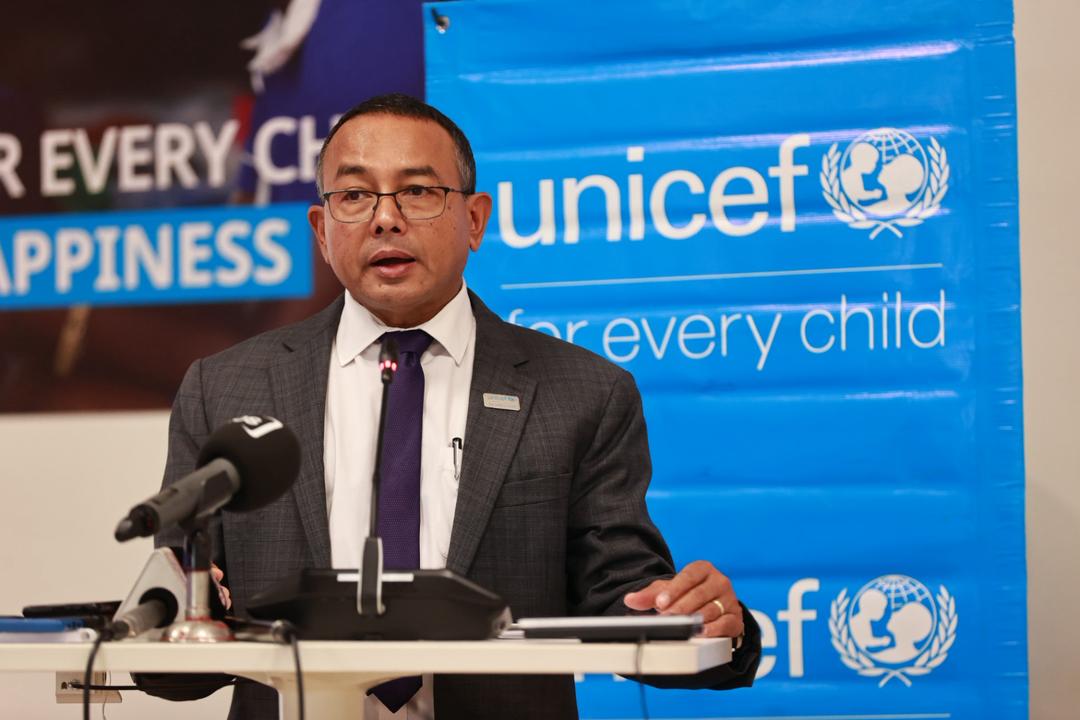
In a bid to promote the full implementation of the Convention on the Rights of the Child and the African Charter on the Rights and Welfare of the Child, United Nations Children’s Fund and the Government of Uganda have unveiled the UNICEF Uganda programme for 2026-2030 aimed to addressing children nutrition,poverty,education and health issues.
According to UNICEF Country Representative to Uganda Dr Robin Nandy the 2026-2030 Country Programme was developed in partnership with the Government of Uganda, civil society organizations, development partners, the United Nations, and most importantly, with children and young people.
In a media interface he said the programme is aligned to Uganda’s National Development Plan IV and to the UN system Sustainable Development Cooperation Framework for Uganda.
The programme covers Investment in human capital development and basic social services that are child-friendly and inclusive,strengthening implementation and adequate financing of policy and regulatory framework to reduce poverty and inequality and Active participation of children and adolescents in decision making that affects them.
According to Nandy,Children in Uganda face significant challenges including poverty, poor health and nutrition, inadequate access to quality education, and experience violence.
He reaffirmed UNICEF commitment to working with the Government of Uganda, loca communities, children, adolescents, young people and other partners, to address these challenges and to ensure every child survives, thrives, and grows to their full potential.
“UNICEF’s work will focus on advocating for better education, health and nutrition services, greater access to safe, climate-resilient water and sanitation and protecting children from violence, poverty and abuse,”he stated.
The UNICEF Country Programme 2026–2030 for Uganda, created in partnership with the Government of Uganda, shifts from localized service delivery to strengthening nationwide social sector systems.

Backed by an estimated $242 million budget, it aims to sustainably improve healthcare, early childhood development, foundational education, and climate-resilient water and sanitation for all children
Key focus areas for the 2026–2030 framework include:
- Health & Nutrition:Expanding access to quality healthcare for women, newborns, and adolescents while combating malnutrition with life-saving therapeutic foods.
- Education & Skilling:Enhancing school attendance, retention, and completion rates while engaging the private sector and civil society partners (such as the Mastercard Foundation) to prepare youth for employability and market-driven entrepreneurship.
- Child Protection:Strengthening systems to protect children from violence, exploitation, and abuse, as well as promoting birth registration and child-friendly justice mechanisms.
- Water & Sanitation:Advocating for access to safe water and climate-resilient sanitation, particularly prioritizing vulnerable populations in refugee settlements and host communities


UNICEF Uganda has operated in the country since the early 1960s to defend the rights of vulnerable children and adolescents, partnering closely with the Government of Uganda. The agency currently operates under a Country Programme aligned with Uganda’s Vision 2040 and the UN Sustainable Development Cooperation Framework
Core Program Areas
UNICEF focuses on six primary pillars of development and humanitarian assistance:Improving access to maternal and child healthcare, routine immunizations, HIV prevention, and high-impact nutrition services and expanding equitable access to quality learning and Early Childhood Development (ECD) for all children, including marginalized and refugee populations.
UNICEF also defends children against abuse, violence, exploitation, and harmful practices and advocates for the access to safe drinking water, proper sanitation, and hygiene facilities.
It also works with the government to build systems that reduce poverty and social exclusion for vulnerable families while engaging youth through civic participation and digital empowerment tools


