When the guns finally fell silent in the mid-1980s, Uganda stood on the debris of a shattered economy. Shops were bare, industries lay dormant, and public confidence had evaporated. To the outside world, Kampala looked like a graveyard for investors—a city operating on basic barter trade with a collapsed banking system.
Yet, amid the smoke and broken infrastructure, one young returnee saw a market waiting to be reborn.
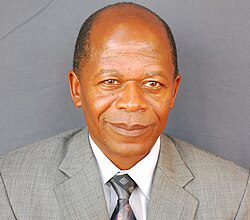
That man was Dr. Sudhir Ruparelia. Having fled the country as a teenager during Idi Amin’s 1972 expulsion of Asians, Sudhir landed back in Kampala in 1985. He found a city gasping for breath, but bursting with raw, untapped possibility. This is not merely a story of a refugee who struck it rich; it is an masterclass in how raw grit, unyielding discipline, and foresight can turn economic ruins into a playground for world-class enterprise.
It is easy to look at the glittering expanse of Speke Resort Munyonyo today and forget its humble origins. The Ruparelia empire did not begin in a posh boardroom; it started behind the steering wheel of distribution trucks moving crates of Nile Special and Bell Lager across a bumpy, unpredictable capital.
Trained by the harsh realities of London’s working-class streets, Sudhir understood that chaos breeds opportunity if met with integrity. At a time when many thrived on short-sighted deceit, Sudhir’s ultimate currency was his word. If he promised to pay, he paid.
That single discipline laid the foundation for what would become the Ruparelia Group. As the distribution business grew, it funded his entry into importation, equipment supply, and eventually, the sector that would redefine Kampala’s skyline: real estate.
By the late 1980s and early 1990s, Kampala was slowly waking up to a new era of stability under the NRM government. Where others saw abandoned colonial structures and dilapidated buildings, Sudhir saw future commercial landmarks and conference resorts.
Instead of chasing flashy, overpriced developments, he quietly bought undervalued lots that the market ignored. He refurbished them, rented them out, and aggressively reinvested the proceeds. Soon, his commercial arcades began dominating Kampala Road and Jinja Road, effectively anchoring the rebirth of Uganda’s urban retail culture.
“If you can’t find a ready opportunity, build one,” became his guiding philosophy.
As the urban economy revived, Sudhir diversified with clinical precision. The group expanded into banking, high-end hospitality, insurance, media, labor export, floriculture, and education. Today, the conglomerate employs tens of thousands of Ugandans and touches nearly every vital artery of the national economy.
Despite sitting at the apex of a multi-million-dollar empire, Sudhir’s management style remains completely devoid of corporate showmanship. His workdays still begin at the crack of dawn with hands-on inspections. It is not uncommon to find him personally evaluating hotel kitchens, walking construction sites, or reviewing floor plans.
Having worked manual shifts in London’s bakeries, butcheries, and driving cabs through freezing nights, he retains a deep respect for detail. Staff at the Speke Group frequently describe him as a perfectionist who can spot a dirty towel from across a crowded hallway. In his corporate ecosystem, no job is beneath anyone—including the owner.
This grounded humility is precisely why his businesses rarely buckle under macroeconomic pressure. The same structural discipline that got him through London’s winters governs his boardrooms in Kampala today.
While the Indian community makes up less than 0.01% of Uganda’s population, it drives a massive portion of the country’s economic output. Sudhir stands at the center of this dynamic—not just as an individual tycoon, but as a living symbol of resilience and local integration. His companies contribute more to the national tax base and domestic employment figures than many prominent multinational corporations.
Now, his focus has shifted from expansion to institutional legacy. His children have stepped into core leadership roles within the Group, inheriting the same values of patience, modest living, and compounding effort.
Through institutions like Kampala Parents’ School and Victoria University, Sudhir is actively investing in shifting the mindset of the next generation. He frequently notes that Uganda’s greatest economic weakness is comfort—the tendency for individuals to work tirelessly abroad only to relax once they return home. For the boy who started with a savings habit and a single truck, true development begins with individual discipline long before it reaches policy.
According to data from the Ministry of Finance, Planning and Economic Development cited by President Yoweri Museveni, the Indian community in Uganda contributes approximately 65% of the nation’s total income tax revenue, despite making up less than 1% (roughly 35,000 to 40,000 people) of the country’s populatio. Members of the Indian diaspora and prominent families (such as the Ruparelias, Madhvanis, and Mehtas) drive major activities across manufacturing, banking, agriculture, construction, and service.
Dr. Sudhir Ruparelia offers a sharp, hyper-pragmatic blueprint for young entrepreneurs. While his pace emphasizes organic stability over reckless scaling, his strategy for execution, market dominance, and financial defense is incredibly aggressive.
The core pillars of Sudhir’s advice cut straight through the noise of modern business trends:
When Sudhir returned to Uganda, he and his wife lived without a personal car for a year to protect their initial trading capital. He aggressively warns against “eating your capital” by spending without a strict budget.
Despite making his fortune partly through financial institutions, Sudhir’s most aggressive rule is to avoid borrowing to start or rapidly expand a business. He advises growing strictly according to the cash flow you generate.
If entering property development, his exact formula is to generate enough cash flow to purchase your first, second, and third properties fully cash. Only consider a loan on the fourth, using the guaranteed income of the first three as an absolute defensive shield against defaulting.
He further advises budding entrepreneurs to find a real, painful market deficit, create a working solution immediately, and charge for it. Do not chase speculative, get-rich-quick “hot” trends.
Sudhir explicitly advises university graduates to Kill sentimental hiring warning that hiring staff based purely on friendship, family relationships, or religious connections is a fast track to disaster. Build teams based entirely on competence and execution.
lastly he says In the Ugandan market, consistency and keeping your word is your highest leverage tool. If you build an unshakeable reputation for honoring contracts and timelines, opportunities will chase your cash flow