

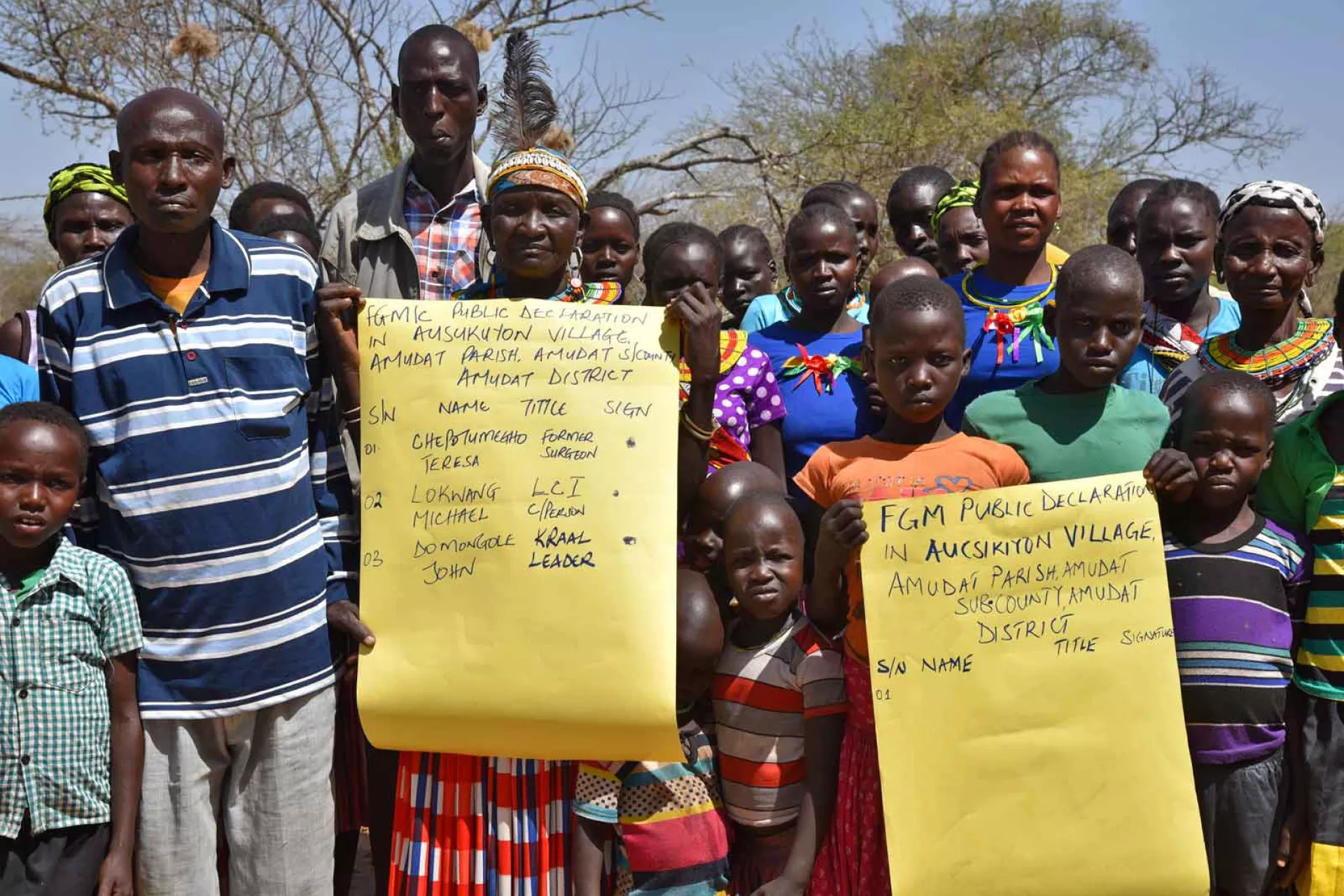
Uganda government has successfully reduced the prevalence of Female Genital Mutilation (FGM) to 0.02% over the past decade, government officials revealed.
This was revealed during celebrations held under the theme, “Towards 2030: No End to FGM without Sustained Commitment and Investment.” in Bukwo District recently organized by UNFPA, the Ministry of Gender, Labour and Social Development, UNICEF, and partner organizations, brought together government representatives, UN agencies, NGOs, youth and women’s groups, FGM survivors, and international partners to strengthen coordinated action toward eradicating FGM in Uganda.
Although FGM was banned in Uganda in 2010, the practice persists in some parts of Eastern and North-Eastern Uganda, particularly among the Sabiny, Pokot, and Tepeth communities, often carried out secretly or across borders.
“FGM prevalence has significantly declined from 4.2% in 2016 to 0.02% in 2026, marking strong progress in the fight to end this harmful practice,” said State Minister for Gender and Culture, Peace Mutuuzo.
She attributed the decline to government interventions, community engagement, partner support, and the implementation of cross-border frameworks.
Mutuuzo welcomed the introduction of Alternative Rites of Passage led by cultural leaders and highlighted plans to establish secondary schools and vocational training centers to empower young girls as alternatives to early marriage.
She also emphasized programs supporting men to adapt to evolving societal norms with educated and empowered women and called for strengthened cross-border collaboration to address remaining FGM practices.
The commemoration aligns with UN Sustainable Development Goal 5 on gender equality, underscoring the need for sustained financing, community action, data-driven approaches, and platforms that amplify the voices of girls and survivors.
Since November 2025, UNICEF Uganda, through its U-Report platform, has led community engagement initiatives across the Sebei and Karamoja sub-regions, reaching over 30,000 community members to raise awareness and curb FGM and child marriages.
U-Report, UNICEF’s flagship youth-led platform for ages 14–24, empowers young Ugandans to share views, propose solutions, and drive community-level change.
Febian Yeko, a 27-year-old U-Reporter from the Sebei community, explained that teams of about 25 youth engage with homes, schools, markets, religious centers, and local leaders to educate communities about the dangers of FGM and child marriage. They encourage parents to keep children in school and support small businesses to protect children from harmful practices.
Vicky Chebet, another U-Reporter, highlighted intensified outreach in 2026, a circumcision year, noting the use of drama, posters, and fliers to promote behavior change. U-Reporters also work with religious leaders, local council officials, Village Health Teams, and savings group leaders to expand the reach of messages.
Safety circles of 5–10 people per village are formed to extend information sharing and enable quick reporting of new cases. These initiatives are fostering safe spaces for discussions on health risks, social consequences, and human rights implications of FGM, while encouraging girls’ education, protecting survivors, and reinforcing collective community responsibility.
