





Uganda’s decades-long dream of a modern railway is facing a quiet but brutal execution test in the boardrooms of Frankfurt, London, and Baku. Behind the public promises of financial closure, President Yoweri Museveni’s €2.7 billion (Shs 13.31 trillion) Standard Gauge Railway (SGR) is caught in a high-stakes standoff between Western capital, Islamic finance institutions, and unpredictable local geopolitics.
A specialized technical appraisal team from the OPEC Fund for International Development has quietly descended on Uganda. They are executing an exhaustive on-site audit of the Kampala-Malaba corridor. The mission is a strict compliance gateway: to verify whether €75 million (Shs 361.6 billion) in domestic taxpayer cash spent during the early preparatory phase was deployed transparently or swallowed by the project’s historical curse of inflation scandals.
Lenders have engineered an unconventional structural marriage to insulate their boards from Uganda’s macroeconomic risks. The capital release mechanism operates like a row of falling dominoes, where one institutional delay completely freezes the next tier of cash.
International financiers, organized by Citibank, forced the Government of Uganda (GoU) to independently front €75 million for early physical works, including the Iganga sleeper factory. By forcing Uganda to burn its own cash first, the lenders insulated their capital until local “skin in the game” could be verified.
Now, any land acquisition friction or legacy legal disputes uncovered by the OPEC audit along the Right-of-Way could stall the entire syndication. The timing is critical. As global financiers gather in Frankfurt for Euro Finance Week (November 16–20), Uganda’s SGR file will be under intense scrutiny behind closed doors by KfW and Citibank executives.
Adding to the lenders’ anxiety is a volatile domestic command structure. Uganda entered into a Limited Notice to Proceed (LNTP) agreement with Turkish contractor Yapı Merkezi to advance early works. However, the arrangement plunged into chaos when the Chief of Defence Forces, Gen. Muhoozi Kainerugaba, publicly announced that the contractor’s deal had been canceled.
While SGR officials maintain that operations are continuing, the public contradiction has rattled international export credit agencies, insurers, and guarantors who demand absolute political predictability before signing off on multi-trillion-shilling infrastructure debt.
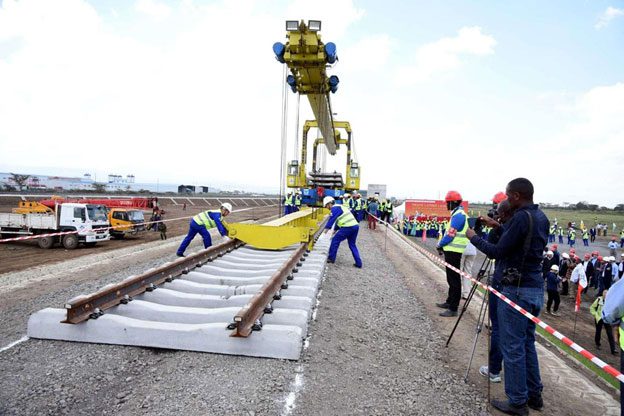
With Kenya aggressively reviving its own SGR extension from Naivasha to the Malaba border, Uganda is running out of time. Treasury Secretary Ramathan Ggoobi’s target for financial closure has hit a wall of compliance checks, pushing the true release of money well into next year.


