






President Yoweri Kaguta Museveni has called for accelerated regional integration within the East African Community (EAC), emphasizing the need for improved infrastructure, enhanced trade cooperation, and the
fast-tracking of plans for a common currency to boost economic growth and prosperity across the region.
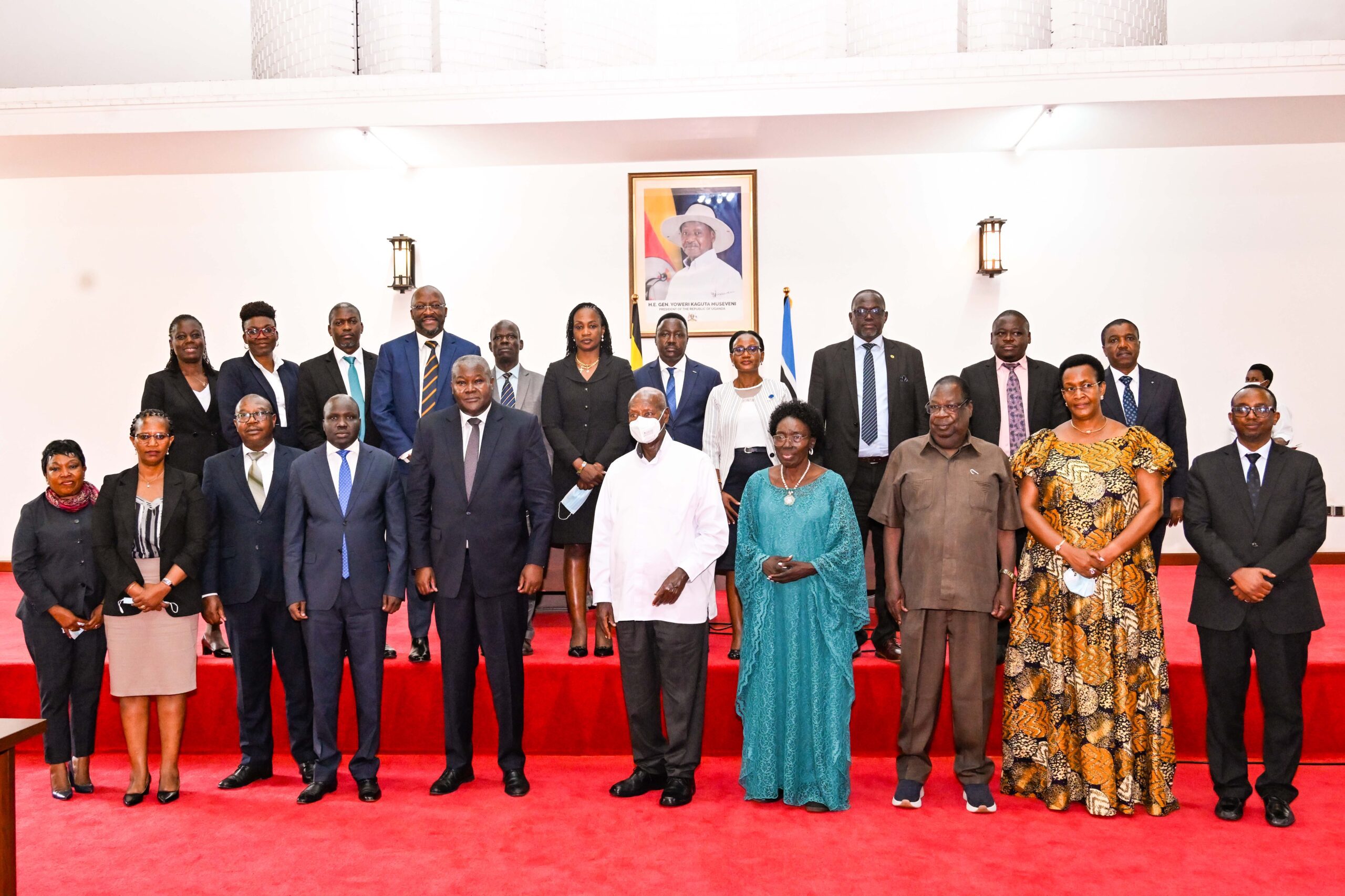
The President made the remarks today during a meeting with the Secretary-General of the East African Community, Mr. Stephen Patrick Mbundi, and his delegation at State Lodge, Nakasero.
The meeting, which was also attended by the First Deputy Prime Minister and Minister for East African Community Affairs, Rt. Hon. Rebecca Alitwala Kadaga, focused on key issues affecting the regional
bloc, including trade facilitation, infrastructure development, health, financing, staffing challenges within EAC institutions, and the broader agenda of regional integration.
President Museveni, who currently serves as chairperson of the East African Community, stressed the importance of strengthening cooperation among member states and ensuring the effective implementation of programs aimed at improving the livelihoods of East Africans.
He challenged the East African Business Council to support rather than undermine the growth of the regional market.

“We should engage in a structural way and tell them that please stop misusing the member states to distort the growth of the East African market,” President Museveni said.
The President also reiterated his support for the development of integrated transport infrastructure across the region, particularly the rationalisation of transport systems to improve efficiency and reduce
costs. He argued that heavy cargo and petroleum products should primarily be transported by railway, leaving roads for passenger traffic and lighter cargo.
“Now the infrastructure I totally support. We must rationalize the transport system. The railway transport should carry heavy goods and petroleum products, while roads remain for passengers and light cargo,”
President Museveni said.
He directed the relevant transport authorities and EAC officials to work together to develop practical solutions for regional transport connectivity.
“The transport committee should meet and really concretize this. I totally support it. I agree. I will tell our minister of Transport, and the minister for East African Affairs here will coordinate them to meet and work out all these connections,” he added.

During the discussions, President Museveni also welcomed a proposal by the EAC Secretariat requiring non-member countries that export goods into the East African market to contribute financially to the
Community. The President described the idea as innovative and worthy of consideration.

“These people who are selling things from here, why don’t they contribute? It’s fantastic. I had not thought about it, but I think it is a new idea and a very good idea,” he noted.
Rt. Hon. Kadaga highlighted the immense responsibility facing the EAC leadership, particularly under President Museveni’s chairmanship, noting that he is widely regarded as one of Africa’s foremost advocates of regional integration.
“We have a very heavy burden because you are the chair of the summit on this continent. You are well known as the champion of integration, so we have a bigger burden to deliver for the community,” Rt. Hon. Kadaga
said.

She expressed optimism that significant progress could be achieved during President Museveni’s tenure, particularly regarding the remaining pillars of the integration agenda.
“I am really hoping that during your tenure we should be able to achieve at least the last two pillars, integration and monetary union,” she added.

A major highlight of the meeting was the discussion on the proposed East African Monetary Union, with Secretary General Mbundi urging President Museveni to engage regional central bank governors to
expedite progress towards the establishment of a common currency.
According to Mr. Mbundi, delays in implementing the monetary union continue to affect businesses and ordinary citizens due to persistent exchange rate fluctuations among member states.


