





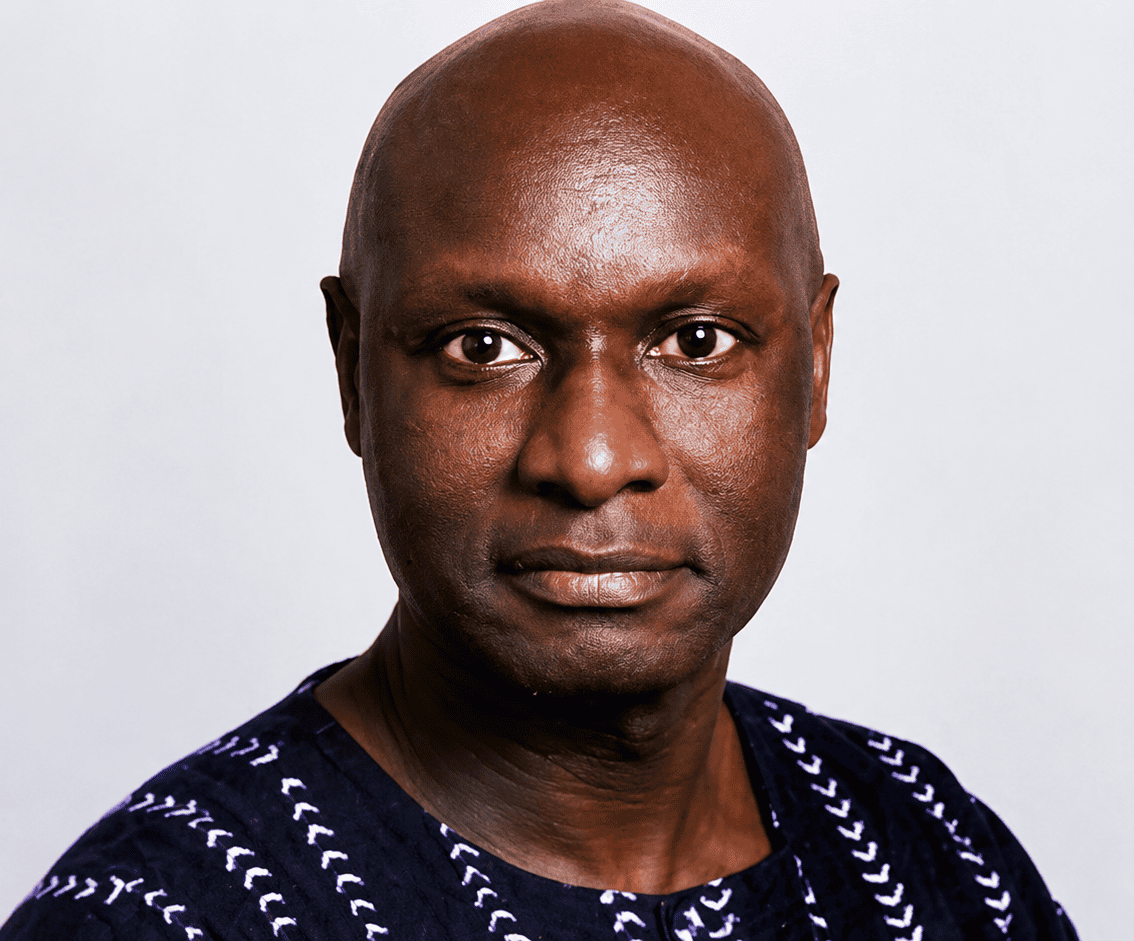
President Yoweri Museveni has endorsed veteran diplomat Olara Otunnu for the position of United Nations Secretary-General, describing him as a candidate with the experience, integrity and diplomatic credentials to lead the global body.
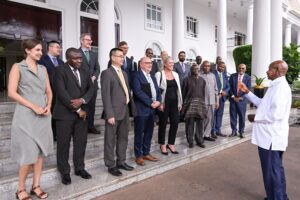
“I met ambassadors representing members of the United Nations Security Council and formally presented Ambassador Olara Otunnu as Uganda’s candidate for the position of United Nations Secretary-General,” Museveni said.
“I urged them to convey Uganda’s endorsement to their respective governments. Ambassador Otunnu has the experience, integrity and diplomatic credentials to lead the UN,” he added.
The president also pointed to Uganda’s record in promoting regional peace and hosting refugees as a reflection of the values underpinning the country’s support for Otunnu’s candidature.
Earlier this month, Museveni nominated Otunnu for the position, setting in motion Uganda’s bid to influence leadership at the United Nations.

The nomination was formally communicated to member states in a joint letter by Annalena Baerbock and Zenon Ngay Mukongo, confirming Uganda’s submission under the agreed UN selection process.
“We have the honour to jointly inform Member States that the Republic of Uganda has presented the nomination of Olara Otunnu as candidate for the position of Secretary-General,” the letter reads.
His nomination places Uganda among countries seeking to shape the leadership of the United Nations, with the selection process expected to involve consultations and possible voting in both the Security Council and the General Assembly.
Otunnu Preposition for UN Job
Otunnu vision is centred on strengthening the United Nations’ effectiveness, credibility and responsiveness to emerging global challenges. Drawing on decades of international experience, he said conflict prevention, peacekeeping, peace building and post-conflict recovery should remain the organisation’s foremost priorities.


He also calls for institutional reforms aimed at improving efficiency, accountability and coordination within the UN system while promoting greater transparency, merit and inclusivity in recruitment
On development financing, Otunnu says the Secretary-General should play a stronger convening role in mobilising long-term resources for developing countries with credible development strategies.
He further proposes enhanced international cooperation on emerging technologies, particularly artificial intelligence, urging the United Nations to bring together governments, academia and industry and the private sector to ensure technological advances benefit all humanity.
Otunnu maintains that the office of the Secretary-General should continue to be guided by moral authority, humility, consensus-building and active engagement with member states in advancing peace, sustainable development and international cooperation.
Biography


Otunnu born 6 September 1950 is a politician, diplomat, and lawyer. He was President of UPC from 2010 to 2015 and stood as the party’s candidate in 2011 presidential elections.
He received his early education at Mvara, Mucwini, and Anaka primary schools. He received his secondary education at Gulu High School and Kings College Budo then attended Makerere University where he was president of the Students’ Guild. Throughout his time as a student, he played an integral role leading the resistance movement against the Idi Amin regime, co-founding and serving as Secretary General of the Uganda Freedom Union, an organization that brought a number of patriotic Ugandans together in the struggle against Amin. Facing increasing threats from the government, Otunnu was forced into exile in 1973, evading arrest and escaping the country into Nairobi Kenya.There, he received an Overseas Scholarship to attend Oxford University In 1976, he attended Harvard Law School under a Filbright scholarship
Career


From 1980 to 1985, Otunnu served as Uganda’s Representative at the United Nations . In 1980, he was appointed Uganda’s Permanent Representative at the UN by President Milton Obote During this period, he served in a variety of major roles. In 1981, he was named president of the UN Security Council where he presided over the election of Secretary General Javier Perez De Cuellar and invented the system of straw balloting commonly known as the Otunnu Formula still in use today.
From 1982 to 1983, he served as a Vice-President of the UN General Assembly as well as Chairman of the Contact Group on Global Negotiations. The following year he worked as the Chairman of the UN Commission on Human Rights .
From 1985 to 1986, Otunnu served as Uganda’s Minister of Foreign Affairs, and played a critical role in orchestrating the Nairobi Agreement of December 1985.
Otunnu was appointed President of the International Peace Initiative in 1990, and served in that role until 1998, transforming the profile of the organization, attracting major new funding, and expanding its operations.


Otunnu was appointed by United Nations Secretary-General Kofi Annan as UnderSecretart General and Special Representative for Children in Armed Conflict on 19 August 1997, taking office on 1 September 1997.
Otunnu brings decades of diplomatic and international experience. He served as Uganda’s Permanent Representative to the United Nations from 1980 to 1985 under President Milton Obote.
During that period, he held several high-level roles, including president of the UN Security Council in 1981, where he presided over the election of then Secretary-General Javier Pérez de Cuéllar.
He is also credited with introducing the “straw polling” method, widely known as the Otunnu Formula, which remains part of the process for selecting UN secretaries-general.
From 1982 to 1983, Otunnu served as Vice President of the UN General Assembly and chaired the Contact Group on Global Negotiations. He later chaired the UN Commission on Human Rights.
Between 1985 and 1986, he served as Uganda’s minister of foreign affairs, playing a role in the Nairobi Agreement.
Otunnu later became President of the International Peace Institute in 1990, a position he held until 1998, helping to expand the organisation’s global reach.
In 1997, he was appointed by then UN Secretary-General Kofi Annan as Under-Secretary-General and Special Representative for Children in armed conflict.


