






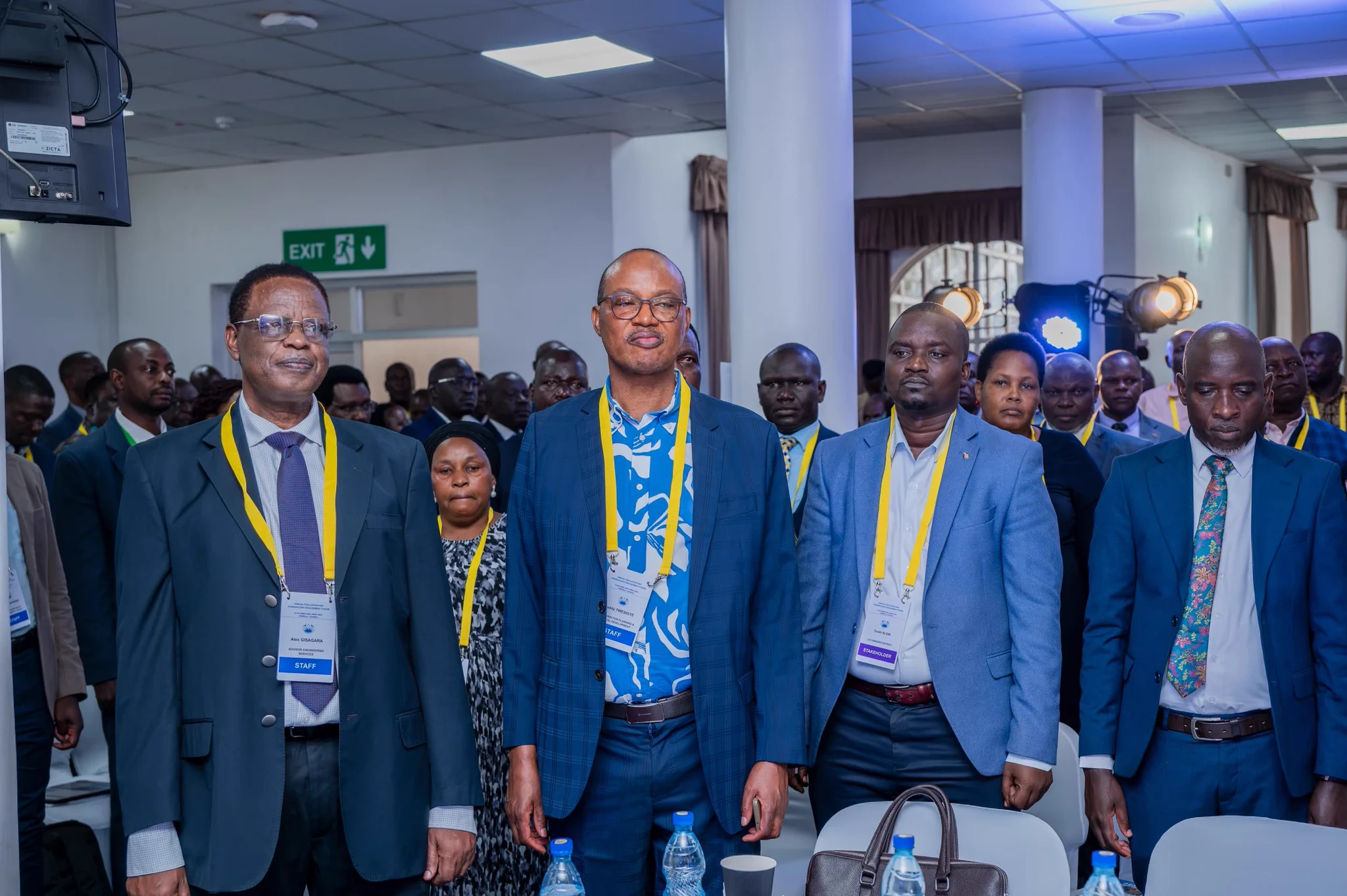
When water supply disruptions occur within rural outposts or municipal suburbs, local administrative leaders—including Local Council chairpersons, Town Clerks, and Resident District Commissioners—frequently serve as the primary point of contact for aggrieved residents. Acknowledging that sustainable utility governance requires collaborative management, the National Water and Sewerage Corporation (NWSC) transitioned from internal boardroom deliberations to an open civic platform. The corporation hosted its Annual Evaluation and Stakeholder Engagement Forum, structurally designated as the NWSC Feedback Baraza.
Convened at the International Resource Centre (IREC) in Bugolobi, Kampala, this summit decentralized public sector authority by facilitating direct engagement between top utility executives and key civic stakeholders. Guided by the theme “Water for All; For Health and Prosperity,” the forum drove institutional transparency, replacing conventional public relations presentations with a rigorous, community-led accountability review.

In developing economies, public utility operations frequently encounter bottlenecks when centralized institutional planning overlooks localized administrative challenges. Infrastructure expansions mapped out on technical blueprints routinely intersect with complex land tenure disputes, rapid urban sprawl, and intermittent power grid instability that compromises pumping station efficiency.
The Baraza functions as a proactive civic governance mechanism to solve these systemic friction points. Rather than addressing service gaps retrospectively, the NWSC leadership team—led by Managing Director Dr. Eng. Silver Mugisha—engaged directly with local government representatives to fulfill three core governance objectives: reviewing the root causes of stalled pipeline extensions, assessing the operational efficiency of completed infrastructural works, and aligning planned supply stabilization projects with local administrative timelines.
During the sessions, civic leaders exercised direct oversight, presenting critical field data regarding inactive distribution networks and expanding informal settlements. The General Manager of Kampala Water, Eng. Andrew Sekayizzi, alongside Eng. Amayo Johnson (Deputy MD Technical Services), systematically logged these regional engineering and localized issues. Simultaneously, NWSC’s commercial wing evaluated customer satisfaction insights brought forward by the community representatives, ensuring community voice directly shapes commercial policy.
In response, executive management opened its capital deployment strategy to public scrutiny. Technical teams detailed how ongoing network upgrades, secondary treatment facilities, and localized booster installations are structurally engineered to stabilize water pressure across urban centers and peri-urban hubs.
By formalizing this dialogue, NWSC transforms local government leaders from external critics into active partners in utility management. The annual forum sets a powerful precedent for public sector accountability, demonstrating how shared civic governance ensures that multi-billion-shilling infrastructural investments are both transparent and aligned with municipal realities.


