





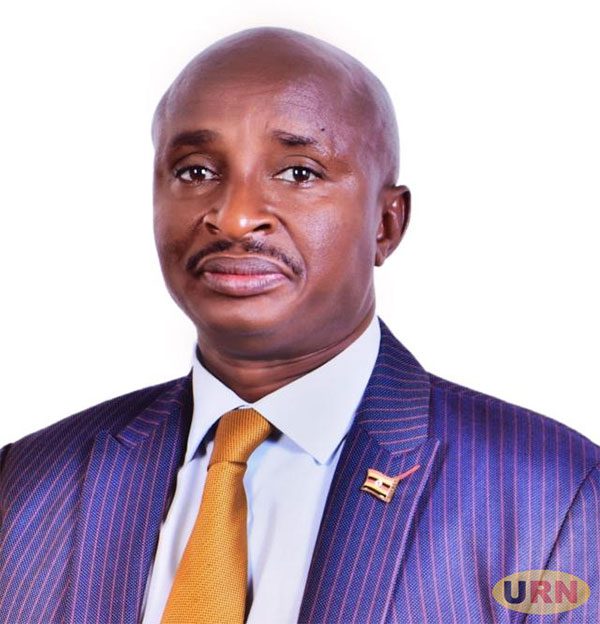
Senior Presidential Advisor and Chairperson of the National Resistance Movement (NRM) for Kayunga District, Moses Karangwa Kalisa, has died following a tragic road accident.
Karangwa was involved in the accident on Sunday evening at Ssukka Village near the Lake Oil Pump Fuel station in Kayunga District. He was initially rushed to Kayunga Hospital before being referred to Nakasero Hospital in Kampala, where he later succumbed to his injuries.
Minister for the Presidency Milly Babalanda confirmed Karangwa’s death in a post on her X account.
“It is with deep sorrow that I announce the passing of the Senior Presidential Advisor and Chairperson of NRM Kayunga District, Moses Karangwa Kalisa, following a tragic accident,” Babalanda said.
She described Karangwa as a dedicated member of the National Resistance Movement (NRM), noting that he will be remembered for his loyalty and service to the party.
“We extend our heartfelt condolences to the bereaved family during this difficult time. May his soul rest in eternal peace,” she added.
His career
Moses Karangwa Kalisa was a prominent Ugandan political figure, businessman, and National Resistance Movement (NRM) mobilizer who rose through local party structures to become one of the influential power brokers in Kayunga District and the wider central region political landscape.
At the time of his death following a road accident in Kayunga District, Karangwa was serving as Senior Presidential Advisor for Special Duties and also the NRM Chairperson for Kayunga District, positions that placed him close to the ruling party’s inner political machinery.
Rise within NRM structures
Karangwa built his political career through party mobilisation and leadership at district and municipal levels. He previously served as NRM chairperson in Jinja Municipality before expanding his influence into Kayunga, where he became one of the party’s key grassroots mobilisers.
His rise culminated in his appointment in early 2026 by President Yoweri Museveni as Senior Presidential Advisor, a role that formally recognized his long-standing loyalty and organisational role within the ruling party.
Business interests and local influence
Karangwa was widely described as a wealthy businessman with investments spanning real estate, agriculture, transport, and security-related enterprises. Reports over the years also linked him to extensive land ownership and business operations across districts including Jinja, Kamuli, Kayunga, and Nakaseke.
He was often portrayed as part of a generation of politically connected businessmen whose economic influence overlapped with local party structures and grassroots mobilisation networks.
In his later years, Karangwa increasingly positioned himself as a public advocate for education and skills development. In 2026, he graduated with a diploma in Social Work and Social Administration from Kampala University, describing education as essential for better leadership and decision-making.
He publicly encouraged wealthy Ugandans and political leaders to pursue academic knowledge alongside business success, arguing that education improves understanding of social issues and governance challenges. ([Monitor][4])
Political controversies and public criticism
Despite his political success, Karangwa’s career was also associated with controversy. Over the years, he faced allegations and public criticism related to land disputes, political dominance in Kayunga, and influence in internal NRM power struggles.
Some critics described him as a highly influential local power broker whose political style was closely tied to patronage networks and strong control over local party structures. These perceptions made him a polarising figure in Kayunga politics.
Karangwa leaves behind a mixed legacy — celebrated by supporters as a loyal NRM mobiliser and development-minded leader, but also viewed by critics as a controversial political operator who benefited from deep involvement in local power structures.
His death marks the end of a long career that blended politics, business influence, and grassroots mobilisation within Uganda’s ruling party system


