






Disaster Preparedness Minister Sam Engola have called for an immediate halt to perpetual relief food hand-outs to Karamoja, pushing for investments in irrigation schemes, grain silos, and commercial agriculture.
Appearing before Parliament’s Presidential Affairs Committee Engola noted that emergency relief food serves only as a temporary life-saving measure.
Engola stressed that government has failed to implement cohesive, forward-looking strategies to solve the region’s food deficit.
“The problem of Karamoja, which is 40 years, is very easy to finish, but there is no sitting where people sit and plan for Karamoja,” Engola told the committee.

The minister revealed that the government secured Shs45 billion from the Consolidated Fund to dispatch emergency food supplies across all districts in the region.
Engola advocated for long-term investments in modern grain silos and expanded water distribution systems.
He underscored that the sub-region has the potential to feed itself if provided with functional irrigation facilities.
Committee Chairperson Hon. Martin Ojara Mapenduzi challenged the Office of the Prime Minister to present a sustainable master plan instead of relying on seasonal emergency fund mobilisations.
“Every year Karamoja faces severe hunger as a result of prolonged drought,” Mapenduzi said.
Dodoth East County MP Peter Pex Paak criticized the continuous reliance on emergency interventions without addressing the root cause.

“For 40 years, you have been feeding Karamoja. You want to feed Karamoja for another 40 years? … Why don’t we have permanent solutions? A ministry for disaster must be having plans to prevent certain things,” Paak argued.
Bushenyi District Woman Representative Hon. Annet Katusiime and Manafwa District Woman Representative Hon. Rose Mutonyi also pressed for a structured, production-led agricultural blueprint for the area.
In response, Assistant Commissioner for Disaster Preparedness Catherine Ahimbisibwe stated that the National Planning Authority and the Ministry for Karamoja Affairs are drafting a comprehensive Karamoja Development Plan.
The forthcoming plan focuses on large-scale water harvesting, commercial farming, irrigation grids, and environmental protection.


Ahimbisibwe reported that the recent relief campaign distributed over 9.4 million kilogrammes of maize flour and beans to 313,987 households across nine districts.
She explained that logistics hurdles, broken-down vehicles, poor roads, and discrepancies between ground data and the 2024 census figures left some households without rations.
To address transit delays, Principal Disaster Management Officer Cyprian Dhikusooka told lawmakers that the ministry urgently requires at least six additional heavy trucks.
“We need extra six trucks,” Dhikusooka said, estimating the cost of each vehicle at up to Shs1 billion.
Mapenduzi ordered the ministry to furnish the committee with comprehensive operational reports detailing emergency budgets, El Niño contingency programmes, and citizen relocation expenses.


Members of Parliament and disaster preparedness officials have demanded a definitive transition from temporary food hand-outs to commercial agriculture and irrigation infrastructure to break Karamoja’s decades-long food insecurity crisis.
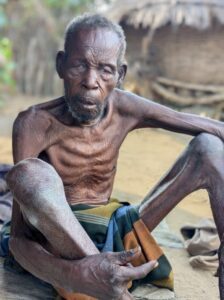
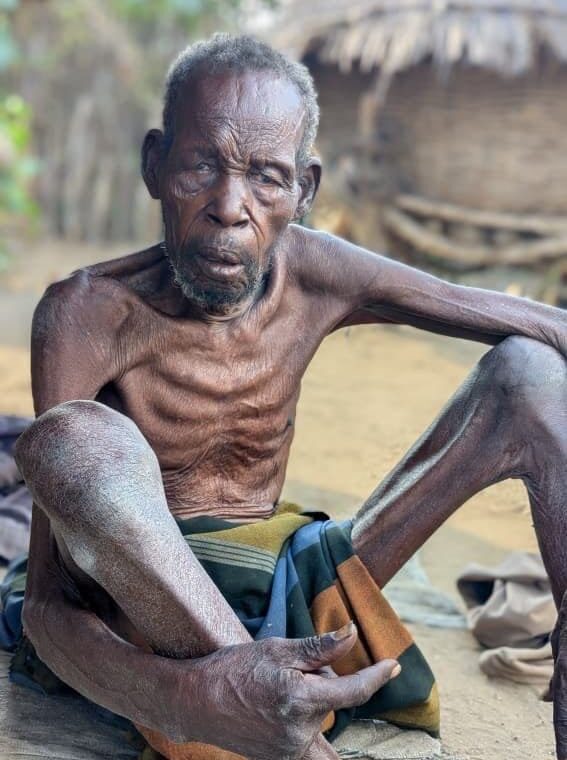
Nearly half a million people across Uganda’s Karamoja region are struggling to get enough food to eat as families exhaust their food stocks and water stress pushes them deeper into crisis, Oxfam said today.
Persistent erratic weather, poor harvests, weak infrastructure, and rising food costs have repeatedly eroded people’s ability to grow food, protect livestock, and recover between crises.
“People in Karamoja are not just running out of food, they are also running out of options. Climate shocks and long-standing inequalities, including low investment in education and water infrastructure, have steadily stripped away their ability to cope,” said Francis Shanty Odokorach, Oxfam in Uganda Country Director.


Odokorach added, “Families need urgent support now to buy food, access safe water and protect their livestock, which their recovery depends on. Although the government has provided support, it remains insufficient to meet the scale of need amid constrained humanitarian funding.”
According to the IPC, only 54.1 per cent of households still had food stocks, and in most districts, food stocks are expected to last less than a month. At the same time, crop and livestock pests, limited access to seeds and wildlife damage to fields have added further pressure.


“Families need urgent support now to buy food, access safe water and protect their livestock, which their recovery depends on. Although the government has provided support, it remains insufficient to meet the scale of need amid constrained humanitarian funding”Francis Odokorach Oxfam Uganda Country Director
“In Kotido District, the prolonged dry spell has wiped out gardens of crops, especially in Napumpum Sub-county. The ground is all dry and bare. You can visibly see people, especially children, very hungry. Families have run out of food early and are now forced to skip meals. Livestock are also suffering from a lack of water and pasture. People really need support,” said Lokiru Musa Hassan, Project Officer at Oxfam in Uganda.
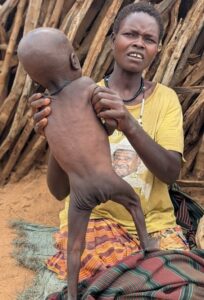
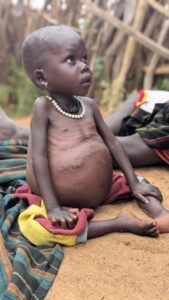
Children and mothers are bearing a particularly heavy burden. The IPC estimates that 122,100 children aged 6-59 months are expected to suffer from acute malnutrition and require treatment between March 2026 and February 2027, including 30,600 children with severe acute malnutrition. A further 8,000 pregnant and breastfeeding women are expected to suffer from acute malnutrition during the same period.


