






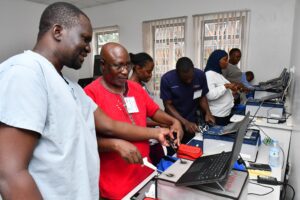
Gynaecology lecturers from Makerere University are undergoing specialised training in the fundamentals of laparoscopic surgery at Kyabirwa Surgical Centre, in a move expected to expand access to safer, minimally invasive procedures across Uganda.
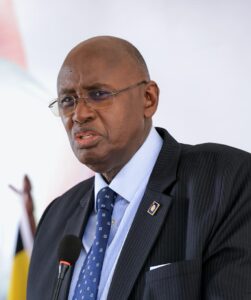
Dr Joseph Okello Damoi, the Head Surgeon at Kyabirwa Surgical Centre, said the course, which began with virtual sessions and moved to hands-on training this week, equips participants with essential skills for practising laparoscopic surgery.

“World over, laparoscopic surgery has been proven as a safer, better method of delivering surgeries to patients for the procedures where it applies,” Damoi said.
“This course teaches you the basics, what you need to know in order to be ready to practice laparoscopic surgery.”
Sixteen lecturers from Makerere University’s Department of Obstetrics and Gynaecology are taking part, alongside one doctor from Gulu and another from Jinja Regional Referral Hospital.
The programme is run in partnership with the university and is accredited by the Society of American Gastrointestinal and Endoscopic Surgeons (SAGES).
Anna Kalumuna, executive director of Global Surgical Initiatives at Kyabirwa Surgical Centre, said the centre is privileged to be an accredited SAGES centre that can both train and administer the certification exams.
“We have partnered with Makerere University, the Obstetrics and Gynaecology Department, to do a skills enhancement for the lecturers—at the end of the hands-on, we will administer the exam on behalf of SAGES and hopefully they will pass and can be certified in what we call Fundamentals of Laparoscopic Surgery. That certification is an internationally recognised certificate,” She said.
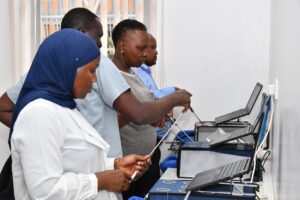
The programme started with self-paced virtual theory sessions in July. Participants are now completing a week of practical skills training in the centre’s simulation laboratory, after which they sit the practical examination.
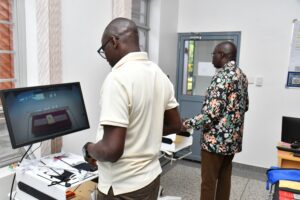
Samuel Banturaki, the simulation Lab Coordinator and Fundamentals of Laparoscopic Surgery proctor at the centre, said the local training removes the previous need for doctors to travel abroad at high cost.
“Before we became accredited as a training and testing centre… participants or surgeons who wanted a similar programme could travel overseas. Looking at accommodation, travel and flights, it was costly,” he said.
“Here they are in a position to learn in a risk-free environment where you are able to make all your errors before you ever step into the theatre,” he added.


Associate Professor Nakalembe Mariam, head of the Department of Obstetrics and Gynaecology at Makerere University, said the partnership was initiated so that lecturers can pass on the skills to the next generation of medical students.
“Being people from the centre of training for medical students at undergraduate and postgraduate level, a lot of students pass through our hands. So as we keep passing on these skills, wherever they go, they will be able to pass on the skills,” she said.
Nakalembe noted that Uganda has lagged in adopting minimal-access surgery partly because of cost and limited training opportunities, but increased exposure should help make the services more widely available.


Damoi observed that the number of laparoscopic surgeons in the country remains low and is concentrated mainly in Kampala and a few private hospitals.
“Most of the laparoscopic surgeons are found in Kampala. Maybe a number of the big private hospitals have laparoscopic surgeons. The public hospitals… I’m not sure if they have the services routinely running. Definitely this will boost the number. But more than that, being gynaecology lecturers, it will have a ripple effect as they are able to teach it to their students,” he said.
He called on the Government to prioritise scaling up training and equipping at least regional referral hospitals with the necessary tools.
“The benefits of laparoscopic surgery are well known, well documented, well researched, and well published. So definitely the Government should come up with a plan to scale it up in the country,” Damoi said, adding that at least regional referrals should be equipped, if possible eventually district hospitals.


Kalumuna highlighted the patient benefits of the technique, commonly known as keyhole surgery. These include smaller incisions, reduced bleeding, faster recovery, shorter hospital stays, earlier return to work and minimal scarring.
Kyabirwa Surgical Centre has previously offered similar training to surgeons from both public and private hospitals as well as trainees under the College of Surgeons of East, Central and Southern Africa (COSECSA). Another group of about 30 surgeons is expected for a similar course in October.
Officials said the current collaboration with Makerere is the first formal university partnership of its kind at the centre and is expected to open doors for further training programmes, including fundamentals of endoscopy.


