
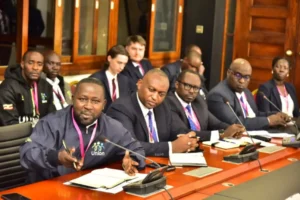







The High Court Land Division has introduced a “Mediation Settlement Fortnight” aimed at fast-tracking the resolution of land disputes and easing pressure on an already congested case backlog.
High Court Judge Justine Atukwase unveiled the initiative on behalf of the Land Division, announcing that mediation sessions will run from June 29 to July 10, during which all pending land cases will be scheduled for alternative dispute resolution.
“The plaintiff sues for trespass and seeks recovery of the land, a declaration that he owns it, compensation for losses, cancellation of the defendant’s faulty title, and an order forcing the defendant to transfer ownership properly,” she explained.


Atukwase also highlighted several challenges slowing down the disposal of land cases at the division, including litigants delegating matters entirely to lawyers without personal involvement, limited public awareness about mediation, delays in advocacy processes, and what she described as “pride” that often obstructs settlements.
She urged parties in land disputes to attend mediation sessions in person to allow direct engagement, faster resolutions, and reduced tension in contested land ownership and resettlement matters.
The judiciary says the initiative is intended to decongest the Land Division registry and promote quicker, mutually agreed settlements outside prolonged court battles.
Land disputes in Uganda are a widespread issue affecting nearly one in four households. They primarily stem from complex land tenure systems, disputed boundaries, family/inheritance wrangles, and fraudulent land titles. Due to massive case backlogs, the Ugandan Judiciary actively encourages out-of-court settlements and local dispute resolution
Culturally, local councils and clan leaders are the most trusted and utilized first-step authorities for solving boundary and family land disputes. Traditional mediation mechanisms (such as the Larii Tal in northern Uganda) are often preferred for their restorative approach


According to the Uganda Police Annual Crime Report land-related crimes and fraud surged by 67% compared to the previous year, highlighting an escalating crisis. Police recorded 663 direct land fraud cases, up from 397 cases in 2024, with Northern Uganda accounting for 33% of these conflicts
The report highlights a growing trend of criminal activity surrounding land ownership across the country.The report indicates that poor land documentation is heavily fueling family and inheritance conflicts. Children often illegally evict surviving parents, or relatives dispute ownership upon a parent’s death.
Meanwhile Issues like corruption, weak enforcement of land laws, and power imbalances continue to hinder access to justiciary
Minister for Lands Judith Nabakooba says her ministry is tackling widespread land conflicts through mass titling, technological upgrades to stop fraud, and strict regulations on evictions. By targeting rogue brokers and modernizing land registries, the government aims to secure tenure and resolve systemic land disputes across the country
She also said the ministry will soon roll out blockchain and AI technologies through the Uganda National Land Information System to drastically reduce the time it takes to transfer land, prevent the fabrication of land titles, and stop encroachment on public reserves.
Pushing for new legislation—such as the Real Estate Bill—to regulate land and property brokers, curbing systemic fraud and corruption that fuels Uganda’s land conflict crisis
Pushing for new legislation—such as the Real Estate Bill—to regulate land and property brokers, curbing systemic fraud and corruption that fuels Uganda’s land conflict crisis


