

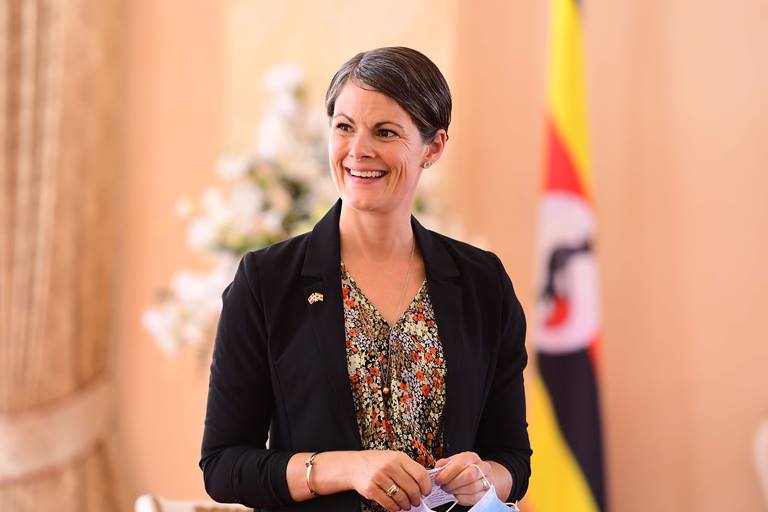
The Embassy of Denmark in Kampala has committed $23.47 million to the UN Capital Development Fund to help rural communities in Uganda adapt to the impacts of climate change.
Uganda faces high vulnerability to climate change, with agriculture, water, and infrastructure at risk from increased flooding, drought, and rising temperatures . Rising temperatures and erratic rainfall threaten crops like Arabica coffee, rice, and maize. Increased investment in climate-smart agriculture and resilient infrastructure is urgent to avoid severe economic and social disruption.
Over the next four years, the funding will enable local governments and communities across the East African nation to strengthen local economies using UNCDF’s LoCAL+ program. For the first time, the initiative will include a new component designed to engage the private sector and unlock investment for locally led, green economic development.

The contribution builds on a previous four-year commitment of more than $14 million from the Danish government in 2022, which included earmarked allocations for Uganda. That funding, channeled through UNCDF’s Local Climate Adaptive Living Facility, supported resilience-building investments in flood protection, climate-resilient agriculture and infrastructure.
“Climate resilience is won or lost at the local level. Our DKK 150 million commitment to Uganda is a testament to our belief in locally led solutions by the countries and communities most exposed to climate change,” said H.E Signe Winding Albjerg, Ambassador of Denmark to Uganda
“Through the LoCAL+ programme, Denmark is proud to stand with Uganda to strengthen the very institutions and communities that are redefining what climate adaptation looks like. It is partnership in action, delivering practical, life-changing solutions exactly where they matter most. Together, we are ensuring that climate adaptation isn’t just a global promise, but a tangible reality for those who lead the way on the climate change frontlines,” she added.

This contribution initiates a pilot for the new LoCAL+ approach, establishing the first structural framework designed to unlock private sector capital for locally led adaptation to the impacts of climate change. By creating a ‘pre-approved’ channel for market-based finance and conducting an initial scoping study, this phase builds the necessary architecture to eventually deploy instruments such as blended finance and guarantees for green small and medium-sized businesses.
“These funds from Denmark meet a critical need for investment in resilience building at the community level, where the impacts of climate change are most acutely experienced,” said Justine Audrain, Regional coordinator for LoCAL+ at UNCDF. “We welcome Denmark’s commitment to scaling adaptation action with their support to also include the private sector and effectively complement and leverage public sector grants to scale adaptation to the impacts of climate change.”
“UN Capital Development Fund welcomes the support of Denmark, not just because it enables us to scale up our work in Uganda, but because they have opened the door to piloting a model of unlocking private sector investment for adaptation and resilient economies that we want to expand across the region,” said Omon Ukpoma-Olaiya, UNCDF’s Regional Investment Team Lead for East and Southern Africa.
The Danish contribution will enable a major expansion of climate resilient investments using PBCRGs and position LoCAL+ as the primary vehicle for channeling climate finance to local governments in Uganda. The programme is aligned with Uganda’s Nationally Determined Contribution (NDC), National Adaptation Plan (NAP) and National Climate Finance Strategy.
Climate resilient investments benefit 5.3 million people across 32 districts, more than doubling the current trajectory and exceeding earlier targets. Expansion of activities from 14 to 32 districts by 2027.
Scaling climate-resilient investments to 250+ cumulative local projects by 2028, with the average grant size increasing from $ 150,000 to $ 200,000 to support more impactful and durable small-scale infrastructure.
