

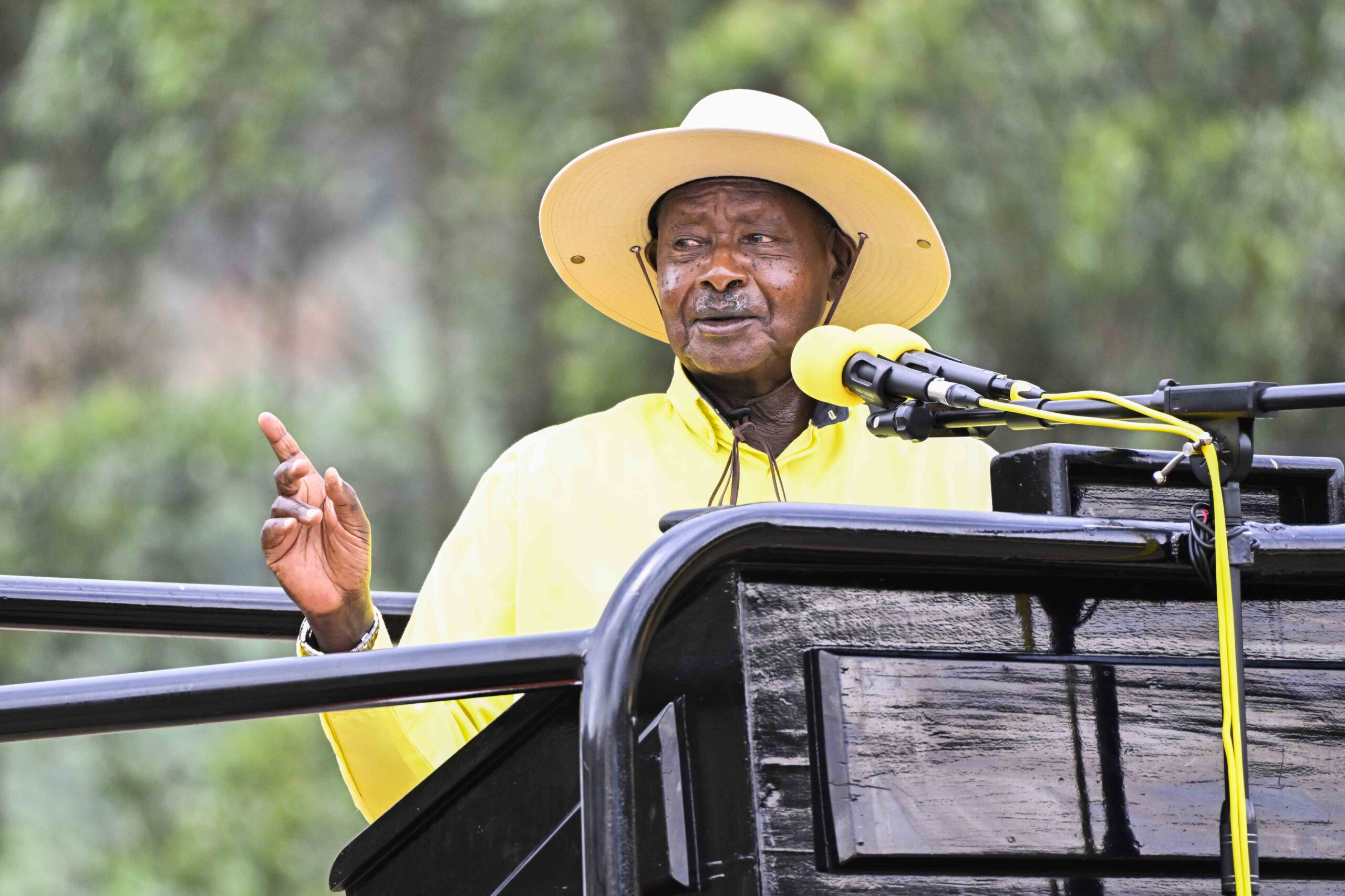
President Yoweri Museveni has assured traders affected by recent floods in Kampala that the government will compensate them for losses incurred, saying the matter is settled and not open to dispute.
“We are going to go through that report. We have to compensate you because you made losses. There are no arguments about that,” President Museveni said.
The President made the remarks while meeting leaders of the trading community at his Kisozi Farm. The delegation was led by John Kabanda, President of the Federation of Uganda Traders Association (FUTA).

The assurance follows severe flooding that struck Kampala over a month ago, further straining the already fragile drainage system along the Nakivubo Channel. After the October 31 downpour, another episode of heavy rainfall around November 19–20 triggered fresh flash floods in several low-lying areas, including the Container Village and the Queensway interchange.
Traders say they lost property worth billions of shillings. Working with city authorities, they attributed the flooding to ongoing construction works along the Nakivubo Channel, which they say narrowed key drainage routes and worsened water flow.
Beyond the floods, President Museveni also addressed concerns over taxation, particularly those raised by young entrepreneurs he described as Gen Z.
“Some of the Gen Z told me they want to join business but complain about taxes. I explained to them that our taxes are intentional, not accidental,” he said.

The President emphasized that Uganda’s tax regime primarily targets imported and luxury goods rather than locally traded products.
“If you are selling bananas, there are no taxes—except occasional market dues. Taxes are mainly on imported products like perfumes and alcohol,” he explained.
He encouraged traders to focus on internal trade and domestic production, noting that import substitution remains a key pillar of the country’s economic strategy.
“If you don’t want to pay taxes, don’t import. We need taxes to run the economy. Go into internal distribution,” the President said, adding that increased local production would gradually reduce reliance on imports.
President Museveni also thanked traders for their continued support of the ruling NRM party and pledged continued engagement with their leaders to resolve outstanding issues.

Kellen Kiconco, the Presidential Advisor on Tax Matters, praised Kampala traders for opting for dialogue instead of protests, describing them as vital partners in revenue mobilization and national stability.
“I appreciate these traders because they are our first tax collectors. When I first met them, they were planning to demonstrate across the country, but they chose dialogue instead of violence,” Kiconco said.
She added that the traders had documented their challenges and formally submitted them to State House for consideration, while also committing to support President Museveni in the upcoming elections.
John Kabanda said peace and freedom of expression were critical to business growth and thanked the President for maintaining stability despite challenges faced by the trading community.
He said traders had already begun mobilization efforts across the country, including in Fort Portal, Mbarara, Masaka, Jinja, and Mbale, with plans to intensify door-to-door engagement within Kampala.
“We are with you. Even those of us with small businesses are confident they will grow because of the peace and security you have provided,” Kabanda said.
Traders also welcomed the government’s swift response to the floods, noting that both the Minister for Kampala and the Prime Minister visited the affected areas.
One of the affected traders, Aman Kavuma, recalled the President’s directive that traders’ concerns be addressed without prolonged court processes.
“We were affected, many shops were destroyed, and names of flood victims were registered. We are waiting for your guidance,” Kavuma said.
Another trader, Allen Kisakye, said the floods destroyed all her property, highlighting the urgency of compensation and government intervention.
The meeting was attended by Minsa Kabanda, Minister for Kampala and Metropolitan Affairs, and John Musinguzi Rujoki, Commissioner General of the Uganda Revenue Authority.