

By Felix Oketcho
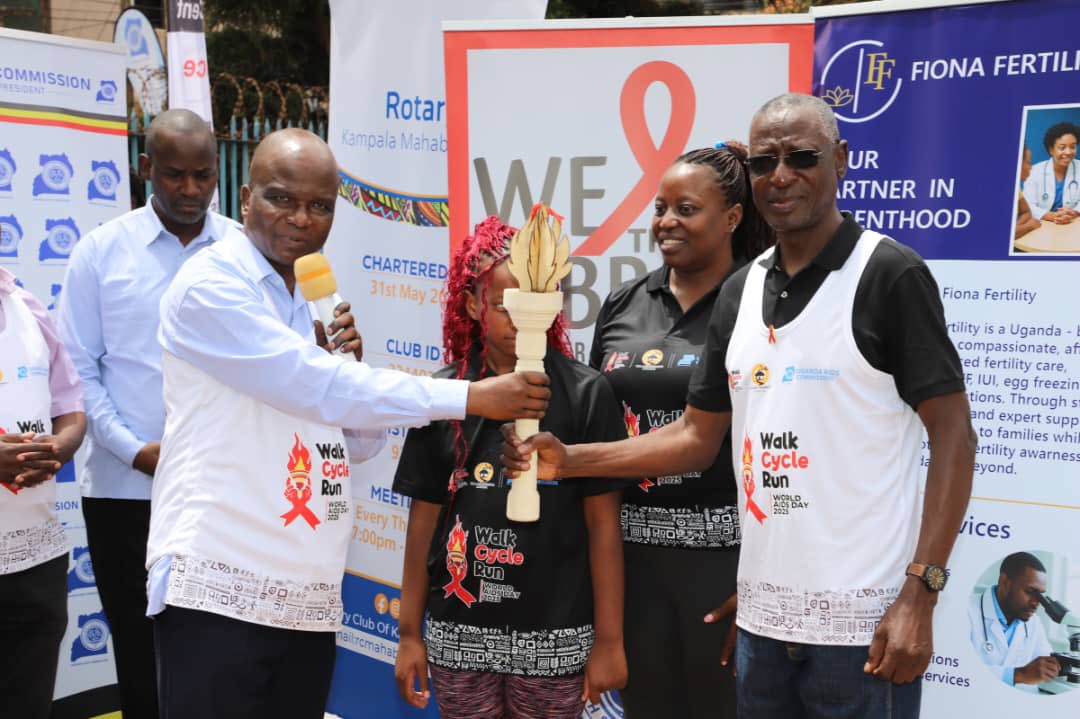
Pressured to hit Zero Hiv/Aids target by 2030,Uganda Aids Commission has partnered with Village Journey Africa to launch Torch awareness campaign to rally Ugandans keep the fight on Aids across the country ahead of World Aids Day 2025.
World Aids Day 2025 which will be commemorated on December 1, 2025,focus on the resilience of the HIV response in the face of challenges like funding cuts and the ongoing threat of HIV transmission worldwide.
It is a day for global solidarity to raise awareness, celebrate progress, and call for continued action to end the epidemic.
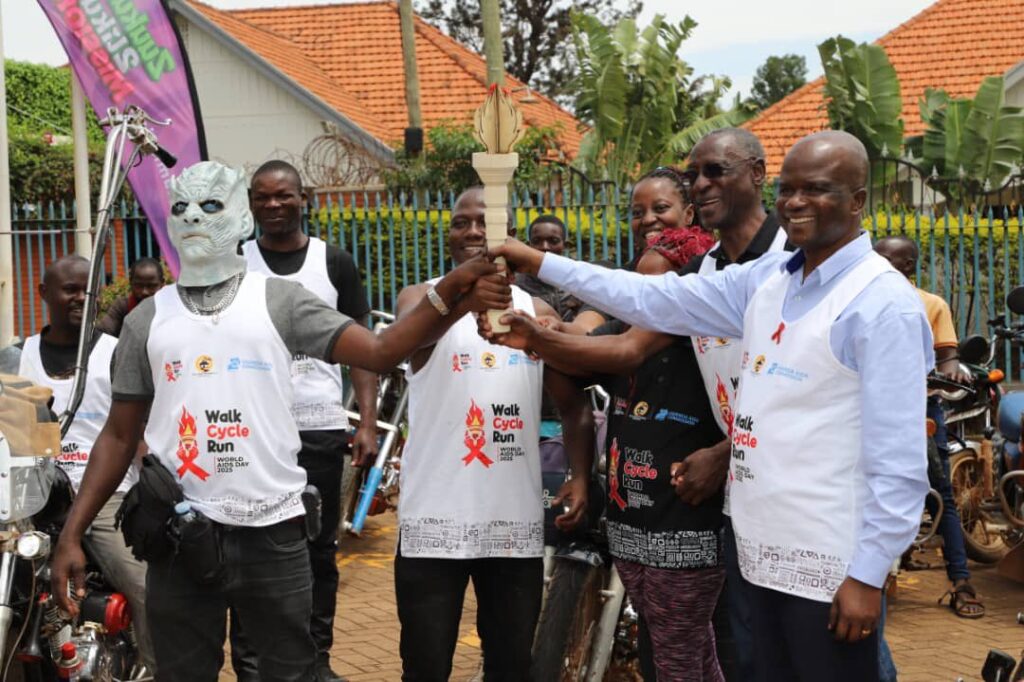
Officiating at the launch in Kampala UAC Director General Dr Nelson Musoba urged private sector to partner with government in scale up up Hiv/Aids awareness campaign.
“We appeal to the private sector to join government in its efforts to raise awareness on Aids intervention.Our development partners have changed their priorities amidst dwindling resources,” he stated.
Mary Mengati Executive Director of Village Journey Africa expressed gratitude to UAC for the partnership saying it will go along way to raising mass public awareness across Mbarara,Gulu,Masaka,Mbale and Bushenyi since they will be using motorcylce riders and skaters to entertain and senstisie the masses on Hiv/Aids prevention.
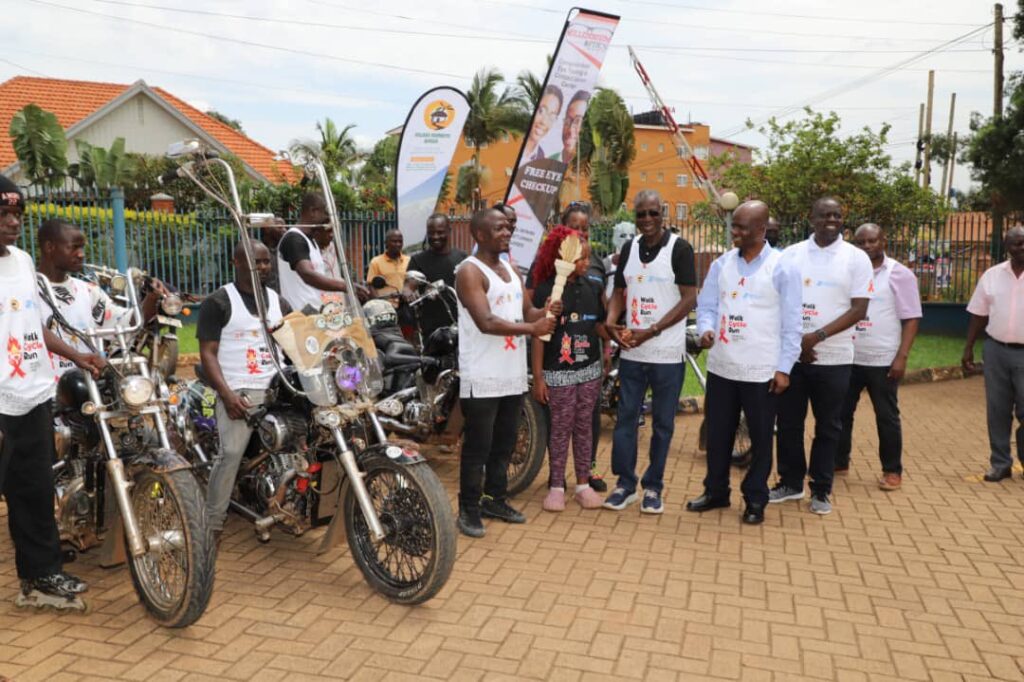
Dr Nelson Musoba, welcomed the Village Journey Africa partnership and strategy saying it will supplement on the current Abstinence Be-faithful and Condom use Strategy.
According to Dr Musoba the National data on Hiv/Aids shows that out of an estimated 1.5 million Ugandans living with HIV today, nearly two-thirds are women and girls.
He adds that among young people aged 15 to 24, about seven in every ten new infections occur among adolescent girls, painting a troubling picture of how poverty and gender inequality still determine who bears the heaviest burden of disease.

Musoba says poverty remains one of the biggest drivers of new infections among women.
“In many villages, a young woman’s ability to make independent choices about her body is limited by her economic situation. When food runs out or school fees can’t be paid, survival frequently depends on men who can offer financial help,”he stated.
Officials from the Uganda AIDS Commission, point out that women with no access to land, stable jobs, or financial independence remain at the highest risk. This group represents the intersection of poverty and powerlessness, two forces that continue to fuel the epidemic among women.

District health officers in high-prevalence regions such as Kyotera report that the economic challenges facing women and girls have driven many into commercial sex work. In Kyotera District, where prevalence is currently the highest in the country, a health officer observes that sex work offers faster money compared to other available jobs, especially for school dropouts and young mothers.
The promise of quick earnings often outweighs the fear of infection, as women are forced to make choices based on immediate needs like food, rent, and school fees for their children.
In Gulu City, health officials estimate that over 5,000 sex workers (most of them young girls and single mothers) operate daily. For many of them, hunger and survival remain stronger motivators than health concerns. The HIV story, therefore, can’t be told without acknowledging the deep link between poverty and exposure to risk.

While Uganda has made progress in introducing new HIV prevention tools such as Pre-Exposure Prophylaxis (PrEP) and the dapivirine vaginal ring, access remains limited.
Ministry of Health data indicates that the country recently received only 2,400 vaginal rings for nationwide use, far below the actual need.
According to Dr. Herbert Kadama from the Ministry’s HIV Prevention Division, logistical gaps and funding limitations have slowed down the scale-up process.
He says that while these tools can empower women to protect themselves without depending on male cooperation, many women in rural areas are not yet aware of them or can’t access them due to supply shortages.
UNAIDS Executive Director Winnie Byanyima insists that keeping girls in school protects them from both economic desperation and sexual exploitation.
She urged government to fund more community-level education to help women understand and trust new prevention technologies.
She argued that education remains one of the strongest shields against new infections.
Research shows that girls who stay in school are far less likely to engage in early sexual activity or transactional relationships.