


The Minister of State for Disability Hellen Asamo has reaffirmed government commitment to fostering an enabling environment for Little Persons through inclusive policies and programs that guarantee equal access to education, healthcare, and economic opportunities.
“Our legal frameworks, including the Constitution and the Persons with Disabilities Act 2020, uphold the rights of persons with disabilities and mandate stakeholders to provide specialized support where needed,”she said.

“The Revised National Policy on Persons with Disabilities prioritizes protection against discrimination and neglect, while promoting improved communication, healthcare access, and social inclusion tailored to individual needs. Since ratifying the UN Convention on the Rights of Persons with Disabilities in 2008, Uganda continues to uphold full participation and non-discrimination of little Persons,”Hellen Asamo stated.
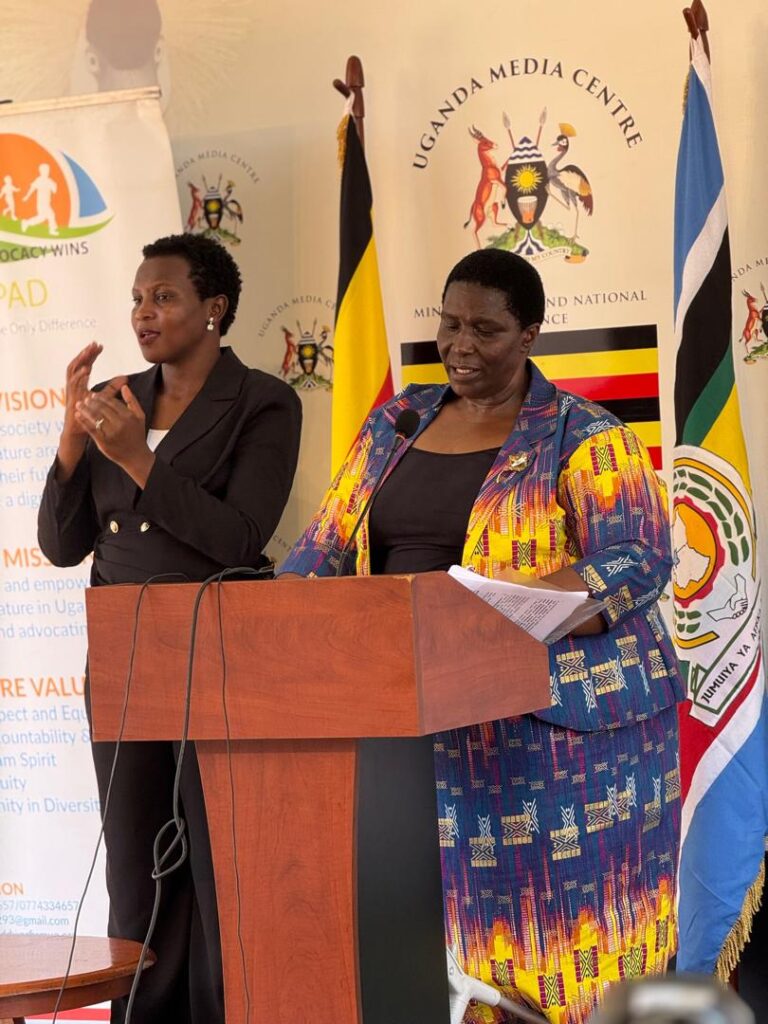
Addressing media in Kampala ahead of the International Day of Little Persons under the theme: “Raising Awareness about Dwarfism and Promoting Inclusion of Little Persons in Uganda” on October 25, Minister Asamo revealed that In education, government has implemented affirmative action to increase enrollment and retention of children and youth affected by short stature in both mainstream and special education settings, facilitating access to tertiary institutions.
She further said Ministry of Health provides specialized services, including early diagnosis and targeted care, to improve well-being of little persons.
“Economic empowerment programs such as the National Special Grant and the Parish Development Model with its 10% allocation for disability-inclusive initiatives, ensure that Little Persons benefit from livelihood opportunities. Government has already set aside 50million shilling as part of Emyooga SACCO for Little Person at national level,”she stressed.

“We remain dedicated to increasing the involvement of Little Persons in policy development and program design, ensuring their voices guide decisions that affect them. Through continued collaboration with stakeholders, the Government will enhance public awareness and service delivery to eliminate barriers, uphold dignity, and advance the full inclusion of little persons in Uganda’s development,” she explained.
The minister however called for urgent mobilization of Little Persons to join other persons with disabilities accessing 10% PDM share and the National Disability Grant.
This year’s International Day for Little celebrations emphasizes the importance of the need to educate the public, challenge misconceptions, and advocate for equal opportunities and rights for Persons of Short Stature in Uganda.
Current challenges
Despite the protection afforded by the Persons with Disabilities Act (2020) and the Revised National Policy on Persons with Disabilities (2023), little persons continue to struggle with accessibility, recognition, and dignity in daily life.
“A major area of concern is the inaccessibility of the physical environment. Most of Uganda’s infrastructure for example buildings, roads, and public facilities have been designed without consideration for persons of short stature.
Walkways and pavements, which could have been safe mobility spaces, are increasingly obstructed by barricades installed by city authorities to control boda boda riders,”Asamo stated.
“In Kampala and other urban areas, these barriers, though intended to prevent motorcycle lawlessness, have inadvertently restricted the mobility of Little Persons, particularly those using wheelchairs or walking aids,”she added.
Asamo further said Little Persons face particularly high risks during childbirth, as delivery beds are typically high and not adapted for their stature, making normal delivery extremely difficult,”she explained.
In the world of education,the minister noted that Little Persons are still marginalized by both the system and social attitudes adding that In many schools, classmates mock Little Persons by forcing them to “touch the opposite ear” over the head a humiliating act used to measure whether someone is “old enough” for school.
“Classroom settings are not adapted to their needs; desks are too high, blackboards are out of reach, and school notice boards are mounted far above their eye level, making it difficult to access information.”she stressed.