



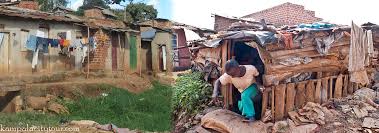
Government is considering providing subsidies to the private sector to spur the construction of low-cost housing in both rural and urban areas, in a move aimed at curbing the rapid growth of slums.
According to Ministry of lands records Uganda’s housing sector faces a critical shortage, with a deficit of over 2.4 million units that increases by hundreds of thousands annually, driven by 5.4%–5.7% urban growth rates. While contributing 11% to GDP, supply meets less than 20% of the 300,000+ required annual units, with 60% of residents in inadequate housing.
“The total deficit exceeds 2.4 million units, including a 210,000-unit shortfall in urban areas and 1.4 million in rural areas. An estimated 300,000 new units are needed annually to close this gap,”Sam Mayanja State Minister for Lands stated.

Mayanja outlining the Ministry’s strategic interventions for addressing Uganda’s housing challenges proposed the capitalization of the National Housing and Construction Company (NHCC) to the tune of Shs350 billion to strengthen its capacity to provide low-cost housing, particularly in urban and peri-urban areas.
“The Ministry recommends capitalization of the National Housing and Construction Company to support the provision of low-cost housing in urban and peri-urban areas,” Mayanja said.
He revealed that government intends to pursue public-private partnerships to harness private sector financing and technical expertise in delivering affordable housing.
According to the Minister, Shs80 billion will be required to facilitate land acquisition for affordable housing projects on 12 already identified sites across the country.


In addition to construction, the Ministry plans to roll out a mortgage liquidity facility aimed at improving access to housing finance. The facility is expected to offer better interest rates and more favorable terms compared to existing financing mechanisms.
Officials from the Ministry told MPs that the high cost of housing remains a key driver of unplanned settlements, especially in fast-growing urban centres.
“The current housing is very costly and that explains why we have mushrooming slums. If we are not careful, most of our urban areas are turning into slums. We want to support the private sector to come in and invest,” said Mr David Wamai, the Assistant Commissioner for Finance and Planning at the Ministry.
As part of its broader housing strategy, the Ministry also plans to partner with Shelter Afrique Development Bank, which provides cheaper and long-term loans dedicated to housing development. Wamai informed the Committee that the Ministry requires Shs250 billion to clear outstanding arrears and subscriptions with the bank, a move that would unlock access to additional housing financing.
However, Members of Parliament raised concerns about regional balance in the Ministry’s plans. The Chairperson of the Committee, Gyavira Ssemwanga, observed that most of the proposed interventions appeared to be concentrated in the central region.
Committee Vice-Chairperson, Andrew Oulanyah, urged the Ministry to pay more attention to other parts of the country, particularly northern and eastern Uganda.
“You are speaking mostly about the central region. For instance, in land registration and titling, we have over 10 million hectares of land in the northern and eastern regions. Can we this time move out to other areas?” Oulanyah asked.
Hon. Gyavira further questioned the adequacy of the Shs970 billion allocated for land titling across all regions, noting that the amount appeared insufficient given the vast acreage of untitled land countrywide.
The Committee is expected to make recommendations on the Ministry’s budget proposals as Parliament continues scrutiny of sector plans for the financial year .
Uganda has a high population growth rate (2.9%) and an urban growth rate of 5.4%–5.7%, causing significant pressure on infrastructure, particularly in Kampala.
One biggest to affordable housing is High costs of land, construction materials, and financing make housing inaccessible for the average worker earning UGX 500,000 monthly. Most developments target high-income earners, causing a massive gap for low-to-middle-income earners.